
2025 Számos technikai kérdés a pigmentekkel kapcsolatban
Helló mindenkinek! Én egy sztár alkalmazott vagyok a CHROMÉCLAIR, egy márka hema mentes gél lakkEzúttal a bevonatokhoz használt pigmentekkel kapcsolatos technikai kérdéseket és válaszokat fogok rendszerezni, remélve, hogy segítségetekre lehet.01 Hogyan kerülhetjük el a mérgező ólom-kromát és ólom-molibdát pigmentek használatát anélkül, hogy a festék színét veszélyeztetnénk?
Due to the toxicity of lead-containing pigments, countries are increasingly restricting their use in coatings. Formulators typically replace lead pigments with organic pigments combined with titanium dioxide. However, in certain applications, organic pigments blended with metal oxide hybrid pigments (inorganic composite colorants) demonstrate superior performance compared to titanium dioxide. The inherent vivid hues, high saturation, and excellent hiding power of metal oxide hybrid pigments offer formulators greater flexibility to reduce costly organic pigments in formulations, minimize or even eliminate titanium dioxide. For organic pigments, numerous options also demonstrate excellent hiding power and weather resistance, making them viable alternatives to lead-containing pigments. Red pigments include Pigment Red 48:4, Red 112, Red 170, Red 254, Red 255, Violet 19, etc. Orange pigments include Pigment Orange 36 and Orange 73, among others. Yellow pigments include Pigment Yellow 74, Yellow 109, Yellow 110, Yellow 139, Yellow 151, and Yellow 154. Particularly for yellow pigments, we recommend using Bismuth Vanadate Yellow (Pigment Yellow 184). Bismuth Vanadate Yellow is significantly brighter than the metal oxide blend pigment Titanium Nickel (Pigment Yellow 53), offering superior tinting strength, better hiding power (even eliminating the need for added titanium dioxide), and outstanding heat and weather resistance. Finally, it is worth noting that compared to lead-containing pigments, all the pigments mentioned above are considered safe and non-toxic as long as proper dust extraction equipment is used during production (inhaling pigment dust is harmful to human lungs).
02 Milyen tényezők befolyásolják a pigmentek flokkulációját a bevonatrendszerekben?
A következő paraméterek befolyásolják a flokkulációt: Viszkozitás: Alacsony viszkozitású körülmények között a pigmentrészecskék könnyebben mozognak. Ezért a bevonatrendszer viszkozitásának csökkentése csökkenti a flokkulációs fürtök méretét és lassítja a flokkulációs sebességet. Hőmérséklet: A hőmérséklet hatása a viszkozitásra nyilvánvaló. A hőmérséklet növelése a viszkozitás csökkenését okozza, ezáltal közvetve csökkenti a flokkulációt. Kikapcsolási idő (száradási idő, a kétrétegű, nedves-nedves permetezés közötti időköz, vagy a kemencébe való belépés előtt az oldószer jelentős elpárolgásához szükséges idő): A túlságosan hosszú elillanási idő jelentős pigmentflokkulációt is okozhat. Titándioxid: A bevonat nélküli titán-dioxid erős flokkulációs hajlamot mutat. A pigment részecskemérete és méreteloszlása: A kisebb pigmentrészecskék nagyobb mobilitást mutatnak a bevonatrendszerben, ami növeli az ütközések és az azt követő flokkuláció valószínűségét. Ez azonban nem abszolút érték. A rendkívül finom részecskeméret megnövelheti a rendszer teljes viszkozitását, csökkentve a részecskék mozgását és csökkentve a flokkuláció kockázatát. Pigment koncentráció (Titándioxid és színező pigmentek): A pigmentkoncentráció növelése növeli a rendszer viszkozitását, csökkentve a flokkulációra való hajlamot. Könyvkötő: A kisebb kötőanyagmolekulák könnyebben adszorbeálódnak a pigmentfelületeken. Azonban kisebb térfogatuk miatt kevesebb sztérikus akadályt képeznek a pigmentrészecskék között, ami valószínűbbé teszi a flokkulációt. Ezzel egyidejűleg a kötőanyag kémiai szerkezete is befolyásolja a pigmentek flokkulációját. Oldószer: A megfelelő, jó oldószer kiválasztása lehetővé teszi a kötőanyag-polimer molekulák teljes kiterjedését, ami növeli a pigmentrészecskék közötti kölcsönös taszítást és megakadályozza a flokkulációt. A rossz oldószerek hatására a kötőanyag-polimer molekulák klaszterekbe húzódnak össze, csökkentve a pigmentrészecskék közötti sztérikus taszítást és elősegítve a flokkulációt. 03 Milyen típusú ftalocianin-kékeket lehet használni a bevonatiparban?
Phthalocyanine blue primarily consists of copper phthalocyanine, featuring a complex chemical structure and appearing as a deep blue powder. It exhibits multiple crystalline forms, with three commercially available types: α-type phthalocyanine blue (Pigment Blue 15), which carries a red light and possesses the highest relative tinting strength; (Pigment Blue 15); β-type phthalocyanine blue (Pigment Blue 15:3), which exhibits a greenish hue and the best thermodynamic stability; and ε-type phthalocyanine blue (Pigment Blue 15:6), which possesses the most vivid reddish hue. In aromatic solvents (e.g., xylene), α-phthalocyanine blue converts to the more stable β-phthalocyanine blue. To prevent this transformation, a portion of monochlorocopper phthalocyanine is typically blended during the pigmentation process of crude phthalocyanine blue to form solvent-stable α-phthalocyanine blue or Pigment Blue 15:1.
Due to the nonpolar surface of phthalocyanine blue pigments, their interaction with binders in many coating systems is weak, leading to poor stability of the pigment dispersion. Coatings containing phthalocyanine blue pigments are prone to flocculation or separation during storage. This drawback is significantly improved by surface treatment and chemical modification of the solvent-stable Pigment Blue 15:1 molecules. The modified phthalocyanine blue pigment is designated as Pigment Blue 15:2 in the dye index.
In the coatings industry, α-type phthalocyanine blue with a red hue is preferred over β-type phthalocyanine blue with a green hue due to its vivid color, strong tinting strength, ease of dispersion, and excellent flow properties. Since flocculation occurs not only due to the pigment itself but also significantly relates to the binder and solvent in the coating system, it is impossible to identify a phthalocyanine blue variety that exhibits optimal anti-flocculation performance in every coating system. This requires coating professionals to determine the optimal formulation combinations through extensive experimentation tailored to different coating systems.
 03 Milyen típusú ftalocianin-kékeket lehet használni a bevonatiparban?
04 Milyen módszerekkel lehet gyorsan felmérni egy pigment diszpergálhatóságát?
Számos közvetlen és közvetett módszer áll rendelkezésünkre a pigmentek diszperziójának értékelésére. A közvetlen módszerek közé tartozik a finomsági lemezpróba, az optikai mikroszkópia és az elektronmikroszkópia.
Finomsági lemezvizsgálat:
A Hegman-féle finomságvizsgálat egyszerű és gyors módszer a folyékony rendszerekben lévő őrölt anyagok finomságának mérésére. A Hegman finomsági lemez egy téglalap alakú rozsdamentes acéllemez, amely két precíziósan megmunkált sekély horonnyal rendelkezik. Ezek a barázdák mélysége fokozatosan csökken 100 mikronról 0 mikronra. A barázda legmélyebb pontján kis mennyiségű őrölt anyagot helyeznek el. Ezután egy rozsdamentes acélból készült, kétlapátos kaparógépet használnak, amely egyenletes sebességgel kaparja le a teljes felületet a nulla barázdamélységű végpont felé. A barázda mentén egyenletesen jelöljük a fokozatokat, amelyek a legmélyebb ponton lévő nullától egyenletesen csökkennek a finomsági lemez vízszintes felületén lévő 8-as vagy 10-es fokozatig. A diszperziós fokmérőnek azt a fokozati beosztást tekintjük, ahol a pigmentrészecskék először jelennek meg sűrű, az alapanyag felszíne fölé egyértelműen kiemelkedő pontokként. Általában legalább 7-es beosztás szükséges a hatékony diszperzió jelzésére.
Finomságvizsgálati módszer:
The use of an optical microscope provides a rapid method for visually assessing pigment particle size and fineness. It also allows observation of the pigment’s tinting strength.
Additionally, it enables examination of pigment particle morphology, size, distribution, and flocculation. The specific experimental procedure involves placing a small drop of ground material onto a microscope slide and covering it with a cover slip. Take care not to apply excessive pressure when covering the slide to prevent the material from spreading excessively, which could compromise the test results. The primary limitation of optical microscopy is its low resolution, with a minimum discernible size of approximately 2 micrometers.
Elektronmikroszkópos finomságvizsgálati módszer:
The high resolution of the electron microscope is a major advantage, allowing direct observation of pigment particle size. Pigment particle size critically influences key coating properties such as transparency, flowability, and hue.
The main drawbacks of the electron microscope fineness testing method are the high cost of the equipment, the lengthy testing time, the requirement for experienced technicians to analyze and interpret the test data, and the necessity for samples to be completely dry before measurement.
 04 Milyen módszerekkel lehet gyorsan felmérni egy pigment diszpergálhatóságát?
05 Mit jelent a pigmentoldószer-ellenállás?
In paint production, we must uniformly and stably disperse pigments throughout most organic binders (composed of resins and solvents), meaning pigments must be surrounded by organic solvents. Furthermore, most paints colored with pigments inevitably come into frequent contact with organic solvents (cleaning agents, gasoline, lubricants, etc.) during their effective service life. Therefore, pigments must be as insoluble as possible in organic solvents. If complete insolubility cannot be achieved, we must recognize that pigment addition is limited in various organic solvents. Exceeding this tolerance level will cause bleeding due to pigment dissolution in the solvent. Essentially, pigment solvent resistance is the pigment’s ability to resist dissolution by solvents and prevent bleeding. Inorganic pigments (due to their inherent chemical structure) and certain complex organic synthetic pigments generally exhibit excellent solvent resistance. However, lower-grade organic pigments and surface-treated pigments typically demonstrate poorer solvent resistance. Solvents used to evaluate pigment solvent resistance include water, turpentine, toluene, xylene, methyl ethyl ketone, ethanol, ethyl acetate, diethylene glycol, and trichloroethylene.
That’s all for today! I hope this article helps you understand pigments more easily!
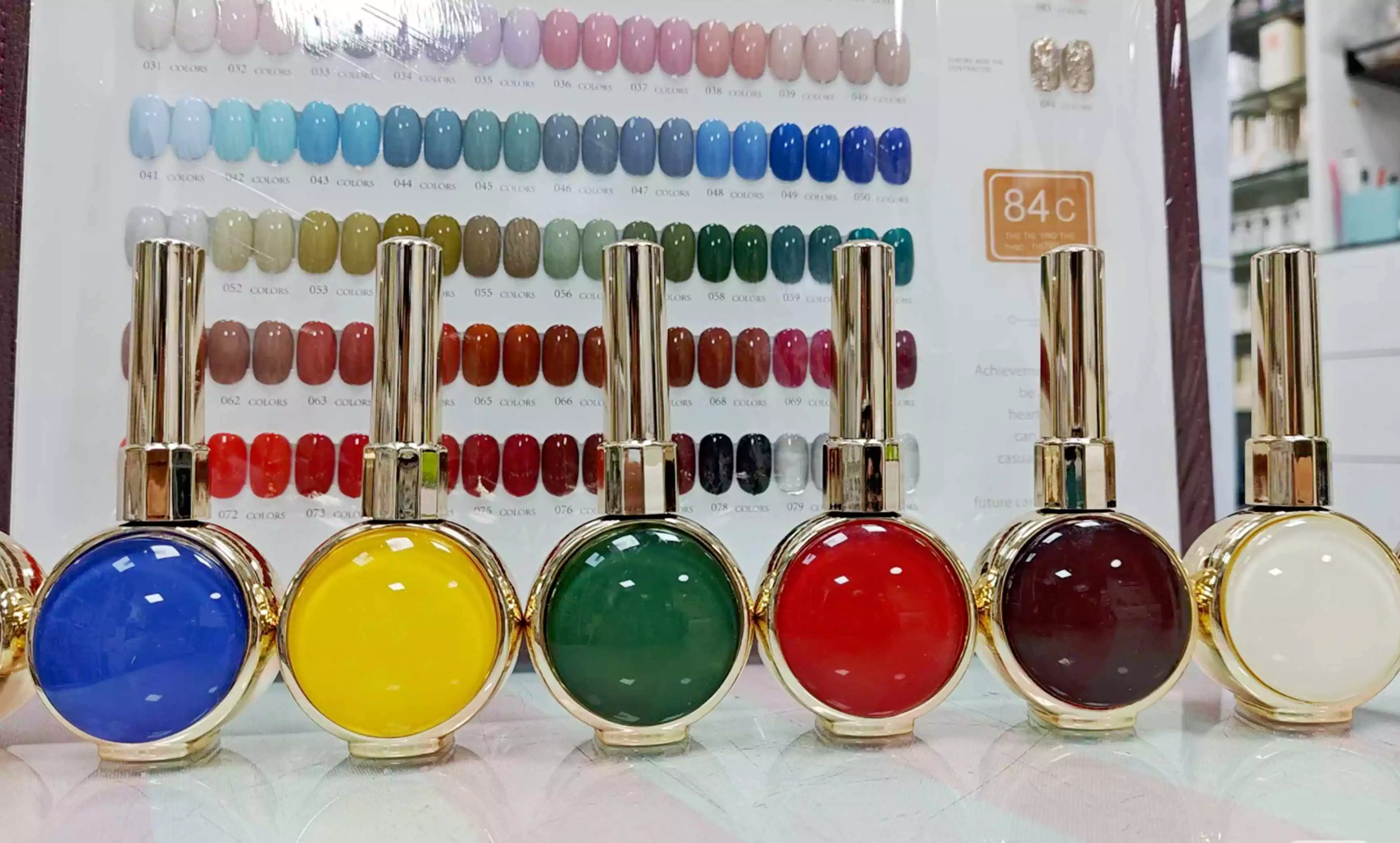
CHROMÉCLAIR offers Base coats, Top coats, solid color HEMA nélküli zselés lakk, és hema mentes macskaszem gél lakk.
 05 Mit jelent a pigmentoldószer-ellenállás?
 Honlapjukon olyan nail art oktatóprogramok is találhatók, mint például:
Hogyan készítsük el a fém 3D virágos körömművészetet otthon?
Legyen áttetsző francia manikűr kristályragasztó nélkül!
Related product references: For formulation review or sourcing comparison, see CHLUMIAO HO-17/17EH.