
UV Curing Technology & Photoinitiators
UV curing stands as an environmentally friendly, energy-efficient, and high-performance advanced technology.
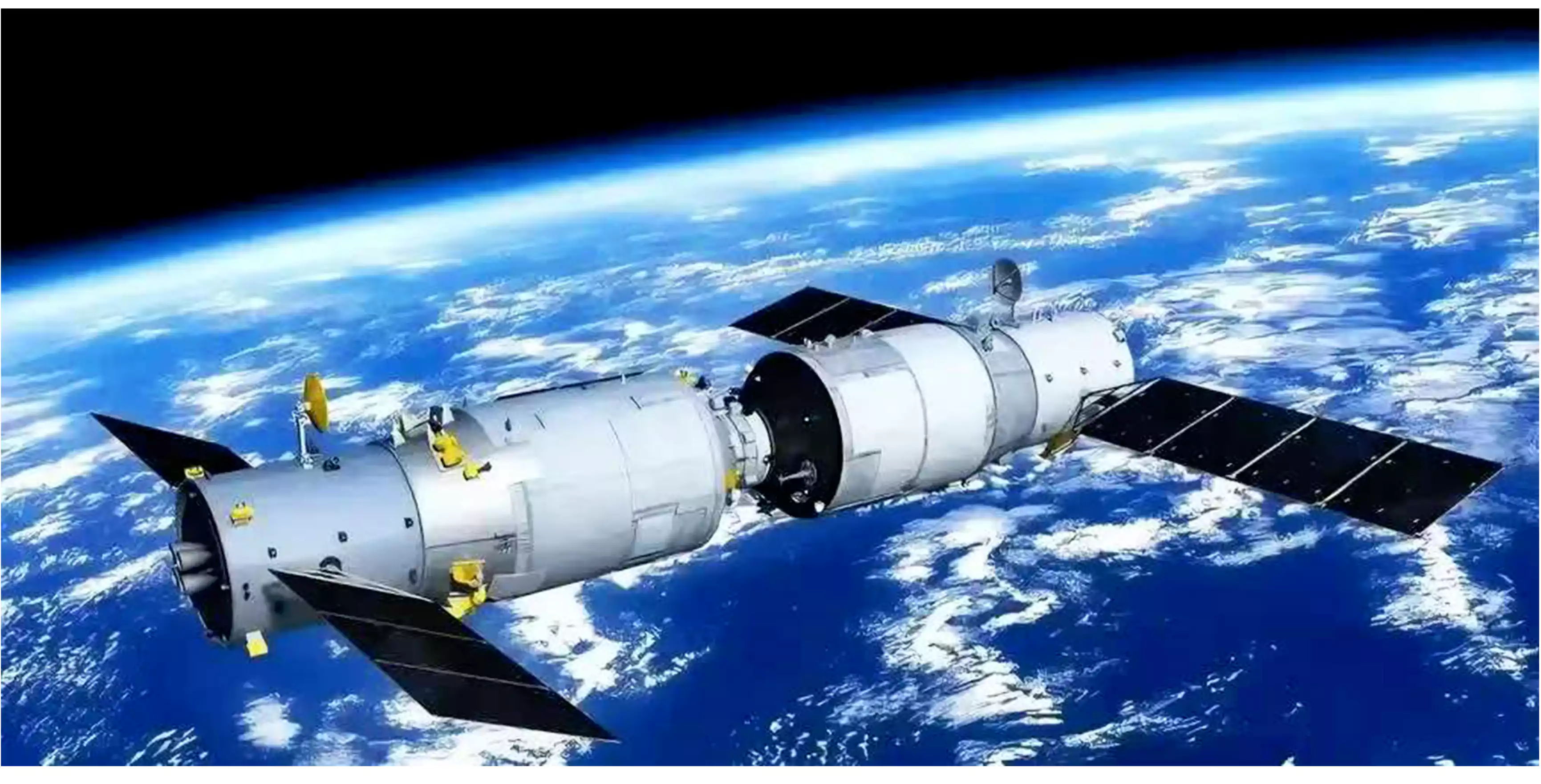
Due to the characteristics of UV adhesive materials—including high-temperature resistance, broad applicability, and chemical corrosion resistance—they are utilized in bonding aircraft engine components and assembling spacecraft.
 Applications of UV Light Curing in the Healthcare Industry
UV LED light source systems have gained widespread adoption in the medical field due to their ability to rapidly cure photoinitiated adhesives, thereby eliminating the need for volatile bonding agents. UV-curable adhesives offer significant advantages including energy savings, reduced consumption, accelerated curing times, enhanced production efficiency, and seamless integration with automated processes.
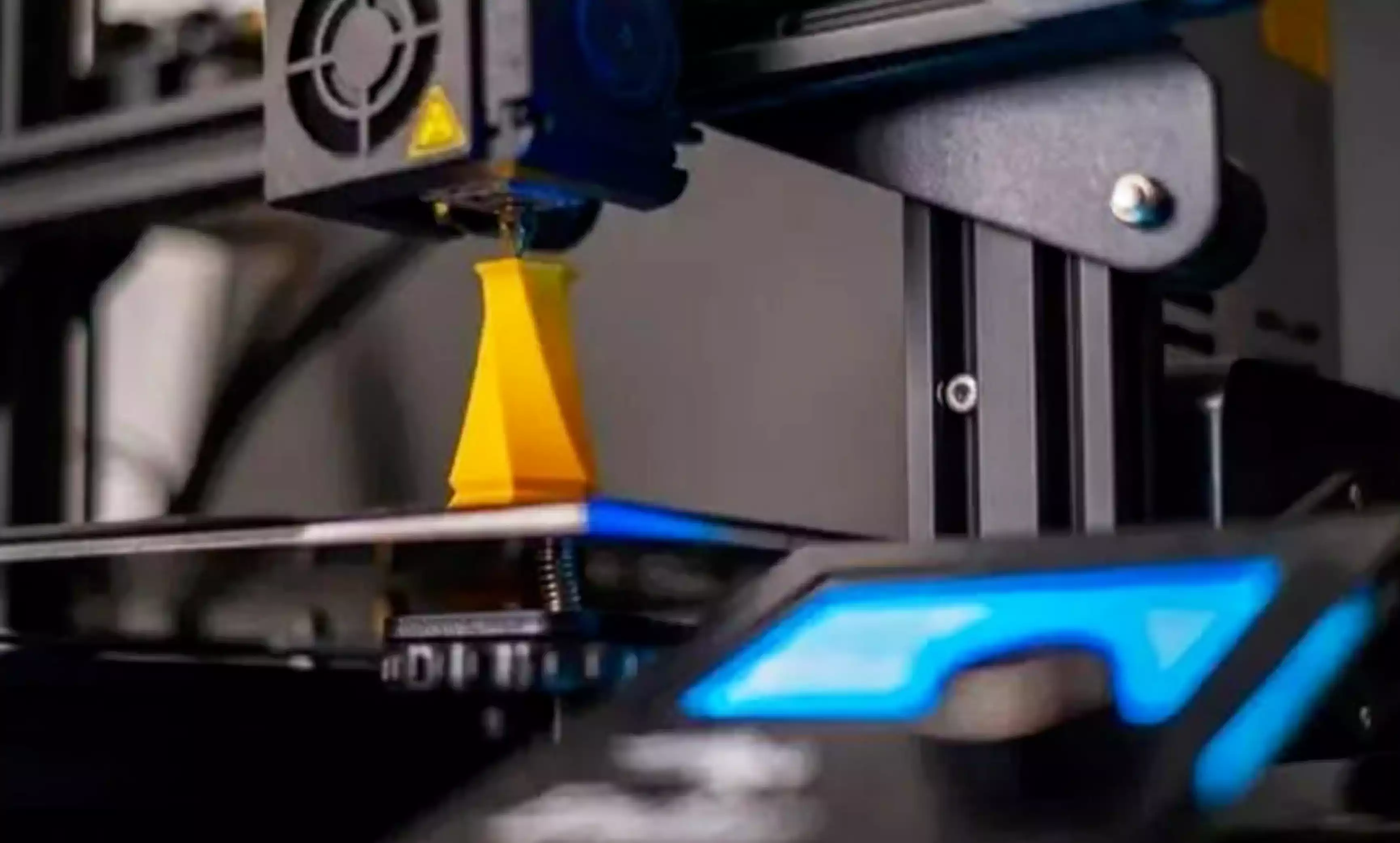 Applications of UV Light Curing in 3D Printing
Photopolymerization 3D printing stands as one of the most advanced rapid prototyping technologies today, offering high printing precision and commercial viability. Its advantages—including low energy consumption, cost-effectiveness, high accuracy, smooth surface finishes, and excellent reproducibility—make it widely applicable across numerous high-tech sectors. For instance, printing prototypes of rocket engines with complex structures enables analysis of gas flow patterns, aiding in the design of more compact engines with higher combustion efficiency. This significantly boosts R&D efficiency for intricate components and shortens automotive development cycles. Additionally, it allows direct printing of molds or reverse molds for rapid prototyping.
Classification of UV Light Sources
Based on curing light sources, photopolymerization primarily divides into traditional mercury lamp curing and emerging UV LED curing. Compared to traditional mercury lamp curing, UV LED curing also has certain limitations. The most significant difference lies in the fact that the spectrum emitted by traditional mercury lamps nearly covers the entire UV wavelength range, whereas UV LED curing is currently limited to the long-wavelength UVA band due to hardware technology constraints and cost considerations.
 Emission Spectrum Comparison Between Mercury Lamps and UV LED Light Sources
Photoinitiators
Photoinitiators constitute a relatively small proportion in light-curing formulations, typically around 2%-5%, yet they play a pivotal role.
For the light-curing reaction to occur, photoinitiators must absorb ultraviolet light emitted by the UV light source to generate free radicals. These free radicals then initiate the polymerization reaction, ultimately curing the product into its final form.
The emission spectrum of the UV light source must match the absorption spectrum of the photoinitiator. Traditional photoinitiators like 1173 and 184 exhibit maximum absorption at short-wavelength UVC regions, making them more suitable for curing with conventional mercury lamps.
In contrast, UV LEDs primarily emit light in a few specific bands, such as 365 nm, 385 nm, 395 nm, and 405 nm. Phosphine oxide-based photoinitiators exhibit relatively strong absorption in these bands, making them widely applicable in UV LED systems.
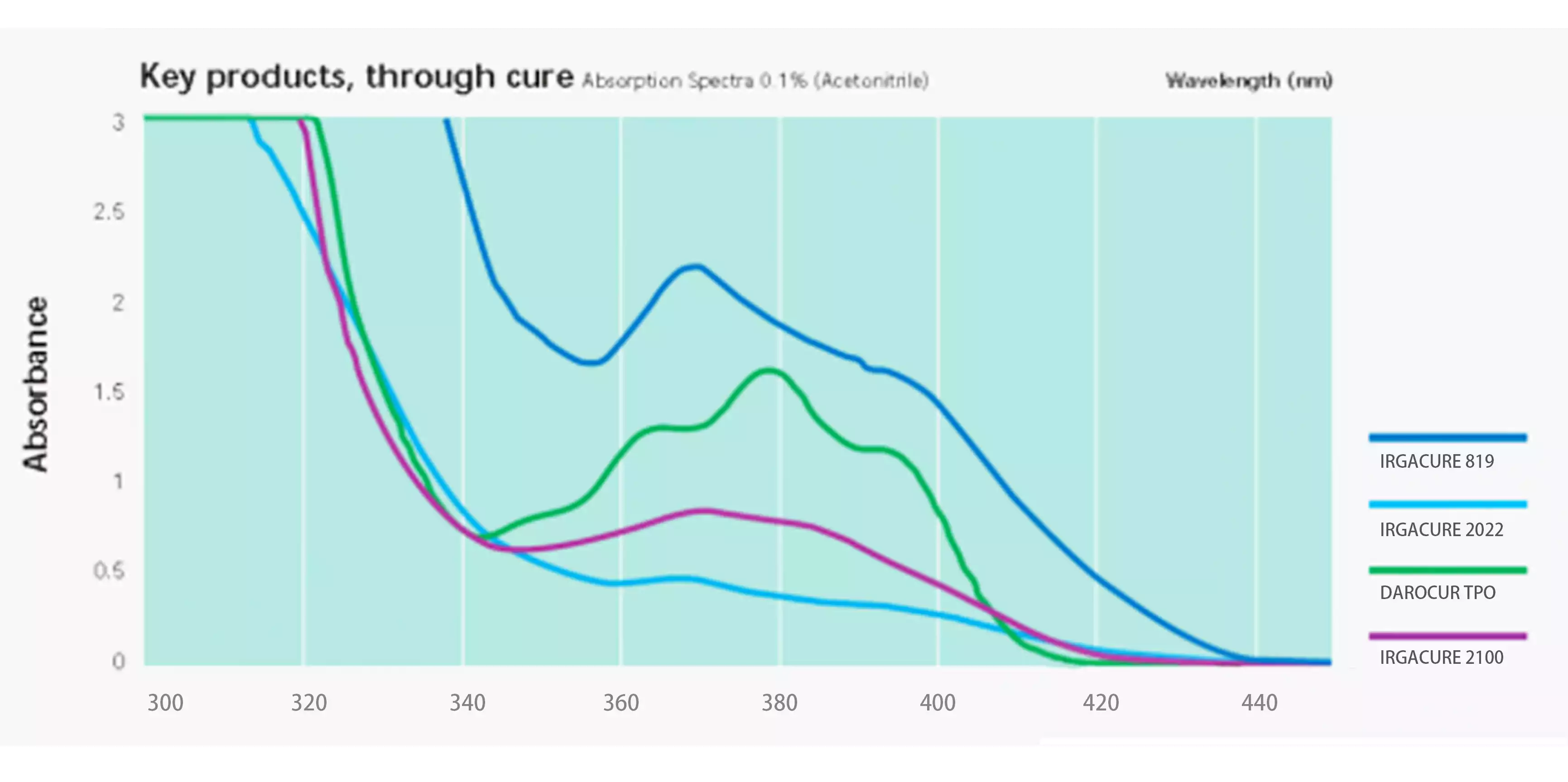 Free radical photoinitiator
Photoinitiators
Photoinitiators are essential components in light-curing materials. They absorb radiant energy, undergo chemical changes upon excitation, and generate reactive intermediates (free radicals or cations) capable of initiating polymerization reactions.
Based on the wavelength of absorbed light, photoinitiators can be categorized into ultraviolet photoinitiators (wavelength 250nm–400nm) and visible light photoinitiators (wavelength 400nm–700nm). According to the mechanism of photopolymerization, they are classified as radical-type photoinitiators and cationic-type photoinitiators.
Radical-initiators can be further subdivided into two types based on their radical-generating mechanisms: cleavage-type initiators (also known as Type I initiators) and hydrogen-scavenging-type initiators (also known as Type II initiators).
Cracking-Type Radical Photoinitiators
Cracking-type radical photoinitiators refer to molecules that, upon absorbing light energy, transition to an excited singlet state and subsequently undergo intersystem crossing to an excited triplet state. In either the excited singlet or triplet state, the molecular structure becomes unstable, causing weak bonds to undergo homolytic cleavage. This generates primary active radicals that initiate the polymerization and cross-linking of oligomers and active diluents.
Cracking-type radical photoinitiators are predominantly arylalkyl ketone compounds, including phenylcoumarins and their derivatives (e.g., benzoic acid ethers), phenylcoumaric acid and its derivatives (e.g., 651), phenylacetone derivatives (e.g., DEAP), α-hydroxyketone derivatives (e.g., 1173, 184, 2959), α-aminoalkylphenylacetones (907, 369), and acylphosphine oxides (TPO, TPO-L, 819).
Hydrogen-scavenging Radical Photoinitiators
Hydrogen-scavenging photoinitiators refer to photoinitiator molecules that absorb light energy, undergo excitation and intersystem crossing to reach the excited triplet state, and then undergo a bimolecular reaction with a co-initiator—a hydrogen donor. Through electron transfer, they generate active radicals that initiate the polymerization and cross-linking of oligomers and reactive diluents. Major examples include benzophenones and their derivatives, thioanthraquinones (ITX, DETX), and anthraquinones (2-EA).
Co-initiators are hydrogen donors used in conjunction with hydrogen-scavenging photoinitiators. Structurally, they all contain at least one tertiary amine at the α-carbon position, primarily being tertiary amine compounds. They react with the excited state of hydrogen-scavenging photoinitiators to form excited-radical complexes. where the nitrogen atom loses an electron, and the hydrogen on the α-carbon adjacent to nitrogen becomes strongly acidic, readily leaving as a proton. This generates a C-centered, reactive tertiary amine alkyl radical that initiates polymerization and cross-linking of oligomers and reactive diluents. Tertiary amine compounds include aliphatic tertiary amines, ethanolamine-type tertiary amines, tertiary amine-type benzoate esters, and reactive amines.