
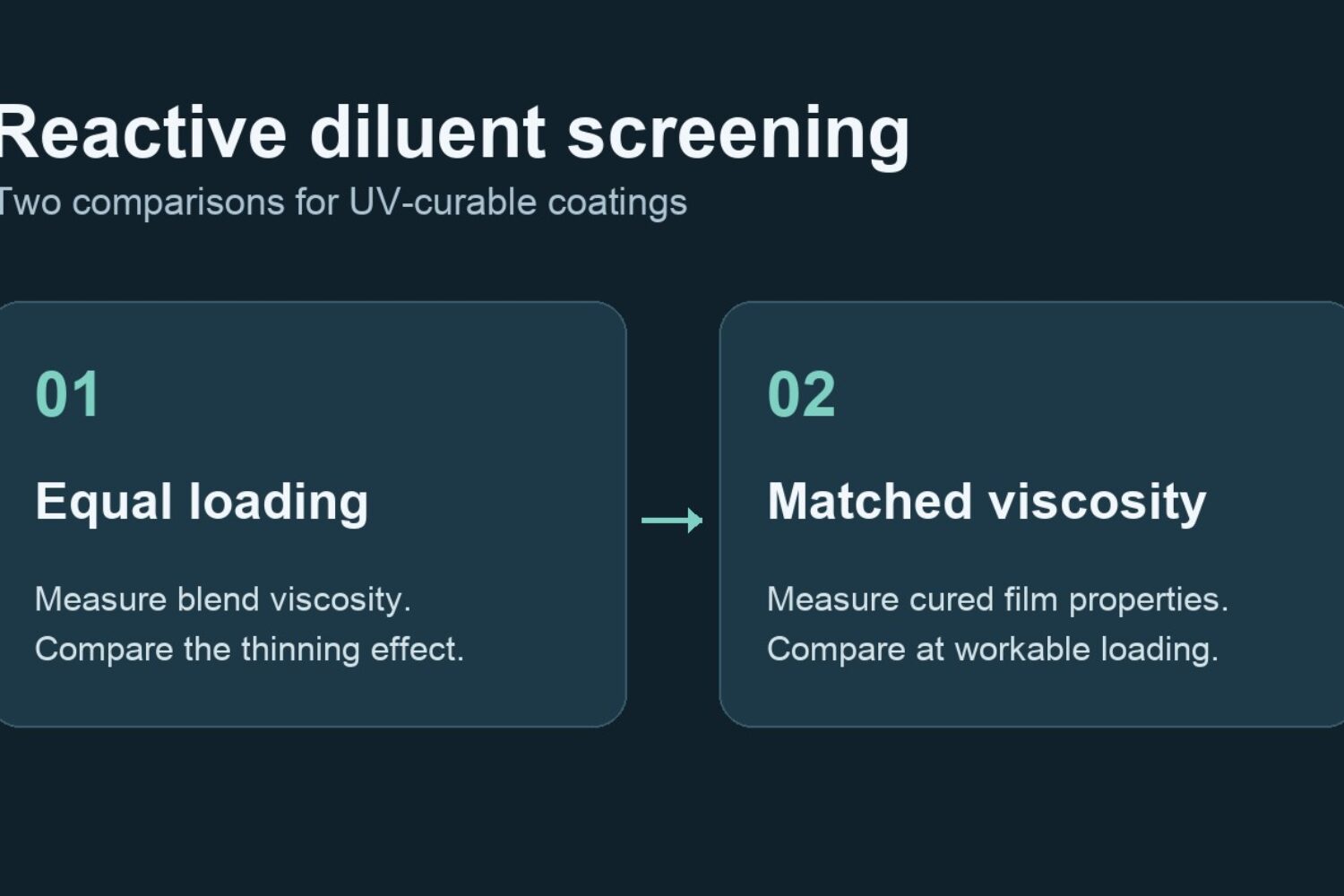
To choose a reactive diluent for a UV-curable coating, compare candidates twice. First use the same weight fraction to see how much each one lowers blend viscosity. Then compare the candidates at the same workable viscosity to find out how the cured coatings perform at the loading each candidate actually needs.
Why the neat monomer viscosity tells only part of the story
A reactive diluent lowers viscosity and participates in the curing reaction. Its datasheet viscosity describes the liquid monomer as tested. Application viscosity depends on how that monomer behaves in your oligomer blend at the coating temperature. Published dilution curves for the same isobornyl acrylate in two different oligomers show why the resin side of the comparison matters.
Two candidates can thin a blend to a similar degree yet give different cured film properties. The structure and amount of the diluent can affect the resulting polymer network. Use a film test relevant to the job, such as adhesion on the actual substrate, bend performance on a flexible part or hardness on a wear surface.
First compare at the same weight fraction
- Use the current coating as the control. Keep the oligomer, additives and photoinitiator constant. Replace the same mass of incumbent diluent with each candidate in separate samples, so the total batch weight and the total diluent fraction stay comparable.
- Condition the blends to the same temperature and measure them on the same instrument with the same settings. For a rotational measurement, record the geometry or spindle, speed and temperature alongside the result. Note haze or separation before treating a low reading as a successful result.
- Keep candidates that move the blend toward your application viscosity and remain compatible. Write down the actual readings and the test conditions so a second person can repeat the comparison.
Then compare at the same application viscosity
For each candidate that passes the first screen, adjust the diluent fraction in documented steps to reach the same viscosity window. Record what the added diluent replaces. Cure comparable film thicknesses on the intended substrate using the same light source, exposure and atmosphere. Check surface cure and the specified film properties. If an air-facing surface stays tacky, run a separate air and low-oxygen comparison before attributing the result to diluent identity.
For example, suppose two candidates both meet the application target, but one reaches it at a lower diluent fraction. The lower loading can be an advantage if the film also passes the acceptance tests. If the higher-loading candidate is the only one that meets the adhesion requirement, document that trade-off in the approval record.
What purchasing should record before requesting a sample
Identify each candidate by grade and CAS. CHLUMICRYL IBOA is isobornyl acrylate, CAS 5888-33-5. CHLUMICRYL ACMO is acryloyl morpholine, CAS 5117-12-4. Treat them as separate screening candidates. Request the lot certificate and confirm the viscosity method and temperature, applicable purity and inhibitor limits, and the actual grade supplied. Keep the approved blend viscosity and film test results with the purchasing record.