
Como os absorvedores de UV protegem os materiais da luz solar?
Você pode notar cadeiras desbotadas ou brinquedos de plástico quebrados depois do verão. A luz do sol faz com que isso aconteça por causa da radiação ultravioleta, ou UV. Os absorvedores de UV são aditivos que ajudam a proteger seus objetos. Eles absorvem os raios UV nocivos e ajudam a impedir o desbotamento e as rachaduras. Eles também ajudam a evitar outros danos. Os absorvedores de UV são usados em muitos itens que usamos todos os dias e em fábricas. O mercado global para essas soluções está crescendo:
- O tamanho do mercado era de US$ 925 milhões em 2023.
- Os especialistas acreditam que esse valor chegará a US$ 1.609 milhões até 2033.
- A taxa de crescimento anual é de 5,7%.
A proteção UV é importante se você quiser que seu material dure mais e tenha uma boa aparência.
Principais conclusões
- Os absorvedores de UV mantêm os materiais seguros da luz solar. Eles absorvem os raios UV e os transformam em calor seguro.
- Uso de absorvedores de UV ajuda as coisas externas a durarem por muito mais tempo. Isso significa que você não precisa comprar novos com frequência. Isso também ajuda você a economizar dinheiro.
- Escolha produtos com absorvedores de UV para evitar desbotamento e rachaduras. Isso mantém seu material com aparência de novo por mais tempo.
- Saiba como os absorvedores de UV e os estabilizadores de UV não são a mesma coisa. Isso o ajudará a escolher a melhor maneira de proteger seus pertences.
- Sempre observe os rótulos dos produtos quanto à proteção UV. Isso garante que seus objetos estejam protegidos contra danos causados pelo sol.
Radiação UV e danos materiais
O que é radiação UV?
A luz solar tem algo chamado radiação ultravioleta. Não é possível ver essa energia, mas ela está lá. Os cientistas dividem a UV em três tipos principais de acordo com seus comprimentos de onda:
- UV-A: 315 nm a 400 nm
- UV-B: 280 nm a 315 nm
- UV-C: 100 nm a 280 nm
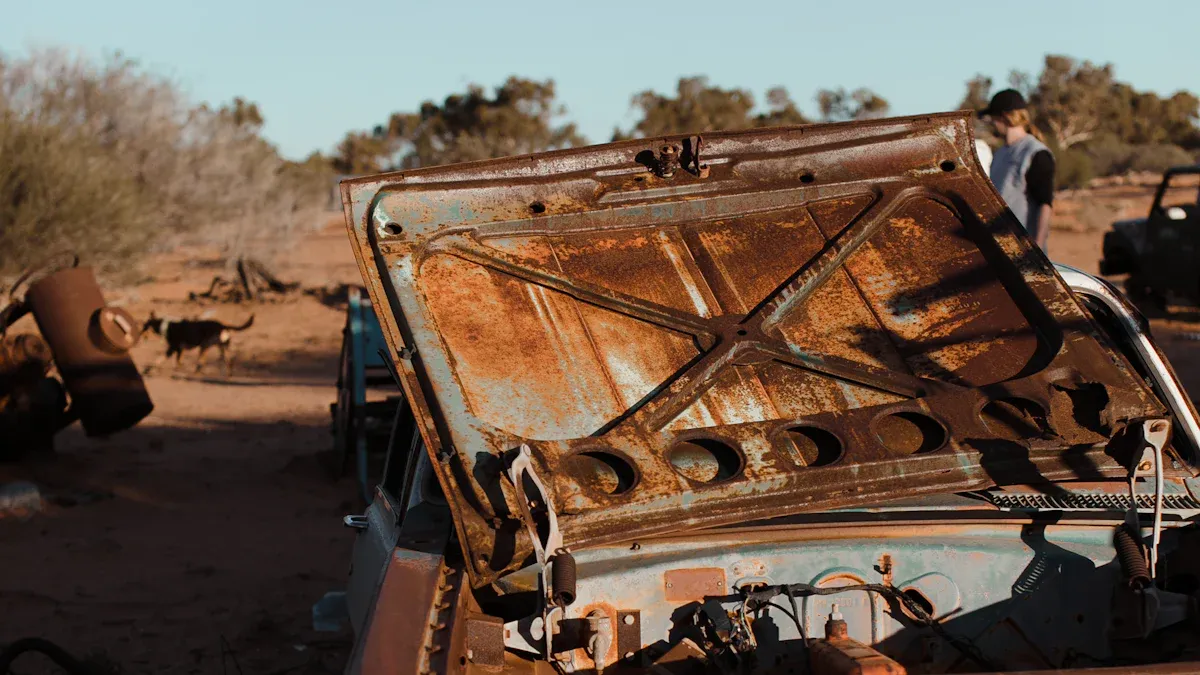
A maioria dos raios UV que chega à Terra é UV-A. Ele tem ondas mais longas e menos energia. Apenas um pouco de UV-B passa pelo ar. A camada de ozônio impede que os raios UV-C cheguem até nós. Os raios UV-A e UV-B podem danificar materiais e sua pele. Quando você usa objetos em ambientes externos, eles são atingidos pela luz UV. É por isso que as cores desbotam ou os objetos ficam mais fracos depois de ficarem expostos ao sol.
Dica: Escolha coisas com absorvedores de raios ultravioleta para ajudar a protegê-los. Esses aditivos bloqueiam a radiação ultravioleta prejudicial antes que ela possa causar danos.
Efeitos da luz solar nos materiais
Quando os raios UV atingem objetos como plástico, madeira ou tecido, eles começam a degradação baseada em raios ultravioleta. A energia UV pode quebrar as ligações químicas dentro desses elementos. Nos polímeros, os raios UV causam a fotooxidação. Esse processo quebra as cadeias que mantêm o material unido. Você pode ver desbotamento, rachaduras ou fragilidade. Os absorvedores de UV retardam a degradação dos raios UV, absorvendo a energia primeiro.
Veja o que acontece durante a degradação baseada em raios ultravioleta:
- A radiação UV causa degradação foto-oxidativa e quebra as cadeias de polímeros.
- O polímero fica mais leve, portanto, não é tão resistente.
- A flexibilidade e a força diminuem.
- Os cromóforos no material recebem fótons e iniciam a quebra.
- Os raios UV podem quebrar cadeias e criar novas ligações, alterando a estrutura do material.
É importante saber quais comprimentos de onda causam mais danos. O UV-A é mais profundo, mas o UV-B tem mais energia. Ambos podem causar degradação por raios UV. O uso de absorvedores de UV ajuda a manter os produtos seguros e com boa aparência por mais tempo.
Como funcionam os absorvedores de UV
Mecanismo do absorvedor de UV
Quando você coloca um aditivo absorvedor de raios ultravioleta em um material, ele age como um escudo. Esses aditivos são como pequenos guarda-costas para seu material. Eles ficam entre seu material e os raios solares. A ciência é simples, mas forte. Cada absorvedor de raios ultravioleta tem moléculas especiais que absorvem a energia ultravioleta antes que ela possa danificar o material.
Veja a seguir o que acontece passo a passo:
- O aditivo absorvedor de raios ultravioleta fica sobre ou dentro do material.
- Quando a luz solar incide, o absorvedor de raios ultravioleta capta os raios ultravioleta.
- O aditivo absorve a energia e a transforma em calor.
- Esse calor se espalha e não prejudica o material.
Você pode ver como esses aditivos funcionam bem em estudos. A tabela abaixo mostra como os cientistas testaram diferentes absorvedores de raios ultravioleta. Eles descobriram que esses aditivos ajudam a reduzir os danos:
| Estudo | Resultados |
|---|---|
| Os efeitos da luz UV nas propriedades químicas e mecânicas de um sistema epóxi-diamina transparente na presença de um absorvedor de UV orgânico | Os absorvedores de raios ultravioleta inorgânicos e orgânicos são usados para reduzir a fotodegradação. Os absorvedores orgânicos transformam a luz ultravioleta em calor e capturam os radicais livres. Os absorvedores de UV inorgânicos dispersam a luz. Os absorvedores orgânicos funcionam melhor, mas não duram tanto tempo. |
| Estudo de preparação e aplicação de materiais compostos multifuncionais de absorção de UV OA-CDs@SiO2 em revestimentos | Adição de absorvedores de UV ou estabilizadores de luz pode retardar a foto-oxidação dos revestimentos. Isso os ajuda a durar mais. Estudos mostraram que as nanopartículas de ZnO e CeO2 ajudaram a impedir danos ao filme de TPU. |
Você quer que seus móveis de exterior, peças de automóveis ou revestimentos durem mais. O uso de um aditivo absorvedor de raios ultravioleta ajuda você a fazer isso. Esses aditivos bloqueiam os piores raios e mantêm seus produtos com aparência de novos.
Observação: Os absorvedores de UV funcionam melhor quando agem mais rapidamente do que a própria reação do material aos raios UV. Essa ação rápida é importante para a estabilidade real aos raios ultravioleta.
Função dos cromóforos e dissipação de calor
Os cromóforos são uma grande parte do funcionamento dos absorvedores de raios ultravioleta. Um cromóforo é a parte de uma molécula que capta a luz. Em um aditivo absorvedor de raios ultravioleta, os cromóforos captam a energia ultravioleta e impedem que ela prejudique o restante do material. Você pode pensar nos cromóforos como "captadores" nesse processo.
- Os cromóforos precisam estar em um sistema conjugado para captar bem a luz ultravioleta ou visível.
- Eles mudam de forma ou de densidade de elétrons quando recebem energia.
- O número e o tipo de cromóforos em uma molécula decidem a quantidade de luz que ela pode captar.
Quando um cromóforo em um aditivo absorvedor de raios ultravioleta capta um fóton ultravioleta, ele fica excitado. Em seguida, a molécula libera essa energia na forma de calor. Isso acontece muito rapidamente. O calor se espalha e não causa danos. É por isso que se observa menos desbotamento, rachaduras ou fragilidade em materiais com boa estabilidade aos raios ultravioleta.
Aqui está uma rápida olhada em como isso funciona:
- Os absorvedores de UV transformam rapidamente a luz UV prejudicial em calor inofensivo.
- A energia se transforma em energia vibracional e rotacional dentro da molécula.
- Isso deve ocorrer mais rapidamente do que a própria reação do material à radiação ultravioleta.
Você deseja que seus materiais tenham uma forte estabilidade aos raios ultravioleta. Ao escolher o aditivo absorvedor de UV correto, você garante que os cromóforos façam seu trabalho. Eles protegem seus produtos e os mantêm com boa aparência por um longo tempo.
Dica: Sempre verifique se o seu produto usa um aditivo absorvedor de raios ultravioleta. Esse pequeno detalhe pode ajudar seus itens a durarem mais ao ar livre.
Tipos de aditivos absorvedores de UV
Há dois tipos principais de absorvedores de UV. Eles são orgânicos e inorgânicos. Cada tipo protege os materiais contra a degradação dos raios ultravioleta de sua própria maneira. Escolher o aditivo certo ajuda seus produtos a durar mais tempo sob a luz do sol.
Absorventes orgânicos de UV
Absorvedores orgânicos de raios ultravioleta usam moléculas feitas de carbono. Essas moléculas absorvem os raios ultravioleta. Elas têm cromóforos que captam a luz ultravioleta e a transformam em calor. Alguns compostos orgânicos comuns são os carotenos, a melanina e a alizarina. A tabela abaixo mostra como esses compostos absorvem bem os raios ultravioleta em diferentes comprimentos de onda:
| Comprimento de onda (nm) | Coeficiente de extinção (cm² mol-¹) |
|---|---|
| 240 | 24,000 |
| 280 | 400 |
| 430 | 20 |
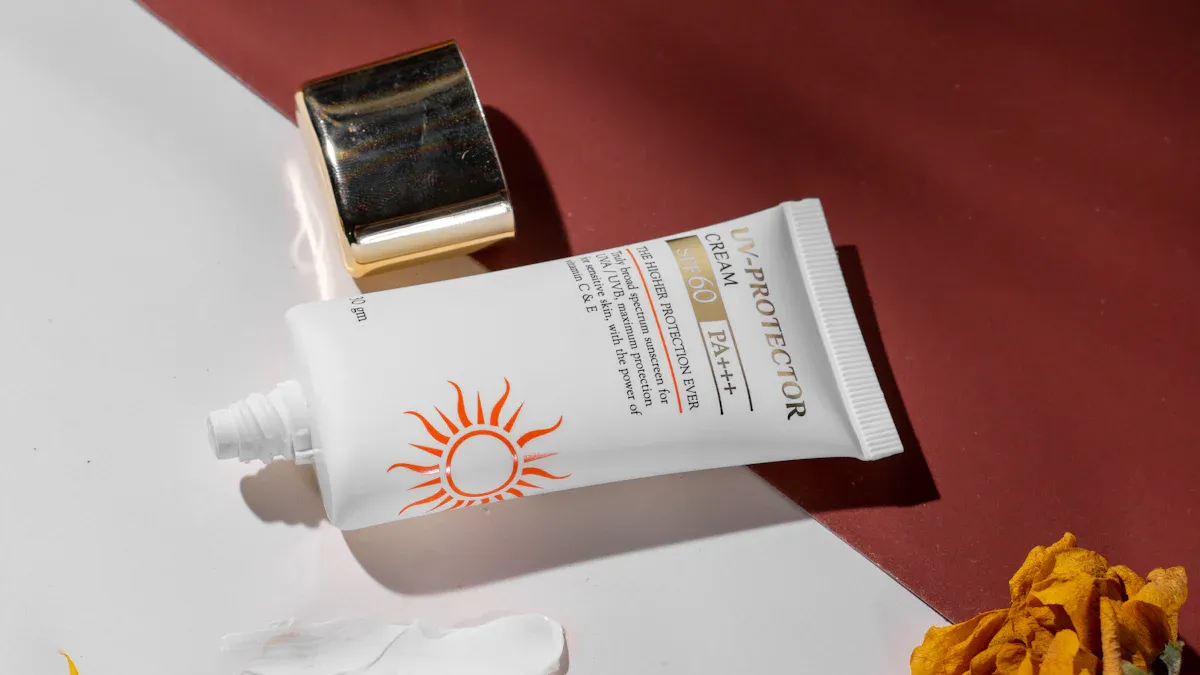
Você pode encontrar absorvedores orgânicos de raios ultravioleta em protetores solares, loções e produtos para os cabelos. Eles também protegem os plásticos em carros e embalagens. O uso de um masterbatch UV com esses aditivos mantém as cores brilhantes e os materiais resistentes.
Absorvedores de UV inorgânicos
Os absorvedores inorgânicos de raios ultravioleta usam minerais como dióxido de titânio, óxido de zinco e óxido de cério. Esses aditivos dispersam e refletem os raios ultravioleta em vez de absorvê-los. Eles funcionam bem em revestimentos, filmes e tintas. A tabela abaixo compara alguns absorvedores inorgânicos de raios ultravioleta:
| Tipo de absorvedor de UV | Eficácia | Perfil de segurança |
|---|---|---|
| Inorgânicos (ZnO, TiO2) | O ZnO cobre os raios UVA-UVB; o TiO2 bloqueia bem os raios UVB | Riscos muito baixos à saúde e ao meio ambiente |
| Orgânico | A eficácia pode variar; alguns problemas de saúde | Possível impacto humano e ambiental |
O negro de fumo é outro forte absorvedor de raios ultravioleta. Ele absorve luz ultravioleta, visível e infravermelha. Isso o torna útil em muitos produtos. A adição desses minerais a um masterbatch UV proporciona uma forte proteção para itens externos.
Usos e aplicações comuns
Ambos os tipos de absorvedores de UV são usados em muitos setores. Aqui estão alguns usos comuns:
- Automotivo: Protege as peças do carro contra o desbotamento.
- Construção: Mantém os materiais de construção fortes e coloridos.
- Embalagem: Ajuda a manter os alimentos e as mercadorias protegidos dos raios ultravioleta.
- Cuidados pessoais: Protege a pele e os cabelos dos danos causados pelos raios ultravioleta.
- Agricultura: Usado em agrotêxteis para proteger as plantações.
- Revestimentos e adesivos: Faz com que as coisas durem mais e tenham uma aparência melhor.
É comum encontrar um masterbatch uv em plásticos, filmes e fibras. Esse aditivo ajuda a impedir a degradação dos raios ultravioleta e mantém os produtos com aparência de novos. Saber onde os absorvedores de UV são usados ajuda a escolher o melhor tipo para suas necessidades.
Dica: Sempre verifique se o seu produto tem os absorvedores de raios ultravioleta corretos. Essa pequena medida ajuda seus itens a durarem mais tempo ao ar livre.
Absorvedores de UV vs. Estabilizadores de UV
Principais diferenças
Você pode pensar que absorvedores de raios ultravioleta e estabilizadores UV são a mesma coisa. Ambos protegem produtos feitos de polímeros, mas funcionam de forma diferente. Um absorvedor de raios ultravioleta funciona como um escudo para seu material. Ele absorve os raios UV e os transforma em calor. Isso evita que os raios prejudiquem o material e causem degradação por raios UV.
Estabilizadores de raios ultravioleta fazem outra coisa. Eles ajudam depois que a luz ultravioleta já começou a danificar o material. Esses aditivos impedem reações químicas ruins, bloqueando os radicais livres. Isso ajuda a manter o material forte mesmo após alguma exposição à luz ultravioleta.
Aqui está uma tabela que mostra como eles são diferentes:
| Recurso | Absorvedores de UV | Estabilizadores de UV |
|---|---|---|
| Função | Absorve a radiação UV e a converte em calor | Evitar a formação de moléculas reativas |
| Mecanismo | Absorve a luz UV antes que ela danifique o material | Neutraliza os radicais livres formados durante a exposição aos raios UV |
| Aplicativos | Usado em revestimentos transparentes, filmes e polímeros | Usado em plásticos, borracha, tintas e têxteis |
| Exemplos | Benzofenonas, benzotriazóis, triazinas | Estabilizadores de luz de amina impedida (HALS), fosfitos |
| Modo de ação | Absorve e dissipa diretamente a energia UV | Evitar reações químicas que levem à degradação |
| Uso | Mantém a clareza nos aplicativos | Uso versátil em vários materiais |
Observação: Você obtém melhor proteção se usar absorvedores e estabilizadores de raios UV juntos.
Quando usar cada um
Escolha o aditivo certo para o que você precisa proteger. Se você quiser evitar que os produtos transparentes fiquem amarelados, use absorvedores de UV. Eles ajudam os revestimentos e filmes a manter a aparência de novos. Se você quiser evitar rachaduras ou desbotamento em plásticos, use um estabilizador UV para plásticos. Os estabilizadores UV para plásticos ajudam os produtos a permanecerem fortes e flexíveis, mesmo depois de muito sol.
Use estabilizadores UV para itens coloridos ou espessos. Eles atuam profundamente no interior do produto. O estabilizador UV para plásticos é usado em cadeiras externas, peças de automóveis e brinquedos de playground. Para obter os melhores resultados, use absorvedores e estabilizadores de raios UV juntos. Isso proporciona a seus itens a maior proteção contra o sol.
Dica: Sempre olhe o rótulo ou pergunte qual aditivo está em seu produto. Escolher o aditivo certo ajuda seu produto a durar mais e a ter uma aparência melhor.
Escolhendo o absorvedor de UV correto
Fatores de seleção
Quando você escolha um absorvedor de raios ultravioletaSe você não tiver um bom material, precisa pensar em alguns aspectos. Cada material e uso é diferente. Você deve se perguntar onde seu produto será usado. Pense em quanto tempo ele deve durar. Além disso, verifique que tipo de raios ultravioleta ele enfrentará. Móveis para ambientes externos e peças de automóveis precisam de proteção UV diferente. A tabela abaixo mostra o que você deve procurar:
| Fator | Móveis para área externa | Componentes automotivos |
|---|---|---|
| Tipo de absorvedor de UV | Precisa durar em condições climáticas externas | Precisa impedir o desbotamento e os danos causados pela luz solar |
| Ambiente do aplicativo | Enfrenta todos os tipos de clima | Toma muito sol dentro dos carros |
| Durabilidade | Faz com que os móveis durem de 5 a 7 anos a mais | Ajuda as peças do carro a durarem até 50% a mais |
| Propriedades estéticas | Mantém a cor e a forma | Evita que o interior e o exterior percam a cor |
Você também deve pensar no clima. A umidade e o calor podem alterar o funcionamento dos absorvedores de raios UV. Muita umidade e muito calor podem fazer com que os danos causados pelos raios UV ocorram mais rapidamente. Portanto, você precisa de um aditivo que possa lidar com esses fatores. Estudos mostram que, quando as coisas ficam úmidas e recebem raios ultravioleta, elas perdem a resistência e a forma mais rapidamente.
Aqui estão alguns pontos que devem ser lembrados:
- Os estabilizadores de UV ajudam a mobília externa a durar de 5 a 7 anos a mais.
- Um revestimento estabilizador de raios ultravioleta pode fazer com que as peças automotivas e externas durem mais tempo.
- As peças do carro podem continuar com boa aparência e funcionando por até 50% mais tempo com os absorvedores de raios UV corretos.
Dicas práticas
Você pode seguir etapas simples para escolher o melhor absorvedor de raios ultravioleta. Primeiro, verifique o tipo e a quantidade de raios ultravioleta que seu produto receberá. Em seguida, verifique se o seu material já é resistente aos raios ultravioleta. Pense em quanto tempo você quer que seu produto dure ao ar livre. Certifique-se de que o absorvedor de raios ultravioleta funcione com seu material e com a forma como você o fabrica. O preço também é importante.
| Considerações | Descrição |
|---|---|
| Tipo e intensidade da radiação UV | Verifique o tipo de raios ultravioleta e a quantidade que seu produto receberá. |
| Resistência inerente aos raios UV | Veja se o seu material já pode combater os danos causados pelos raios ultravioleta. |
| Vida útil esperada | Decida quanto tempo seu produto precisa durar ao sol. |
| Compatibilidade | Certifique-se de que o absorvedor de raios ultravioleta funcione com seu material e como você o produz. |
| Custo-efetividade | Pense se o absorvedor de raios ultravioleta vale o preço pelo seu bom funcionamento. |
Para plásticos, você precisa usar a quantidade certa de aditivo. Aqui estão algumas sugestões de quantidades:
| Tipo de aplicativo | Faixa de dosagem recomendada |
|---|---|
| Filmes de PE e PP | 0.5% – 1.5% |
| Filmes PET (uso interno) | 0.1% – 0.3% |
| Filmes PET (uso externo) | 0.3% – 0.8% |
| Peças automotivas | 1% – 2% |
| Itens de plástico para uso doméstico | 0.05% – 0.3% |
| Fibras sintéticas | 0.3% – 1% |
Dica: Sempre teste seu produto na área externa antes de decidir. Isso ajuda você a ver como o absorvedor e os estabilizadores de raios UV funcionam juntos.
Se você seguir essas etapas, poderá escolher o absorvedor de UV correto. Isso dá a seus produtos a melhor proteção uv.
Benefícios dos absorvedores de UV
Durabilidade e vida útil
Você quer que seus objetos para uso externo durem muito tempo. Os estabilizadores de UV ajudam a tornar isso possível. Quando você adiciona um absorvedor de UV ao plástico ou aos revestimentos, ele oferece uma forte proteção contra a luz solar. Estudos demonstram que os plásticos com absorvedores de UV permanecem resistentes e impedem a entrada de água, mesmo depois de condições climáticas adversas. Por exemplo, os filmes tratados podem manter um alto ângulo de contato de 145° depois de ficarem ao ar livre. Isso significa que eles permanecem resistentes e não se deterioram rapidamente.
Você pode ver como os absorvedores de UV ajudam, observando os números.
- Os filmes com estabilizadores UV à base de benzofenona perdem 62% menos resistência após 18 meses do que os filmes sem esses estabilizadores.
- As fitas de nylon com estabilizadores químicos de raios ultravioleta mantêm 75-90% de sua resistência após cinco anos. As cintas sem tratamento mantêm apenas 35-45%.
Esses resultados mostram que os estabilizadores UV ajudam seus produtos a durar muito mais. Você não precisa substituí-los com tanta frequência, o que economiza tempo e dinheiro.
Aparência e economia de custos
Os estabilizadores de UV também ajudam seus objetos a parecerem novos. A luz solar pode fazer com que as cores desbotem e os plásticos pareçam velhos. Ao usar absorvedores de UV, você evita esse dano.
- Os fabricantes adicionam absorvedores de raios ultravioleta durante a produção para bloquear os raios ultravioleta que causam o desbotamento.
- Esses aditivos ajudam a manter a cor e o acabamento dos plásticos.
- Os estabilizadores de UV impedem a quebra das ligações químicas, portanto, há menos descoloração e menos rachaduras.
- Ao absorver e dispersar os raios ultravioleta, eles ajudam seus objetos a manter a forma e a cor.
Você também economiza dinheiro com essa proteção. Quando você usa estabilizadores UV como o Ultraviolet Absorbent 326, seus itens duram mais e precisam de menos reparos. Os fabricantes dizem que gastam menos com consertos e substituições de itens. Esse é um grande motivo para usar absorvedores de raios UV. Você obtém produtos que duram mais, têm melhor aparência e custam menos ao longo do tempo.
Dica: Escolhendo os estabilizadores UV corretos oferece forte proteção, mantém seus pertences com boa aparência e ajuda você a economizar dinheiro.
Você pode manter seus objetos protegidos da luz solar com absorvedores e estabilizadores de raios UV. Esses aditivos bloqueiam os raios UV e ajudam os materiais a permanecerem fortes e brilhantes por mais tempo. Atualmente, muitas empresas optam por escolhas ecologicamente corretas. Isso ajuda a reduzir o desperdício e ajuda o planeta. A tabela abaixo mostra por que é importante escolher o aditivo certo:
| Aspecto | Detalhes |
|---|---|
| Papel dos absorvedores de UV | Faça com que as coisas durem mais tempo, absorvendo os raios ultravioleta ruins |
| Importância da escolha | Combine a estabilidade com a forma como você o utiliza |
- Sempre verifique se o item tem um absorvedor ou estabilizador de raios UV.
- Se você quiser saber mais sobre a química uv, leia artigos sobre como esses aditivos funcionam.
PERGUNTAS FREQUENTES
Qual é a função de um absorvedor de raios UV?
Um absorvedor de raios ultravioleta protege seus itens da luz solar. Ele absorve os raios ultravioleta e os transforma em calor. Isso ajuda a impedir o desbotamento, as rachaduras e outros danos.
Onde é possível encontrar absorvedores de raios ultravioleta?
Você vê absorvedores de raios ultravioleta em móveis de exterior, peças de automóveis, embalagens e protetores solares. Os fabricantes os adicionam a plásticos, revestimentos e tecidos para ajudam os produtos a durar mais ao sol.
Como saber se um produto tem proteção UV?
Verifique se há absorvedor ou estabilizador de raios UV no rótulo. Alguns produtos dizem "resistente a raios UV" ou "protegido contra raios UV". Você pode perguntar ao vendedor se não tiver certeza.
Os absorvedores de raios ultravioleta podem ajudar a economizar dinheiro?
Sim! Ao usar absorvedores de raios ultravioleta, você mantém seus itens com aparência nova e forte. Você substitui os itens com menos frequência e, portanto, gasta menos dinheiro ao longo do tempo.
Os absorvedores de raios ultravioleta são seguros para você e para o meio ambiente?
A maioria dos absorvedores de raios ultravioleta é segura quando usada conforme as instruções. Os tipos inorgânicos, como o óxido de zinco, apresentam baixo risco. Sempre siga as dicas de segurança e verifique se há opções ecologicamente corretas.