CHLUMIUV® UV-234 / UV Absorber 234 CAS 70321-86-7

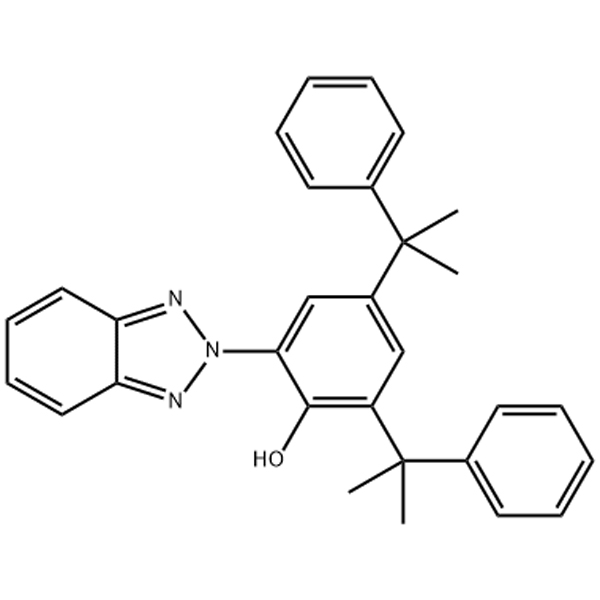
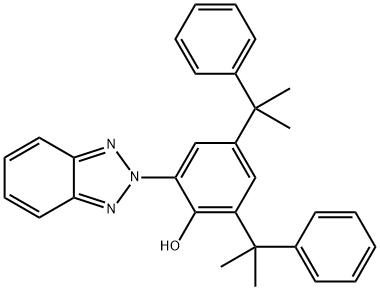
Chemical Name:2-(2H-benzotriazol-2-yl)-4,6-bis(1-methyl-1-phenylethyl)phenol

Cas No.:70321-86-7

Synonym:Eversorb 76;Milestab 234;THASORB UV-234;UV Absorber UV-234

Structure:

紫外吸收剂 234

Description

UV-234 / UV Absorber 234 CAS 70321-86-7

Appearance Off-white powder
Content ≥99%(HPLC)
Melting point 139.5-144℃
Ash ≤0.1%
Volatile ≤0.5%
Transmittance 460nm≥95%   500nm≥97%

UV Absorber 234 Application

Suitable for polycarbonate, polyvinyl chloride, polyoxymethylene, polyamide, polyester, etc.

Polyvinyl chloride Polycarbonate Polyester
0.25-0.5% 0.3-0.5% 0.3-0.5%

lcsorb® UV-234 has the advantages of good compatibility, low volatility, strong UV absorption, and excellent thermal stability. Suitable for polycarbonate, polyester, polyoxymethylene, polydilute amine, polyphenylene ether, thermoplastic polyurethane and polyurethane fiber, etc.

UV Absorber 234 Storage

Being kept in dry, clean warehouse with well ventilation.
Avoid exposing to light and heating for prevention of oxidation.
Protecting the product from leakage, rain and insolation during transportation.

Contact Us Now!

If you need COA, MSDS or TDS of UV Absorber, please fill in your contact information in the form below, we will usually contact you within 24 hours. You could also email me info@changhongchemical.com during working hours ( 8:30 am to 6:00 pm UTC+8 Mon.~Sat. ) or use the website live chat to get prompt reply.
UV-234 Application scenarios

1. Polycarbonate (PC) Products:

Suitable for PC sheets, CDs, electronic and electrical appliance casings, etc., especially suitable for high-temperature processing, improving long-term weather resistance and preventing yellowing and degradation of mechanical properties.

2. Polyester Materials (PET/PBT):

Used in polyester fibers, films, bottle flakes, and engineering plastic components, reducing degradation caused by ultraviolet light and maintaining fiber strength and product appearance.

3. Polyamide (PA) and Polyacetal (POM):

Provides stable light protection for high-temperature processed engineering plastics such as PA (nylon) and POM, suitable for automotive parts, mechanical parts, and other applications.

4. Polypropylene (PP) and Polyethylene (PE):

Used in PP/PE films, injection molded parts, pipes, etc., improving outdoor weather resistance, commonly used in agricultural films, outdoor building materials, and packaging containers.

5. Polyvinyl Chloride (PVC) and Polystyrene (PS):

Suitable for rigid PVC, PS, and ABS, improving UV resistance, used in building materials, home appliance casings, and daily necessities.

6. Coatings and Coating Systems:

Can be used in automotive topcoats, industrial coatings, powder coatings, and anticorrosive coatings, enhancing the aging resistance of coatings and extending their outdoor service life.

7. Synthetic Fibers and Textiles:

Used in the spinning or finishing of synthetic fibers such as polyester and polyamide, improving the UV resistance of fabrics, suitable for outdoor clothing and sunshade fabrics.

8. Polyurethane (PU) Materials:

Suitable for thermoplastic polyurethane (TPU), polyurethane fibers (spandex), etc., preventing aging and performance degradation caused by ultraviolet light.

9. Special Engineering Plastics:

Effective for special engineering plastics such as polyphenylene sulfide (PPS) and polyphenylene oxide (PPO), suitable for industrial components and electronic devices under high-temperature conditions.

10. Packaging Material Modification:

Used in PE/PP food packaging, pharmaceutical packaging, etc., reducing UV transmittance and protecting the contents from photodegradation.

Contact US

English