

Use the cure schedule for your exact epoxy resin and hardener, then check whether the part can meet it. Room air may be warm enough while the substrate is still too cold. In an oven, a heavy assembly can take longer than the air to reach the specified temperature.
Find out where the supplier measures temperature
A coating data sheet may give a minimum temperature for the surface being coated. An adhesive data sheet may quote oven temperature even though the adhesive layer warms more slowly. Before comparing cure times, ask when the hold begins. It might start when the oven recovers its set point or when a specified point on the part reaches temperature. Record the supplier’s definition on the trial sheet.
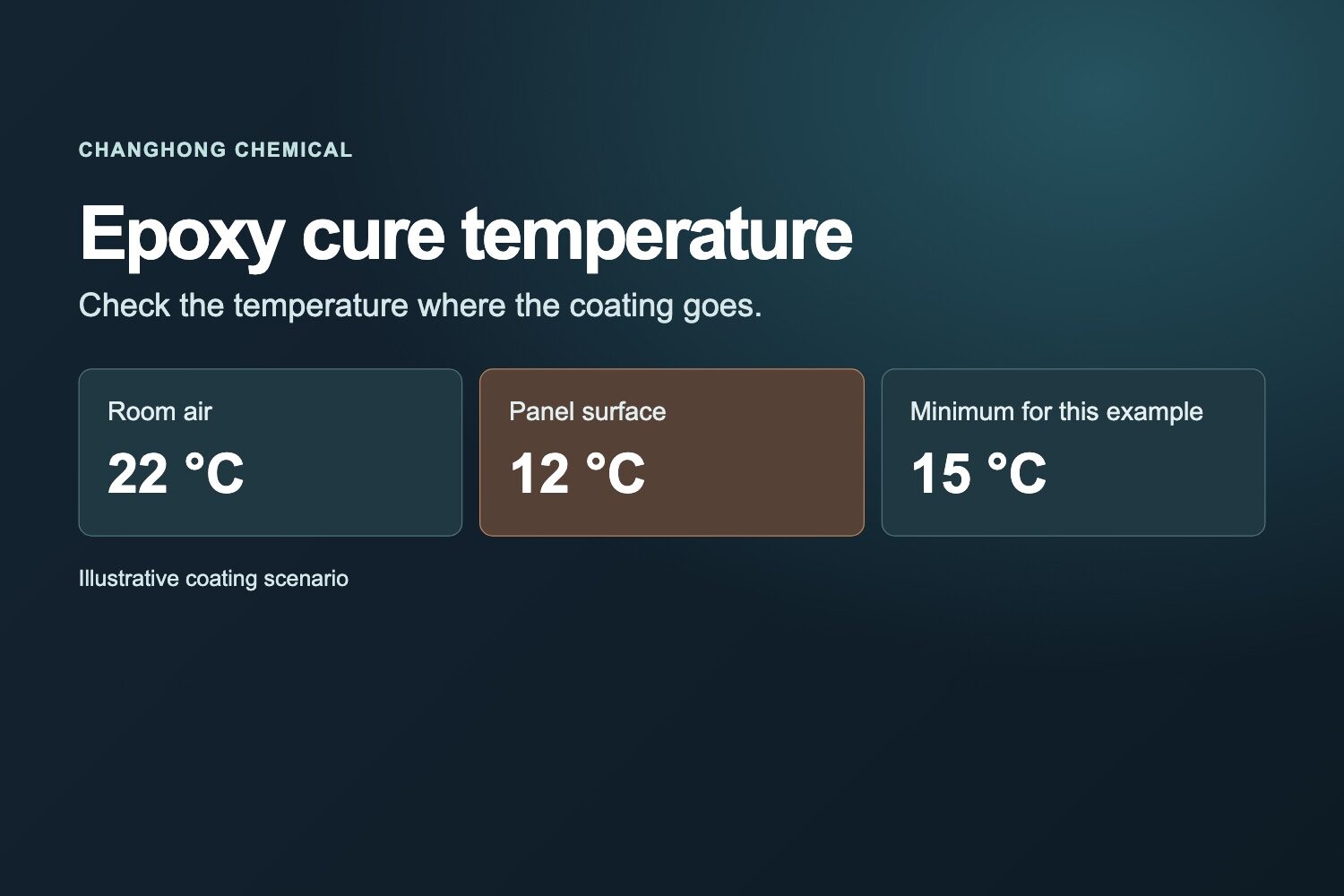
Suppose a coating calls for a substrate temperature of at least 15 °C. The room is at 22 °C, but the incoming panel reads 12 °C where the coating will go. The panel is 3 °C below the limit. Hold the job until the panel meets the requirement under the approved process, or qualify a system for the temperature the line can maintain.
Run the trial on a representative part
A thick mass of mixed epoxy can retain more reaction heat than an applied film. A sample that sets in a cup may take a different amount of time to cure on the part. Use the intended substrate and thickness in the trial. For a heated assembly, agree where to measure temperature, including any area that takes longer to warm up. Log the temperature at that location, the hold time and the starting material temperatures. Record the mix ratio and whether it was measured by weight or volume. Follow the supplier’s limits for batch size and thickness.
Measure the time available for mixing and application separately. The epoxy pot-life guide explains what to check when suppliers report different working times.
Decide what must pass before the part moves
An adhesive joint may be strong enough to unclamp before it can carry its service load. A floor coating may have separate times for recoating, light traffic and full cure. Before the trial, agree which test lets the part move to the next station and which property needs to be checked before it goes into service. Include any post-cure the supplier specifies for that final property.
Ask for data on the resin and hardener together
If you are evaluating PM839 liquid epoxy curing agent, request the current technical and safety data sheets. Ask which resin the supplier tested, how it measured the mix ratio and cure temperature, and which test it used to report the cure time. Share your part thickness and the lowest substrate temperature you expect on the line so the supplier can tell you whether its test conditions are relevant.