
Pourquoi les agents de nivellement que vous choisissez posent-ils toujours des problèmes ?
Après des années de formulation de revêtements, j'ai vu d'innombrables reprises causées par le mauvais choix ou l'utilisation incorrecte des Agents de nivellement-Des scénarios tels que le respect des normes de brillance pour la couche de film, mais la formation de plis lors de l'enduction ; la résolution du problème de cratérisation, mais la présence de trous d'épingle ; et le problème le plus frustrant : des résultats de laboratoire parfaits qui se transforment en échecs de production à grande échelle.
En réalité, le choix d'un agent de flux ne se résume pas à une simple question d'argent. "choisir le plus cher"mais "choisir le bon pour votre système". Dans cet article, je vous présente mes décennies d'expérience pratique : de l'analyse comparative des trois principaux types d'agents d'écoulement au contrôle détaillé des niveaux d'ajout et des méthodes de mélange, en passant par les pièges dans lesquels je suis personnellement tombé. Après avoir lu cet article, vous résoudrez 80% des problèmes de revêtement liés à l'écoulement.
I. Trois grands courants Agents de nivellement: Caractéristiques, scénarios d'application et pièges
1.1 Produits mixtes à base de solvants Agents de nivellement: Des solutions d'urgence rentables - Éviter le surdosage
Il s'agissait de mes "solutions d'urgence" lorsque j'ai commencé à travailler dans ce secteur. Il s'agit essentiellement d'un mélange de solvants à point d'ébullition élevé, composé d'hydrocarbures aromatiques, de cétones et d'esters, dont la fonction principale est d'ajuster les taux d'évaporation des solvants.
Je me souviens d'un client qui se plaignait que les laques nitrocellulosiques blanchissaient et n'atteignaient pas un niveau de brillance suffisant pendant la construction dans le sud de la Chine, pendant la saison des pluies. Les essais sur site ont révélé que la peau de surface se formait trop rapidement en raison de l'évaporation rapide du solvant, qui emprisonnait le solvant interne. Nous avons ajouté 5% d'un agent d'écoulement à base de solvants mixtes (hydrocarbures aromatiques + esters composés) à la formulation, et le problème a été résolu instantanément.
Caractéristiques principales et lignes directrices d'utilisation
- Scénarios d'application: Seuls les problèmes de cratérisation, de blanchiment et de manque de brillance causés par les éléments suivants sont traités séchage trop rapide des solvantsou mauvaise solubilité du liant.
- Contrôles clés:
- Taux d'évaporation : Un taux d'évaporation trop bas entraîne une réduction de la dureté du film (j'ai vu une fois un ajout de 7% donner un film mou après 3 jours).
- Plage de dosage : 2%-7% (sur la base du volume total de la peinture) ; le dépassement de 7% prolonge considérablement le temps de séchage.
- Des avantages uniques: Pour les revêtements verticaux (par exemple, la laque nitrocellulosique), il améliore l'écoulement, augmente la brillance et empêche la formation de brouillard en cas de température et d'humidité élevées.
- Avertissements sur les pièges: Doit être utilisé en synergie avec d'autres agents de nivellement ; une utilisation isolée donne des résultats limités et augmente le risque d'affaissement.
1.2 Acrylique Agents de nivellement: Grande polyvalence et excellente recouvrabilité
Ce sont les "bêtes de somme" actuelles du marché, et leur structure de copolymère acrylique leur confère une compatibilité supérieure. Dans les projets de revêtement industriel que je supervise aujourd'hui, 80% utilise des agents de nivellement acryliques.
Leur mécanisme de base repose sur les groupes fonctionnels de la structure moléculaire : -COOH et -OH ajustent la compatibilité, les esters d'alkyle assurent l'activité de surface, et le poids moléculaire a un impact direct sur la performance d'étalement. Agents de nivellement de différents modèles présentent des vitesses d'écoulement très différentes.
Caractéristiques principales et lignes directrices d'utilisationAvantages particuliers:
- Excellente compatibilité critique, convient à la grande majorité des systèmes de revêtement.
- Inhibition de la mousse et capacité de démoussage intégrées, ce qui réduit le coût des antimousses supplémentaires.
- Recouvrabilité supérieure : Les modèles comportant des groupes -OH/-COOH mineurs permettent de recouvrir jusqu'à 5 fois sans formation de plis (testé en laboratoire).
Notes clés:
- La polarité doit être vérifiée (il m'est arrivé de provoquer des cratères sur les bords de revêtements en polyuréthane en omettant de vérifier la compatibilité).
- Le choix du poids moléculaire s'aligne sur la viscosité du revêtement : les modèles à poids moléculaire élevé pour les revêtements à viscosité élevée, les modèles à poids moléculaire faible pour les systèmes à faible viscosité.
1.3 A base de silicone Agents de nivellement: Double flux et effets antimousse - La modification est essentielle
Les agents de nivellement à base de silicone présentent l'avantage fondamental d'une faible tension superficielle (le polydiméthylsiloxane a une tension superficielle d'environ 20 mN/m), ce qui permet d'obtenir des performances d'écoulement et de démoussage bien supérieures à celles des autres types d'agents. Cependant, la compatibilité est leur talon d'Achille.
Au début de ma carrière, j'ai utilisé directement du polydiméthylsiloxane non modifié, ce qui a entraîné une grave cratérisation de tout un lot de revêtements et une perte de près de 100 000 RMB. J'ai appris par la suite que les siloxanes non modifiés sont incompatibles avec la plupart des systèmes de revêtement et doivent être modifiés.
Types modifiés et scénarios d'application
| Méthode de modification | Avantages principaux | Systèmes de revêtement |
| Modification des polyéthers | Meilleure compatibilité, fort pouvoir antimousse | Revêtements à base d'eau, revêtements en polyuréthane |
| Modification des alkyles | Résistance accrue aux rayures | Revêtements industriels à base de solvants |
| Modification du fluor | Effet superhydrophobe | Revêtements protecteurs spéciaux |
Avertissements sur les pièges: Même les produits modifiés doivent faire l'objet d'un test de compatibilité avant d'être utilisés (mélange 5% d'échantillon de peinture + 0,3% d'agent d'écoulement ; pas de décollement après 24 heures = qualifié).
II. 4 points critiques pour l'utilisation des agents d'écoulement : Du laboratoire à la production de masse
2.1 Logique de sélection : Priorité au type de revêtement, puis aux besoins fonctionnels
De nombreux utilisateurs ne se concentrent que sur la "performance du flux" lorsqu'ils choisissent Agents de nivellementsans tenir compte des propriétés intrinsèques de l'enduit. Mon 经验 (expérience) est :
- Revêtements à base de solvants: Privilégier l'acrylique (grande polyvalence) ou le silicone modifié (pour les demandes de débit élevé).
- Revêtements à base d'eau: Les silicones modifiées par des polyéthers sont le premier choix (excellente compatibilité, faible risque de démoussage).
- Revêtements durcissant à température ambiante (par exemple, laque nitrocellulosique): Utilisation synergique d'un mélange d'agents de nivellement à base de solvants et d'agents de nivellement acryliques.
- Revêtements durcissant à haute température: Privilégier l'acrylique (bonne résistance à la chaleur, pas d'interférence avec les réactions de polymérisation).
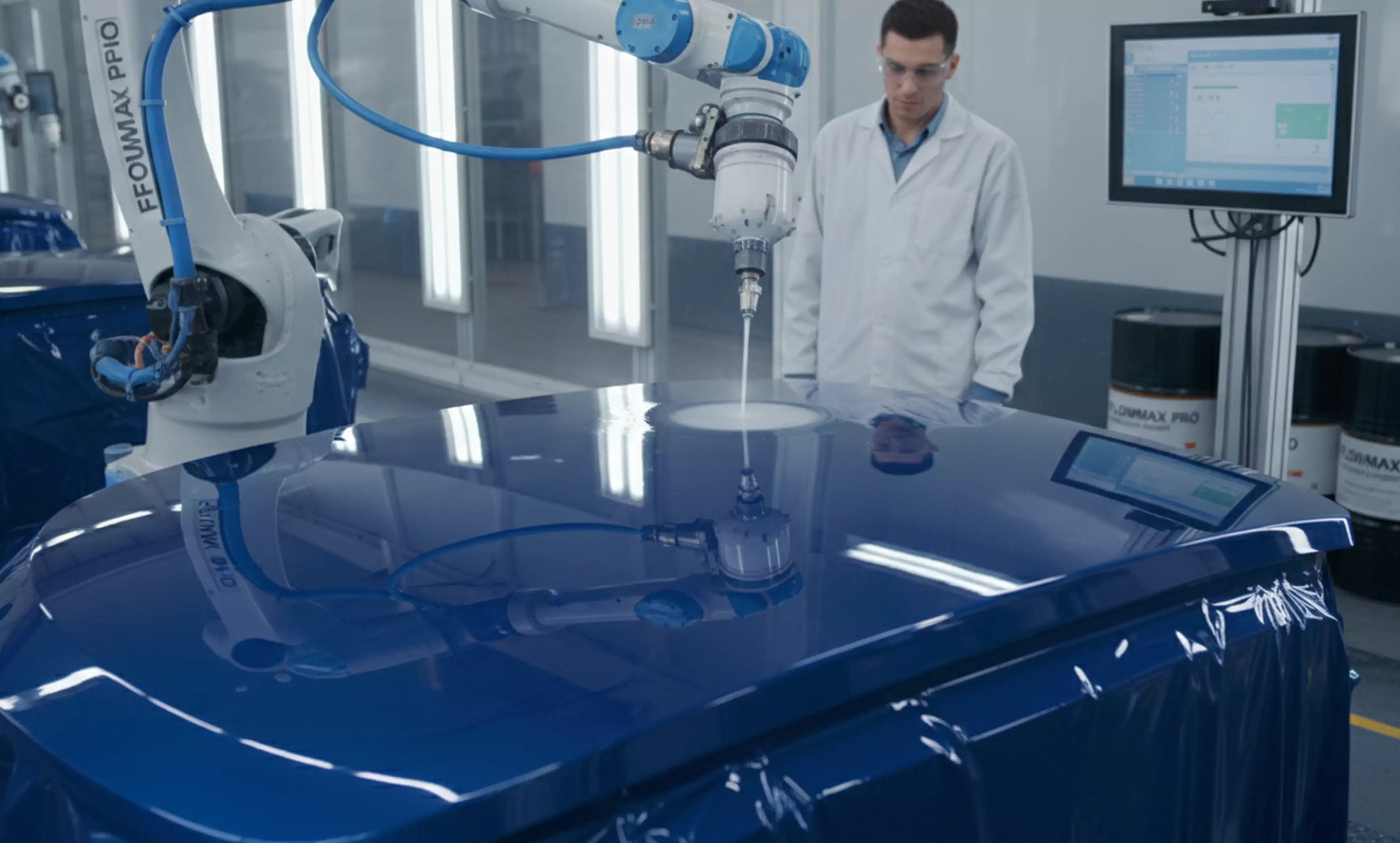
2.2 Contrôle du dosage : Moins, c'est plus - Essais graduels
Le dosage est l'étape la plus sujette aux erreurs : une quantité insuffisante n'a aucun effet ; une quantité trop importante entraîne la formation de cratères, un affaissement, une mauvaise recouvrabilité et toute une série d'autres problèmes.
Flux de travail standard en laboratoire:
- Effectuer des essais sur de petits échantillons à des gradients de 0,1%, 0,3%, 0,5% et 1,0% (sur la base du volume total de peinture).
- Inspecter la couche de film après 48 heures : vérifier la fluidité, la brillance et la présence de cratères.
- Confirmez le dosage optimal, puis effectuez un essai pilote à échelle 10x pour éviter les risques liés à la production de masse.
Référence des données: Le dosage optimal pour la plupart des systèmes se situe entre 0,3% et 0,8% ; dépasser 1,0% augmente le risque de cratérisation de 300%.
2.3 Méthodes d'application des revêtements : Conseils d'adaptation pour différents scénarios
La performance des agents d'écoulement est directement influencée par les méthodes d'application, un détail souvent négligé :
- Brossage/Roulage: Choisir des agents de nivellement acryliques à faible poids moléculaire (étalement rapide, réduction des marques de pinceau).
- Pulvérisation: Donner la priorité aux agents de nivellement modifiés à base de silicone (faible tension superficielle, étalement rapide, minimise la peau d'orange).
- Revêtement vertical: Composé mixte à base de solvant + acrylique Agents de nivellement (empêchent l'affaissement et maintiennent la brillance).
2.4 Techniques de mélange : L'uniformité de la dispersion est essentielle
Dans de nombreux cas, les agents de nivellement échouent non pas en raison d'une mauvaise qualité du produit, mais d'un mélange inadéquat. Mes normes opérationnelles sur site :
- Vitesse de mélange: 300-500 r/min (une vitesse trop élevée introduit des bulles d'air ; une vitesse trop faible entraîne une dispersion inégale).
- Temps de mélange: Régler en fonction du type d'agent d'écoulement :
- Mélange à base de solvants : 3-5 minutes (facile à disperser).
- À base d'acrylique/silicone : 5-8 minutes (dispersion complète requise pour les produits à haut poids moléculaire).
- Note: Laisser reposer le mélange pendant 10 minutes avant la construction afin de libérer les bulles d'air générées pendant le mélange.
III. 3 points douloureux à haute fréquence et solutions pour l'utilisation d'agents de flux
3.1 Mauvaise recouvrabilité : Équilibrer le débit et la recouvrabilité
C'est le problème le plus courant, en particulier avec les agents de nivellement à base de silicone. Mes solutions :
- Donner la priorité aux agents de nivellement acryliques avec des groupes -OH/-COOH (recouvrabilité optimale).
- Si les agents à base de silicone sont obligatoires, choisir des modèles modifiés par du polyéther ou de l'acrylique et limiter le dosage à ≤0,5%.
- Validation : Effectuer un essai cyclique "couche-sèche-revêtement" pour vérifier l'absence de plis et de cratères dans la deuxième couche.
3.2 Cratérisation : L'agent d'écoulement est-il mal choisi ?
La formation de cratères est due à deux causes principales : incompatibilité entre l'agent d'écoulement et le revêtement ou dosage excessif. Suivez les étapes suivantes pour résoudre le problème :
- Méthode d'élimination: Appliquer un petit mélange de peinture et d'agent d'écoulement sur une lame de verre ; les cratères sur les bords indiquent une incompatibilité.
- Plan d'ajustement: Changer de type de modification (par exemple, remplacer le silicone par un polyéther modifié) ou réduire le dosage (réduire de 0,2% à chaque fois).
- Étude de cas: Nous avons résolu le problème de la formation de cratères dans les revêtements en polyuréthane en remplaçant les agents de nivellement à base de silicone par des agents acryliques et en réduisant le dosage de 0,8% à 0,4%.
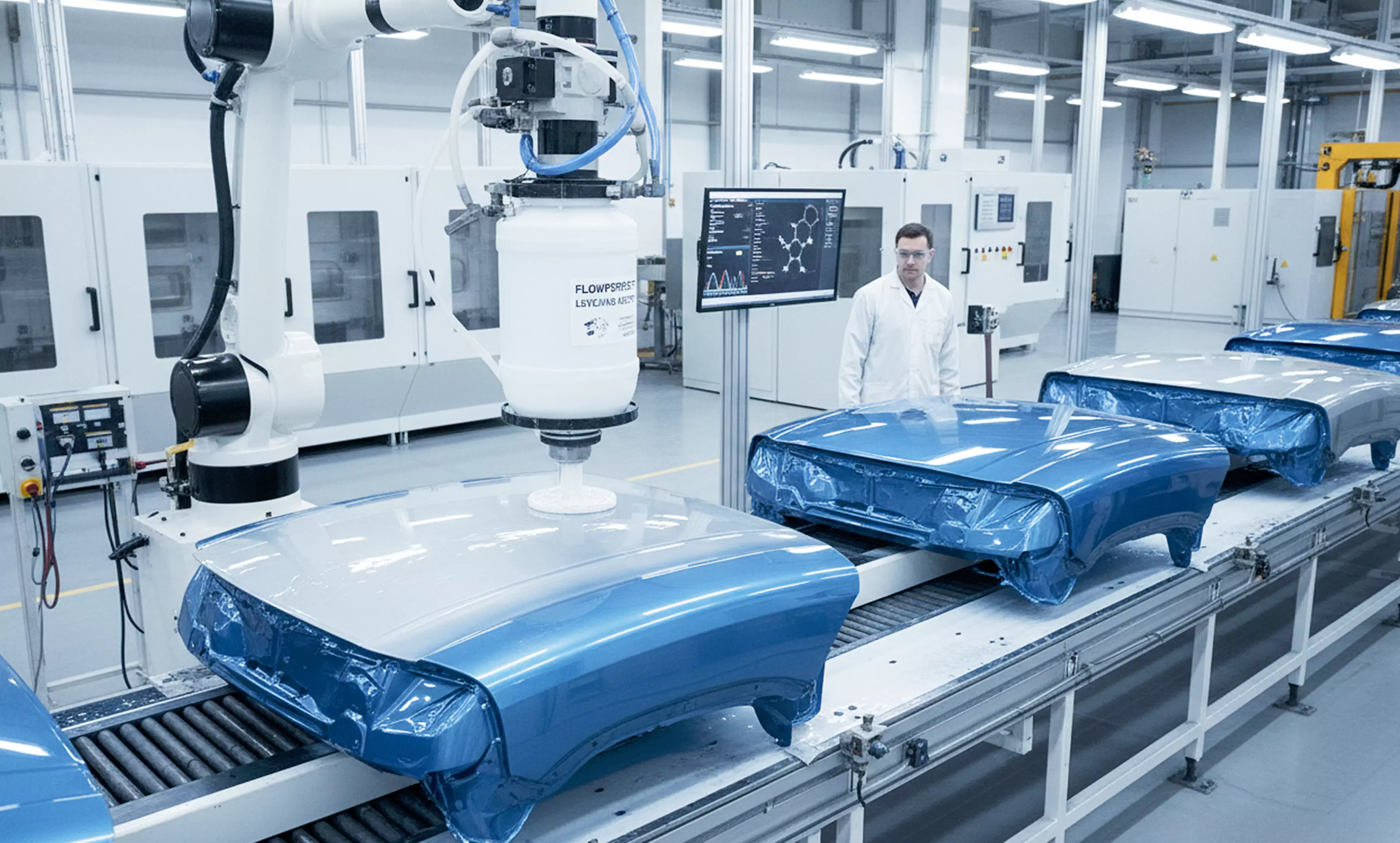
Agent de nivellement
3.3 Tests de compatibilité : 3 méthodes de validation rapide
De nombreux utilisateurs trouvent que les tests de compatibilité sont fastidieux. Trois méthodes simples suffisent :
- Méthode de revêtement des lames de verre: Appliquer le mélange sur une lame de verre ; pas de cratères ou de décollement des bords après 24 heures = qualifié.
- Test de stabilité au stockage: Placer dans un four de 50℃ pendant 7 jours ; pas de précipitation/couche flottante = qualifié.
- Test de changement de brillance: Variation de brillance avant/après l'ajout ≤5% (évite la perte de brillance due à une mauvaise compatibilité).
IV. Tendances futures : Développement d'agents d'écoulement multifonctionnels
Avec des réglementations environnementales plus strictes, les agents de nivellement monofonctionnels ne peuvent plus répondre aux exigences du marché. Je développe actuellement multifonctionnel Agents de nivellement (fluidité + résistance aux rayures + résistance aux taches) par copolymérisation par greffage d'acrylates et de silicones modifiés par du fluor. Ces agents maintiennent les performances d'écoulement tout en renforçant la résistance aux rayures et aux taches du film.
Ces agents de nivellement multifonctionnels deviendront la norme, en particulier pour les revêtements de meubles haut de gamme, les revêtements de finition automobile et d'autres secteurs. Si vous avez des besoins en la matière, n'hésitez pas à prendre contact avec moi : nous pourrons étudier ensemble des solutions personnalisées.
Clôture : Quels sont les problèmes rencontrés par les agents de flux ?
Il n'existe pas de normes absolues pour la sélection et l'utilisation des agents d'écoulement, mais seulement les solutions les plus adaptées à votre système. Toutes les informations présentées ici sont le fruit d'années d'expériences en laboratoire et de projets pratiques.
Avez-vous été confronté à des problèmes d'écoulement insolubles dans le cadre de votre travail ? Par exemple, la sélection de systèmes de revêtement spéciaux, les défis de construction dans des environnements extrêmes, ou l'équilibre entre la recouvrabilité et la performance d'écoulement ? Laissez un commentaire ci-dessous et discutons ensemble des solutions !