
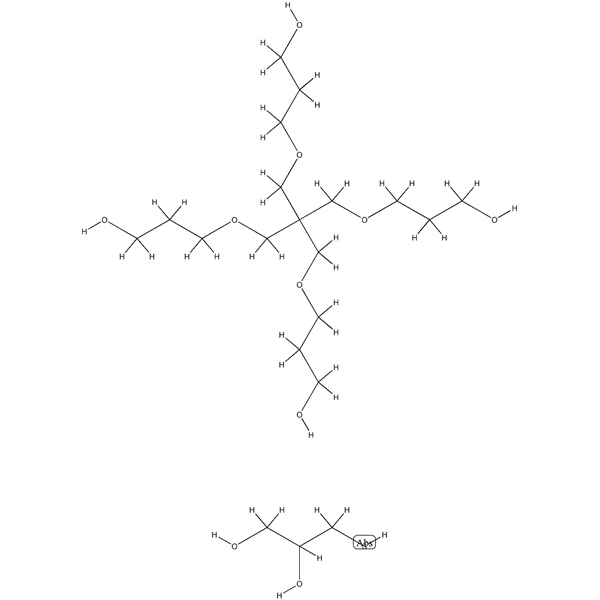
Description
PM839 CAS 72244-98-5
| Appearance | Colorless transparent liquid |
| Viscosity (25℃) , mPas | 12000~14000 |
| APHA Color | ≤20 |
PM839 Usage:
In the field of material science, PM839 has emerged as a low-temperature fast curing agent for epoxy resins. Its appearance is pure and colorless, or a transparent liquid with a hint of yellowish color. Its viscosity ranges from 12,000 to 14,000 mPa-s at room temperature, i.e., 25°C. This viscosity characteristic makes it useful in a wide range of application scenarios. Its sulfhydryl content is impressive at ≥12 and its coloration is controlled at ≤20, which ensures both performance and good appearance in use.
In terms of practical applications, PM839 is frequently seen in various industrial and electronic fields. In the case of 5-minute AB glue, for example, it can achieve efficient bonding results in a very short time, which meets the needs of rapid production. In the field of electronic adhesives, it provides a reliable guarantee for the fixing and encapsulation of electronic components. In the application of metal epoxy putty, it can effectively fill the tiny gaps on the metal surface and enhance the stability and durability of the metal structure. In the production of electronic thermal conductive adhesive, PM839 not only has good bonding performance, but also can realize efficient heat conduction, to ensure the stability of electronic equipment in the process of operation. In the field of anticorrosive coatings, it provides a strong protective barrier for metal surfaces against the erosion of the external environment.
The field of silicon rod cutting adhesive deserves special mention. Silicon rod cutting, as a key link in the photovoltaic industry, requires high performance of cutting adhesives, and PM839 silicon rod cutting adhesive shows excellent bonding strength and flexibility after curing. From the perspective of historical development, the early silicon rod cutting adhesive due to poor performance, resulting in silicon rod cutting process often appear to fall, edge chips and cracks and other problems, seriously affecting the yield of silicon rod cutting. The appearance of PM839 has greatly improved this situation. For example, in the production line of a large photovoltaic enterprise, after the use of PM839 cutting adhesive, the yield of silicon bar cutting from the original 70% to more than 90%, which not only improves the production efficiency, but also reduces the production cost. Once the silicon rods have been cut, the silicon wafers coated with the adhesive can be quickly and easily separated by immersing them in warm water, which also facilitates large-scale industrial production.
The photovoltaic industry is in a golden age of growth as the global demand for clean energy grows. According to relevant data, the annual growth rate of the global photovoltaic industry has reached more than 20% in the past decade. In this development trend, the fine degree of silicon rod cutting requirements are also rising, which will undoubtedly promote the market demand for silicon rod cutting adhesive shows a rapid growth trend. According to the forecast of market research institutions, in the next five years, the market size of silicone rod cutting adhesive is expected to realize double growth.
In addition, PM839 also plays an important role in the packaging field of electronic and electrical production. As a key process in the production of electronic and electrical appliances, the quality of packaging is directly related to the final quality and service life of the product. In the packaging process of electronic components, packaging adhesive bears the important responsibility of protecting electronic components. From the scientific principle, it can effectively prevent the intrusion of moisture, avoiding the electronic components short-circuit or damage due to moisture. At the same time, it can also block dust and harmful gases to prevent these impurities from corroding electronic equipment or circuit boards. For example, in some electronic enterprises in coastal areas, due to the high humidity of the air, if high-quality packaging adhesives are not used, the failure rate of electronic components will be significantly higher. In addition, packaging adhesives can also slow down or offset the effects of external forces and vibrations on electronic components through their own cushioning effect, thus greatly improving the stability of electronic equipment. As the demand for smart phones, smart homes and other electronic and electrical products continues to climb globally, China, as the world’s largest electronics production and consumption market, is also expanding its market size. According to statistics, China’s electronics market has grown at an annual rate of about 15% over the past five years, which will further drive the steady growth in demand for adhesives for electrical and electronic products.
PM839 Package
25kg/drum or 220 kg/drum
PM839 Storage:
Being kept in dry, clean warehouse with well ventilation.
Avoid exposing to light and heating.
Protecting the product from leakage, rain and insolation during transportation.
Contact Us Now!
If you need Price and Sample Testing, please fill in your contact information in the form below, we will usually contact you within 24 hours. You could also email me info@changhongchemical.com during working hours ( 8:30 am to 6:00 pm UTC+8 Mon.~Sat. ) or use the website live chat to get prompt reply.
| CHLUMICRYL® AAEM Monomer | CAS 21282-97-3 | Acetylacetoxyethyl methacrylate |
| CHLUMICRYL® ADAMA Monomer | CAS 16887-36-8 | 1-Adamantyl Methacrylate |
| CHLUMICRYL® AMA Monomer | CAS 96-05-9 | Allyl methacrylate |
| CHLUMICRYL® BDDMA | CAS 2082-81-7 | 1,4-Butanedioldimethacrylate |
| CHLUMICRYL® BDDMP Monomer | CAS 92140-97-1 | 1,4-Butanediol Di(3-mercaptopropionate) |
| CHLUMICRYL® Bis-GMA Monomer | CAS 1565-94-2 | Bisphenol A Glycidyl Methacrylate |
| CHLUMICRYL® BZA Monomer | CAS 2495-35-4 | benzyl prop-2-enoate |
| CHLUMICRYL® BZMA Monomer | CAS 2495-37-6 | Benzyl methacrylate |
| CHLUMICRYL® CHA Monomer | CAS 3066-71-5 | cyclohexyl prop-2-enoate |
| CHLUMICRYL® CHMA | CAS 101-43-9 | Cyclohexyl methacrylate |
| CHLUMICRYL® DCPA Monomer | CAS 12542-30-2 | Dihydrodicyclopentadienyl Acrylate |
| CHLUMICRYL® DCPEMA Monomer | CAS 68586-19-6 | Dicyclopentenyloxyethyl Methacrylate |
| CHLUMICRYL® DCPMA Monomer | CAS 30798-39-1 | Dihydrodicyclopentadienyl methacrylate |
| CHLUMICRYL® DEAEA Monomer | CAS 2426-54-2 | 2-(diethylamino)ethyl prop-2-enoate |
| CHLUMICRYL® DEAM Monomer | CAS 105-16-8 | Diethylaminoethyl methacrylate |
| CHLUMICRYL® DMAEA Monomer | CAS 2439-35-2 | Dimethylaminoethyl acrylate |
| CHLUMICRYL® DMAEMA | CAS 2867-47-2 | N,M-Dimethylaminoethyl methacrylate |
| CHLUMICRYL® DMES | CAS 3570-55-6 | 2,2′-Thiodiethanethiol/Bis(2-mercaptoethyl) sulfide/Dimercapto diethyl sulfide/THIOCURE DMDS/Polythiol DMDS/Mercaptan DMDS |
| CHLUMICRYL® DMPT | CAS 131538-00-6 | THIOCURE DMPT |
| CHLUMICRYL® ECPMA Monomer | CAS 266308-58-1 | 1-Ethylcyclopentyl Methacrylate |
| CHLUMICRYL® EEMA | CAS 2370-63-0 | 2-ethoxyethyl 2-methylprop-2-enoate |
| CHLUMICRYL® EGDMA Monomer | CAS 97-90-5 | Ethylene glycol dimethacrylate |
| CHLUMICRYL® EGDMP Monomer | CAS 22504-50-3 | Ethylene glycol Bis(3-mercaptopropionate) |
| CHLUMICRYL® EHMA | CAS 688-84-6 | 2-Ethylhexyl methacrylate |
| CHLUMICRYL® EMA Monomer | CAS 97-63-2 | Ethyl methacrylate |
| CHLUMICRYL® EO10-BPADA Monomer | CAS 64401-02-1 | ethoxylated bisphenol A diacrylate |
| CHLUMICRYL® EO4-BPADA Monomer | CAS 64401-02-1 | ethoxylated bisphenol A diacrylate |
| CHLUMICRYL® HDCPA Monomer | CAS 79637-74-4 | Dicyclopentenyl acrylate (hydrogenation) |
| CHLUMICRYL® IBA Monomer | CAS 106-63-8 | Isobutyl acrylate |
| CHLUMICRYL® i-BMA | CAS 97-86-9 | Isobutyl methacrylate |
| CHLUMICRYL® MCPMA Monomer | CAS 178889-45-7 | 1-Methylcyclopentyl Methacrylate |
| CHLUMICRYL® MEMA | CAS 6976-93-8 | 2-Methoxyethyl Methacrylate |
| CHLUMICRYL® MPEG Monomer | CAS 26915-72-0 | MPEG Monomer |
| CHLUMICRYL® Muscomer Tricyclodecanedimethanol | CAS 26896-48-0 | Muscomer Tricyclodecanedimethanol |
| CHLUMICRYL® N,N-Dimethyl Acrylamide | CAS 2680-03-7 | N,N-Dimethyl Acrylamide |
| CHLUMICRYL® n-BMA | CAS 97-88-1 | n-Butyl methacrylate |
| CHLUMICRYL® PETMP Monomer | CAS 7575-23-7 | PETMP Monomer |
| CHLUMICRYL® Polythiol PM839 | CAS 72244-98-5 | Polythiol PM839 |
| CHLUMICRYL® TBAEMA | CAS 3775-90-4 | 2-(Tert-butylamino)ethyl methacrylate |
| CHLUMICRYL® THFMA Monomer | CAS 2455-24-5 | Tetrahydrofurfuryl methacrylate |
| CHLUMICRYL® ACMO Monomer | CAS 5117-12-4 | 4-acryloylmorpholine |
| CHLUMICRYL® DCPEOA Monomer | CAS 65983-31-5 | Dicyclopentenyloxyethyl Acrylate |
| CHLUMICRYL® DI-TMPTA Monomer | CAS 94108-97-1 | DI(TRIMETHYLOLPROPANE) TETRAACRYLATE |
| CHLUMICRYL® DPGDA Monomer | CAS 57472-68-1 | Dipropylene Glycol Dienoate |
| CHLUMICRYL® DPHA Monomer | CAS 29570-58-9 | Dipentaerythritol hexaacrylate |
| CHLUMICRYL® EO3-TMPTA Monomer | CAS 28961-43-5 | Ethoxylated trimethylolpropane triacrylate |
| CHLUMICRYL® EOEOEA Monomer | CAS 7328-17-8 | 2-(2-Ethoxyethoxy)ethyl acrylate |
| CHLUMICRYL® GPTA ( G3POTA ) Monomer | CAS 52408-84-1 | GLYCERYL PROPOXY TRIACRYLATE |
| CHLUMICRYL® HDDA Monomer | CAS 13048-33-4 | Hexamethylene Diacrylate |
| CHLUMICRYL® HEMA Monomer | CAS 868-77-9 | 2-hydroxyethyl methacrylate |
| CHLUMICRYL® HPMA Monomer | CAS 27813-02-1 | 2-Hydroxypropyl methacrylate |
| CHLUMICRYL® IBOA Monomer | CAS 5888-33-5 | Isobornyl acrylate |
| CHLUMICRYL® IBOMA | CAS 7534-94-3 | Isobornyl methacrylate |
| CHLUMICRYL® IDA Monomer | CAS 1330-61-6 | Isodecyl acrylate |
| CHLUMICRYL® IPAMA Monomer | CAS 297156-50-4 | 2-isopropyl-2-adamantyl methacrylate |
| CHLUMICRYL® LMA Monomer | CAS 142-90-5 | Lauryl methacrylate |
| CHLUMICRYL® NP-4EA Monomer | CAS 50974-47-5 | (4) ethoxylated nonylphenol |
| CHLUMICRYL® NPGDA Monomer | CAS 2223-82-7 | Neopentyl glycol diacrylate |
| CHLUMICRYL® PDDA | Phthalate diethylene glycol diacrylate | |
| CHLUMICRYL® PEGDA Monomer | CAS 26570-48-9 | Polyethylene Glycol Diacrylate |
| CHLUMICRYL® PEGDMA Monomer | CAS 25852-47-5 | Poly(ethylene glycol) dimethacrylate |
| CHLUMICRYL® PETA Monomer | CAS 3524-68-3 | PETA; 2-(Hydroxymethyl)-2-[[(1-oxoallyl)oxy]methyl]-1,3-propanediyl diacrylate; 3-(acryloyloxy)-2-[(acryloyloxy)methyl]-2-(hydroxymethyl)propyl acrylate |
| CHLUMICRYL® PHEA Monomer | CAS 48145-04-6 | 2-PHENOXYETHYL ACRYLATE |
| CHLUMICRYL® PO2-NPGDA | CAS 84170-74-1 | |
| CHLUMICRYL® TEGDMA Monomer | CAS 109-16-0 | Triethylene glycol dimethacrylate |
| CHLUMICRYL® THFA Monomer | CAS 2399-48-6 | Tetrahydrofurfuryl acrylate |
| CHLUMICRYL® TMPTA Monomer | CAS 15625-89-5 | Trimethylolpropane triacrylate |
| CHLUMICRYL® TMPTMA Monomer | CAS 3290-92-4 | Trimethylolpropane trimethacrylate |
| CHLUMICRYL® TPGDA Monomer | CAS 42978-66-5 | Tripropylene glycol diacrylate |
| CHLUMICRYL® UV Functional Monomers | Acrylic Monomers |



Xavier Thompson –
Wonderful experience! The service was top-notch, the product quality exceeded my expectations.