
Endüstriyel UV Kürlemede Zorluklar ve Fırsatlar
UV kaplamalar, mürekkepler, yapıştırıcılar ve 3D baskı gibi endüstriyel alanlarda, formülasyon mühendisleri her gün temel bir ikilemle karşı karşıya kalmaktadır: üretim verimliliğini korurken üstün nihai performans nasıl elde edilir? Fotobaşlatıcılarfotokürlenebilir sistemlerin "motoru" olarak kürlenme hızını, kürlenme derinliğini, malzeme özelliklerini ve nihai ürünün güvenilirliğini doğrudan belirler.
Geleneksel seçim yöntemleri genellikle yalnızca ürün parametrelerini karşılaştırmaya odaklanır ve gerçek dünyadaki üretim senaryolarındaki karmaşık değişkenleri ihmal eder. Bu kılavuz, 20 endüstriyel senaryonun temel sorunlu noktalarını inceleyerek Changhong Chemical'ın "teknoloji odaklı senaryo adaptasyonu" stratejisiyle farklı endüstriler için nasıl kesin çözümler sunduğunu ortaya koyacaktır.

Bölüm 1: Temel İlkeler ve Yaygın Seçim Tuzakları
S1: Serbest radikal ve katyonik fotobaşlatıcılar arasındaki temel farklar nelerdir? Pratik uygulamalarda bunlar arasında nasıl seçim yapılır?
Senaryo Sıkıntı Noktası: Mühendisler genellikle yeni formülasyonlar geliştirirken, özellikle de ürünün birden fazla performans gereksinimini dengelemesi gerektiğinde bu iki sistem arasında seçim yapmakta zorlanırlar.
Derinlemesine Analiz:
Serbest radikal sistemler (TPO, 819 gibi) hızlı reaksiyon hızlarına ve daha düşük maliyetlere sahiptir, ancak oksijene duyarlıdır ve daha yüksek kürlenme büzülme oranına sahiptir (genellikle 5-10%). Katyonik sistemler (iyodonyum tuzları, sülfonyum tuzları gibi) daha düşük kürlenme büzülmesine (1-3%) sahiptir, oksijen tarafından inhibe edilmez ve güçlü kürlenme sonrası etkilere sahiptir, ancak neme duyarlıdır ve daha yavaş bir ilk reaksiyon hızına sahiptir.
Changhong Çözümü:
Sadece belirli bir ürün önermekle kalmıyor, bunun yerine dört aşamalı bir seçim matrisi oluşturuyoruz:
Substrat Uyumluluk Testi: Plastik, metal ve cam gibi farklı yüzeylerde yapışma performansını önceden test edin.
İyileştirme Ortamı Değerlendirmesi: Üretim hattının nitrojen ortamında mı, hava ortamında mı yoksa kısmen izole edilmiş bir ortamda mı olduğunu analiz edin.
Nihai Performans Gerekliliklerinin Önceliklendirilmesi: Hava koşullarına dayanıklılık, esneklik ve kimyasal direnç gibi gereksinimleri önceliğe göre sıralayın.
Karma Sistem Tasarımı: Endüstriyel uygulamaların 70%'si aslında karma sistemler kullanmaktadır. Örneğin, CHG-8010 serimiz serbest radikal ve katyonik fotobaşlatıcıları moleküler düzeyde birleştirerek hem hızlı yüzey kuruması hem de 4%'nin altına kadar kontrol edilen büzülme ile tam derin kürleme sağlar.
S2: Su bazlı UV sistemleri için fotobaşlatıcı seçimi neden bu kadar zor? Migrasyon problemleri temelde nasıl çözülebilir?
- Senaryo Sıkıntı Noktaları: Su bazlı UV kaplamalar ahşap ve plastik kaplama alanlarında hızla büyümektedir, ancak geleneksel yağda çözünen fotobaşlatıcılar sulu fazda zayıf dağılabilirliğe ve özellikle gıda ambalajı ve oyuncaklar gibi hassas uygulamalarda yüksek migrasyon risklerine sahiptir.
- Gerçek Sektör Örneği: AB'ye ihracat yapan bir çocuk mobilyası şirketi UV kaplama migrasyon testlerinde defalarca başarısız oldu ve önemli para cezalarıyla karşı karşıya kaldı.
Changhong Teknolojik Atılımı:
Suda dağılabilen bir polimer ankraj teknolojisi geliştirdik:
- CHG-W Serisi Su Bazlı Fotobaşlatıcılar: Polietilen glikol segmentleri ve karboksilik asit grupları eklenerek fotobaşlatıcımolekülleri, sulu fazda 50-100 nm'lik kararlı dispersiyonlar oluşturarak kendi kendine emülsifiye olma özelliğine sahiptir.
- Göç Engelleme Mekanizması: Polimerizasyondan sonra, ürünün aktif grupları sistemdeki çok işlevli monomerlerle çapraz bağlanarak polimer ağında "kilitli" hale gelir. Üçüncü taraf testlerine göre, 8 haftalık hızlandırılmış migrasyon testinde CHG-W803'ün migrasyon miktarı geleneksel ITX'in sadece 3%'si kadardır.
İkinci Bölüm: Üst Düzey Üretim Senaryoları için Derinlemesine Çözümler
S3: Otomotiv yapısal yapıştırıcılarının UV ile kürlenmesinde "hızlı konumlandırma" ve "nihai mukavemet" arasındaki çatışma nasıl dengelenir?
Senaryo Sıkıntı Noktası: Otomotiv beyaz gövde yapısal yapıştırıcılarının 30 saniye içinde (üretim hattı döngü süresini karşılamak için) ilk konumlandırmaya ulaşması gerekir, ancak nihai mukavemetin tam olarak gelişmesi 24 saat sürer ve sonraki süreçleri etkiler.
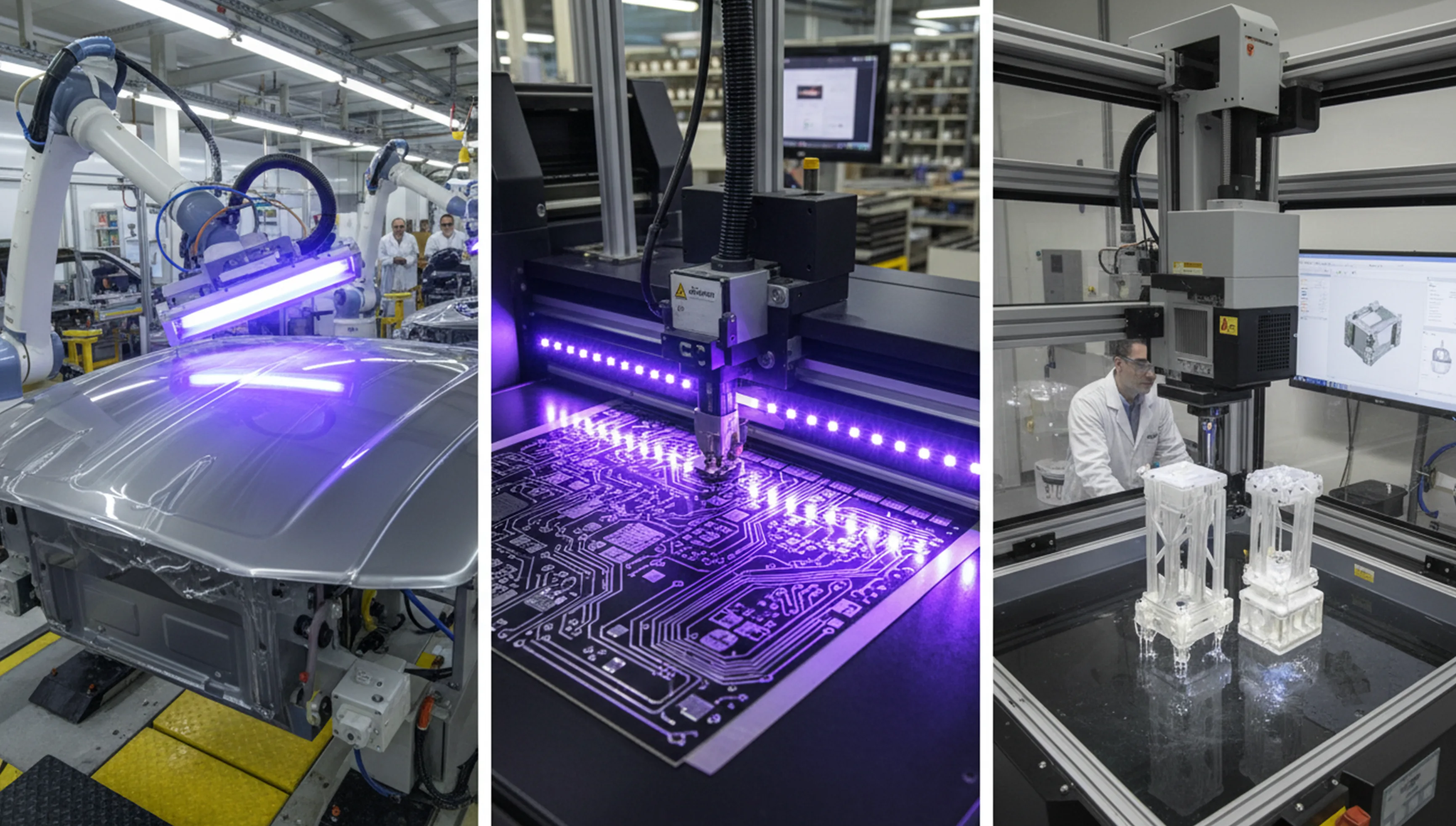
Çift aşamalı tetiklemeli bir kürleme sistemi geliştirdik:
Birinci Aşama: Hızlı Konumlandırma (0-30 saniye)
- CHG-A501 yüksek aktiviteli asilfosfin oksit kullanıldığında, jelleşme 1500mW/cm² LED ışık kaynağı altında 3 saniye içinde gerçekleşir.
- İlk kesme mukavemeti 2MPa'ya ulaşarak parça taşıma gereksinimlerini karşılar.
İkinci Aşama: Derin Güçlendirme (30 saniye - 24 saat)
- Sistem, ortam sıcaklığında yavaş reaksiyona giren CHG-A502 latent katyonik başlatıcı içerir.
- Tescilli CH-Monomer A10 monomerimiz ile birleştiğinde, iç içe geçen bir ağ yapısı oluşur.
- 24 saat sonra, gerilme mukavemeti 35MPa'ya ulaşır ve darbe tokluğu geleneksel çözümlerden 50% daha yüksektir.
Süreç Adaptasyonunda Öne Çıkanlar:
Müşterilerimize üretim hatları için bir ışık yoğunluğu-zaman eğrisi optimizasyonu çözümü sunuyoruz:
İlk istasyon: Yüksek ışık yoğunluğu (2000mW/cm²) kısa süreli ışınlama (5 saniye) - yüzey kürlenmesini sağlar.
İkinci istasyon: Orta ışık yoğunluğu (800mW/cm²) uzun süreli ışınlama (25 saniye) - derin kürlenme sağlar.
Doğal koşullar altında: Gizli sistem tepki vermeye devam ederek gücü en üst düzeye çıkarır.
Bölüm 3: Özel Uygulamalar ve Ortaya Çıkan Teknolojik Zorluklar
Sorun Açıklaması: Elektronik ambalajlarda kullanılan UV ile kürlenebilen yapıştırıcılar, yeniden akış lehimleme sırasında sararma, çatlama ve kabarcıklanma yaşayarak çip ambalajının bozulmasına neden olur.
Bu zorluğu üç boyutta ele alıyoruz:
| Geleneksel yaklaşım: | Changhong Çözümü: | Performans iyileştirmeleri: |
| Sıradan serbest radikal başlatıcı | Katyonik + epoksi reçine sistemi | Isı bozulma sıcaklığı +50 ℃ artmıştır |
| Basit inorganik dolgu maddesi ilavesi | Yüzey işlemli nano-SiO₂ gradyan dağılımı | 60% ile azaltılmış termal genleşme katsayısı |
| Tek noktadan kürleme | Gradyan aydınlatma + kürleme sonrası işlem paketi | 70% ile iç gerilim azaltıldı |
S4: Kalın kaplamalar (>500μm) UV ile kürlenirken yüzeyde kürlenme ancak altta eksik kürlenme sorunu nasıl çözülür?
Senaryo Sıkıntı Noktası: Endüstriyel korozyon önleyici kaplamalar ve zemin kaplamaları gibi kalın kaplama uygulamalarında, geleneksel UV sistemleri yalnızca en üstteki 200-300μm'lik kısmı iyileştirebilir ve alttaki reçinenin yeterince reaksiyona girmemesine neden olur.
Çözümümüz ışık yoğunluğu zayıflama telafisi prensibine dayanmaktadır:
Teknik Çekirdek: Gradyan Absorpsiyon Fotobaşlatıcı Sistem
Yüzey Katmanı (0-200μm): CHG-D301 - Yüksek emilim oranı, "koruyucu tabaka" oluşturmak için hızlı reaksiyon
Orta Katman (200-400μm): CHG-D302 - Orta emilim oranı, reaksiyona devam etmek için yüzey katmanına nüfuz eder
Alt Katman (400-500μm+): CHG-D303 - Düşük emilim oranı, artık ışığı verimli bir şekilde kullanır
Süreç inovasyonu ile birlikte:
Çift dalga boylu ışık kaynağı çözümü: Müşterilere 395nm + 365nm kombine LED ışık kaynağı kullanmalarını öneriyoruz.
Viskozite ayarlama teknolojisi: CHG-D310 akış katkımızın eklenmesi, sistem viskozitesini azaltarak fotobaşlatıcının kürleme işlemi sırasında difüzyon yoluyla yeniden dağılmasını sağlar.
Sonuç: 500μm şeffaf kaplamada, alt kürlenme derecesi geleneksel 65%'den 92%'ye yükselmiş ve kalem sertliği 2H.H'ye ulaşmıştır.
Q5: 3D baskı ışığa duyarlı reçineler yüksek hassasiyet ve düşük büzülme taleplerini aynı anda nasıl karşılayabilir?
Senaryo Sıkıntı Noktası: Özellikle diş modellerinde ve hassas parça baskısında 0,1%'lik bir büzülme oranı montaj hatasına yol açabilir.
Malzemeden ekipmana ve süreçlere kadar tüm zinciri optimize ediyoruz:
Malzeme Seviyesi:
Düşük büzülmeli monomer tasarımı: Kürlenme sırasında halka açılma polimerizasyonuna uğrayan spirosiklik ester monomerlerin geliştirilmesi ve hacim genişlemesinin büzülmeyi telafi etmesi.
CHG-3D701 başlatıcı: Özellikle 405nm LED lazerler için optimize edilmiştir ve 0,85 kuantum verimliliğine ulaşır (endüstri ortalaması 0,65).
Ekipman İşbirliği:
Ana akım 3D yazıcı üreticileriyle bir parametre paylaşım kütüphanesi kurarak farklı ekipman markaları (Formlabs ve UnionTech gibi) için önceden optimize edilmiş pozlama parametresi paketleri sağladı.
Pratik Vaka: Diş Tacı Baskısı
Geleneksel Reçine: Küçülme oranı 1,8%, kenar hassasiyet sapması ±50μm
CHG-3D701 Sistem: Küçülme oranı 0,3%, kenar hassasiyeti ±15μm
40% ile işlem sonrası süre kısalır (ikincil termal kürleme gerekmez)
Bölüm 4: Süreç Adaptasyonu ve Üretim İstikrarı
S6: Farklı ışık kaynakları (cıva lambaları, LED'ler, lazerler) için ilgili fotobaşlatıcılar nasıl seçilmelidir?
Senaryo Sıkıntı Noktası: Fabrikalar LED aydınlatmaya geçtiklerinde, orijinal formüllerinin kürleme verimliliğinin 30-50% oranında azaldığını görürler.
En kapsamlı ışık kaynağı test platformuna sahibiz:
- Geleneksel cıvalı lambalar: 200-450nm tam spektrum
- LED ışık kaynakları: 365nm, 385nm, 395nm, 405nm, 415nm ana dalga boyları
- Özel ışık kaynakları:Excimer lambalar (172nm, 222nm), lazer ışık kaynakları (355nm, 532nm)
Seçim Kılavuzu:
- Cıvalı lambadan LED'e dönüşüm: Anahtar, uzun dalga boylu fotobaşlatıcıların seçimidir. Farklı emilim dalga boylarına sahip üç fotobaşlatıcı örneği içeren bir CHG-LED dönüşüm değerlendirme paketi sunarak müşterilerin en uygun çözümü hızlı bir şekilde test etmelerini sağlıyoruz.
- Çoklu dalga boyu sinerjisi:Karmaşık şekilli iş parçalarında, gölgeli alanlarda bile yeterli kürlenmeyi sağlamak için çift dalga boylu bir fotobaşlatıcı sistemi (CHG-DW401+DW402) önerilir.
- Işık yoğunluğu zayıflama telafisi: LED ışık kaynakları 2000 saatlik kullanımdan sonra yaklaşık 10-15% ışık yoğunluğu zayıflaması yaşar. CHG-LA serimiz daha geniş bir "doz-kürlenme derecesi" platformuna sahiptir ve ışık kaynağının kullanım ömrü boyunca kürlenme kararlılığı sağlar.
S7: Yüksek pigment içerikli sistemlerde (renkli boyalar ve siyah UV mürekkepler gibi) yeterli kürlenme nasıl sağlanır?
Senaryo Sıkıntı Noktası: Siyah UV mürekkeplerde, karbon siyahı ultraviyole ışığın çoğunu emerek kürlenmeyi son derece zorlaştırır. Bu genellikle aşırı miktarda fotobaşlatıcı eklenmesini gerektirir ve bu da koku ve migrasyon sorunlarına yol açar.
Bir foton yukarı dönüşüm ve saçılma kullanım teknolojisi geliştirdik:
Foton Yeniden Dağıtım Mekanizması:
CHG-P401: Kısa dalga boylarını (örn. 365nm) emen ve uzun dalga boylarını (örn. 405nm) yayan floresan özelliklere sahiptir.
CHG-P402:saçılma maddesi pigment partiküllerinin yüzeyine kaplanarak doğrudan ışığı saçılan ışığa dönüştürür ve ışık yolunu arttırır.
Katmanlı Kürleme Tasarımı:
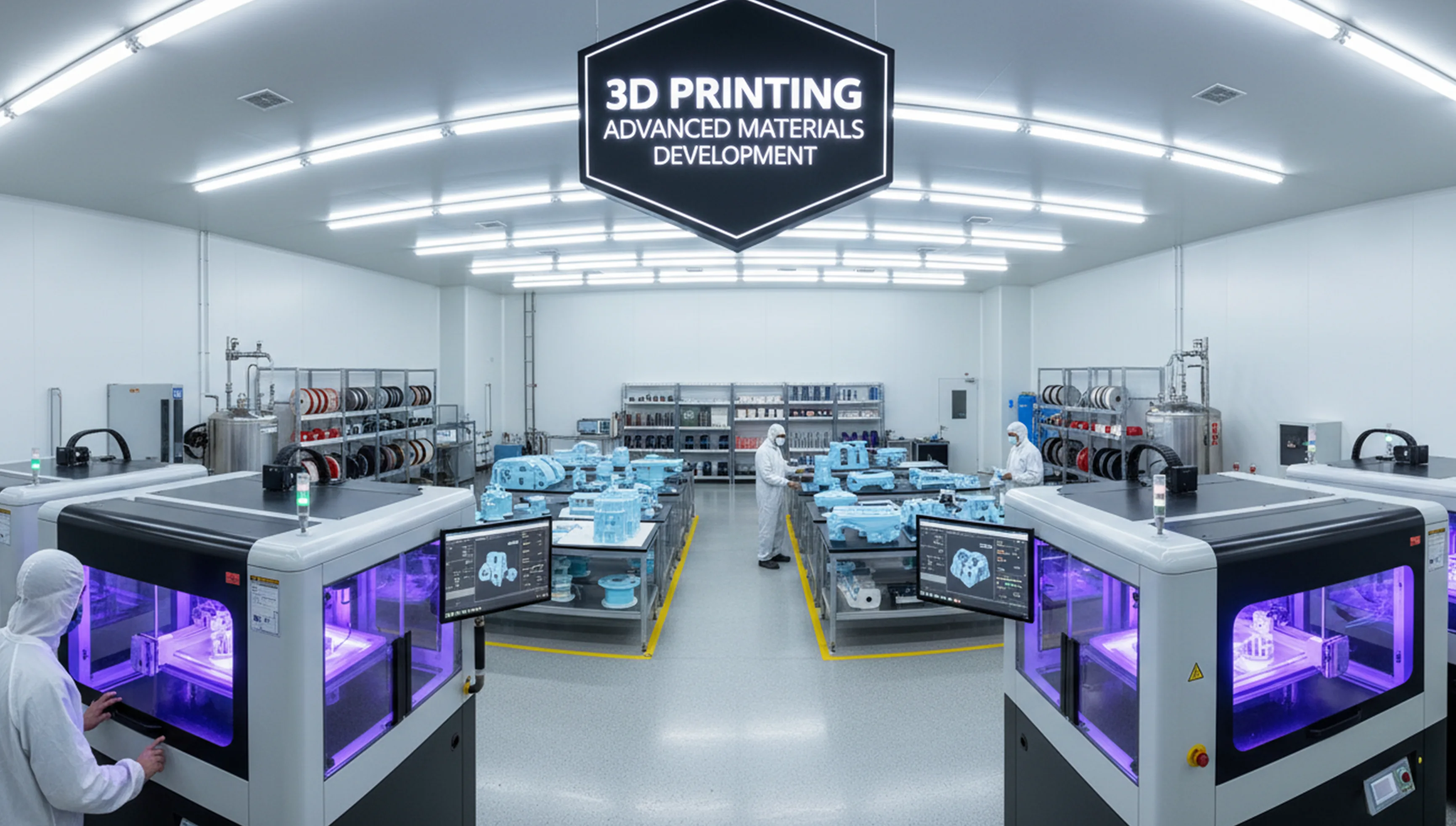
Geleneksel Çözüm: Tek tip fotobaşlatıcı ilavesi - yüzey katmanında aşırı emilim, alt katmanda yetersiz emilim.
Changhong Çözümü: Gradyan dağıtım tasarımı
- Yüzey katmanı: Düşük konsantrasyon, aşırı kürlenmeyi ve kırılganlığı önler
- Orta katman: Orta konsantrasyon, çekirdek reaksiyon bölgesi
- Alt katman: Işık yoğunluğu zayıflamasını telafi eden yüksek konsantrasyon
Gerçek sonuçlar:
Siyah UV mürekkep (5% karbon siyahı içeriği) 50μm kalınlığında tamamen kürlenir.
Toplam fotobaşlatıcı kullanımı 25% azalır ve koku 2 seviye azalır.
Geliştirilmiş depolama stabilitesi (6 ay sonra viskozite artışı <5%).
Sonuç: Ürün Tedarikçisinden Teknoloji Sağlayıcısına
Yukarıdaki 20 senaryonun derinlemesine analizi sayesinde, modern UV kürleme teknolojisinin karmaşıklığının basit ürün seçiminin çok ötesinde olduğunu açıkça görebiliyoruz. Longchang Kimya"teknoloji odaklı senaryo adaptasyonu" temel stratejisi ile moleküler tasarımdan süreç uygulamasına kadar tam bağlantı destek kabiliyeti oluşturmuştur.
Temel değerlerimiz:
- Senaryoların derinlemesine anlaşılması: Sadece ürün parametreleri sağlamak değil, üretim hattınızı, son uygulamalarınızı ve gerçek zorluklarınızı anlamak.
- Tam zamanlı teknik destek: İlk danışmanlıktan istikrarlı seri üretime kadar sürekli teknik yükseltmeler ve süreç optimizasyonu sağlamak.
- Ölçülebilir performans iyileştirmeleri: Her çözüm, net performans iyileştirme göstergeleri ve doğrulama yöntemleriyle birlikte gelir.
- Sürdürülebilir maliyet optimizasyonu: Müşterilerin sadece basit fiyat indirimleri değil, teknolojik yollarla uzun vadeli maliyet avantajları elde etmelerine yardımcı olmak.
UV kürleme teknolojisinin geleceği, hassas eşleştirme ve derin işbirliğinde yatıyor. Gelin birlikte keşfedelim ve kimyanın hassasiyetini endüstriyel değere dönüştürelim.