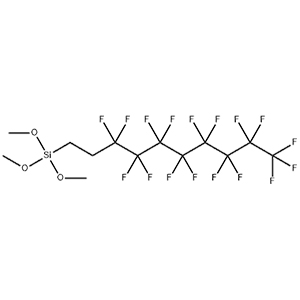
1. Surface Treatment of Glass and Optical Devices:
Used for eyeglass lenses, camera lenses, mobile phone screens, optical prisms, etc., to form ultra-thin anti-fingerprint, anti-fouling, and hydrophobic coatings that do not affect light transmittance, improving cleanliness and durability. It can also be used for self-cleaning coatings on architectural glass.
2. Surface Modification of Inorganic Materials:
Treats ceramics, stone, metals, wood, concrete, and composite materials to reduce surface energy, achieving waterproofing, oil resistance, corrosion resistance, and easy cleaning. Examples include building facades, stone decoration, metal component protection, and weathering protection for historical brick and stone structures.
3. Fluorosilicone Coatings and Coating Additives:
Used as a component in coating formulations to prepare high-performance fluorosilicone coatings for outdoor buildings, bridges, ships, and electronic appliances, improving weather resistance, wear resistance, chemical corrosion resistance, and stain resistance; it can also be used as a leveling agent and wetting agent to improve coating application and performance.
4. Electronics and Semiconductor Fields:
Used for moisture-proof and insulating coatings on electronic components and circuit boards, protecting circuits and devices from moisture and contaminants, improving stability and service life; it can also be used for surface passivation and protection of semiconductor devices.
5. Microfluidic Chip and Device Manufacturing:
Used in soft lithography processes to silanize substrates, reducing surface energy to enable microfluidic manipulation and device demolding. It can also be used to prepare chemically patterned surfaces, supporting microfluidic analysis and biochip applications.
6. Nanomaterial and Functional Thin Film Preparation:
Used to treat substrates such as alumina films to construct superhydrophobic polyimide nanotube arrays; used as a coating additive in sol-gel systems to prepare high-performance functional thin films, such as superhydrophobic and anti-fog films.
7. Fluorosilicone Compound Synthesis:
Used as an intermediate in the synthesis of fluorine-containing and organosilicon compounds to prepare various fluorosilicone materials, meeting performance requirements in specific application scenarios, such as fluorosilicone resins and fluorosilicone rubbers.
8. Textile and Paper Treatment:
Used for waterproofing and oil-repellent treatment of textiles and paper, providing excellent water and oil repellency without affecting breathability. Suitable for outdoor clothing, specialty papers, etc.
9. Metal Corrosion Protection and Inhibition:
Forms a protective film on the metal surface, preventing corrosive media from contacting the metal and slowing down the corrosion rate. Suitable for the protection of stainless steel, aluminum alloys, and other metal components.