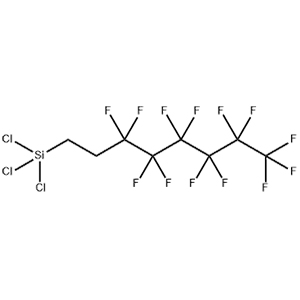
1. Surface Treatment of Glass and Optical Devices:
Used for mobile phone screens, camera lenses, optical lenses, etc., to form anti-fingerprint, anti-fouling, and hydrophobic coatings without affecting light transmittance, improving cleanliness and durability.
2. Surface Modification of Inorganic Materials:
Treats ceramics, stone, metals, wood, and composite materials to reduce surface energy, achieving waterproofing, oil resistance, corrosion resistance, and easy cleaning, such as for building facades, stone decorations, and metal component protection.
3. Fluorosilicone Coatings and Coating Additives:
Used as a component in coating formulations to prepare high-performance fluorosilicone coatings for outdoor buildings, bridges, ships, electronic appliances, etc., improving weather resistance, wear resistance, chemical corrosion resistance, and stain resistance; can also be used as a leveling agent and wetting agent to improve coating application and performance.
4. Microfluidic Chip and Device Manufacturing:
Silanizes substrates in soft lithography processes to reduce surface energy for microfluidic manipulation and device demolding; can also be used to prepare chemically patterned surfaces, supporting quantitative analysis of insoluble surfactants in polymer matrices.
5. Nanomaterial and Functional Thin Film Preparation:
Treats substrates such as alumina films to construct superhydrophobic polyimide nanotube arrays; used as a coating additive in sol-gel systems to prepare high-performance functional thin films.
6. Fluorosilicone Compound Synthesis:
Used as a synthetic intermediate for fluorine-containing and organosilicon compounds to prepare various fluorosilicone materials, meeting performance requirements in specific application scenarios.
7. Electronics and Semiconductor Fields:
Used for moisture-proof and insulating coatings of electronic components, protecting circuits and devices from moisture and contaminants, improving stability and service life.