
Wat is de belangrijkste rol van fotoinitiatoren in de moderne industrie?
In het huidige snel voortschrijdende landschap van UV-uithardingstechnologie fungeren fotoinitiatoren als de "motor" van fotocurabele systemen. Hun prestaties bepalen rechtstreeks de kwaliteit, efficiëntie en veiligheid van het eindproduct. Of het nu gaat om verpakkingsdrukwerk, coatings voor de auto-industrie, elektronische componenten of 3D-printing, het selecteren van de juiste fotoinitiator is een belangrijke uitdaging geworden voor formuleerders en technische besluitvormers. Dit artikel gaat in op 20 kernvragen over fotoinitiatoren om u te helpen weloverwogen keuzes te maken in een complexe markt.
Deel 1: Fundamentele principes & selectiecriteria
V1: Wat is een fotoinitiator? Welke rol speelt het in een UV-uithardingssysteem?
Een fotoinitiator is een verbinding die licht van specifieke ultraviolette of zichtbare golflengten absorbeert en daarbij actieve vrije radicalen of kationen genereert, waardoor de polymerisatiereactie van monomeren of prepolymeren in gang wordt gezet. Eenvoudig gezegd is het de "schakelaar" die lichtenergie omzet in chemische energie.
Belangrijkste rollen:
-
Bepaalt de uithardingssnelheid en -efficiëntie.
-
Beïnvloedt de uithardingsdiepte en oppervlakteafwerking.
-
Beïnvloedt de weerbestendigheid, vergelingsbestendigheid en mechanische eigenschappen van het eindproduct.
V2: Wat zijn de fundamentele verschillen tussen vrij-radicale en kationische fotoinitiatoren? Hoe kan ik kiezen?
Vrij-radicale fotoinitiatoren (bijv. TPO, ITX, 184/Irgacure 184):
-
Voordelen: Snelle uithardingssnelheid, grote verscheidenheid, relatief lagere kosten.
-
Beperkingen: Gevoelig voor zuurstofinhibitie, hogere krimp, potentieel voor geur.
-
Typische toepassingen: UV-inkten, houtcoatings, printen met hoge snelheid.
Kationische fotoinitiatoren (bijv. jodoniumzouten, sulfoniumzouten):
-
Voordelen: Geen zuurstofremming, lage krimp, geurvrij na uitharding.
-
Beperkingen: Gevoelig voor vocht, langzamere uithardingssnelheid, hogere kosten.
-
Typische toepassingen: Voedselverpakking, elektronische inkapseling, producten die uitharding in diepe lagen vereisen.
Selectieadvies: Weeg vier dimensies: uithardingsomgeving (aanwezigheid van zuurstof), substraatkarakteristieken, kostenbegrotingen prestatie-eisen.
V3: Waarom is mijn UV-coating plakkerig of onvolledig uitgehard? Hoe kunnen fotoinitiatoren dit oplossen?
Dit is een van de meest voorkomende uithardingsproblemen, meestal veroorzaakt door:
Mogelijke oorzaken en oplossingen:
-
Zuurstof Remming → Kies zuurstofongevoelige fotoinitiatoren (bijvoorbeeld TPO) of voeg aminesynergisten toe.
-
Mismatch tussen het absorptiespectrum van PI en de lichtbron → Controleer of de absorptiepiek van de initiator overeenkomt met de golflengte van uw UV-LED (bijv. 365 nm, 395 nm).
-
Onvoldoende dosering of slechte dispersie → Optimaliseer de hoeveelheid additief (meestal 1-5%), zorg voor grondige menging.
-
Onvoldoende lichtintensiteit → Hoewel dit geen PI-kwestie is, moet er wel rekening mee worden gehouden naast de lichtbronparameters.
Pro Tip: Een gemengd systeemzoals het combineren van een type "oppervlakteharding" (bijv. TPO) met een type "diepe uitharding" (bijv. Irgacure 819/BAPO) voor een gelijkmatige uitharding.
Deel 2: Diepgaande analyse van toepassingsscenario's
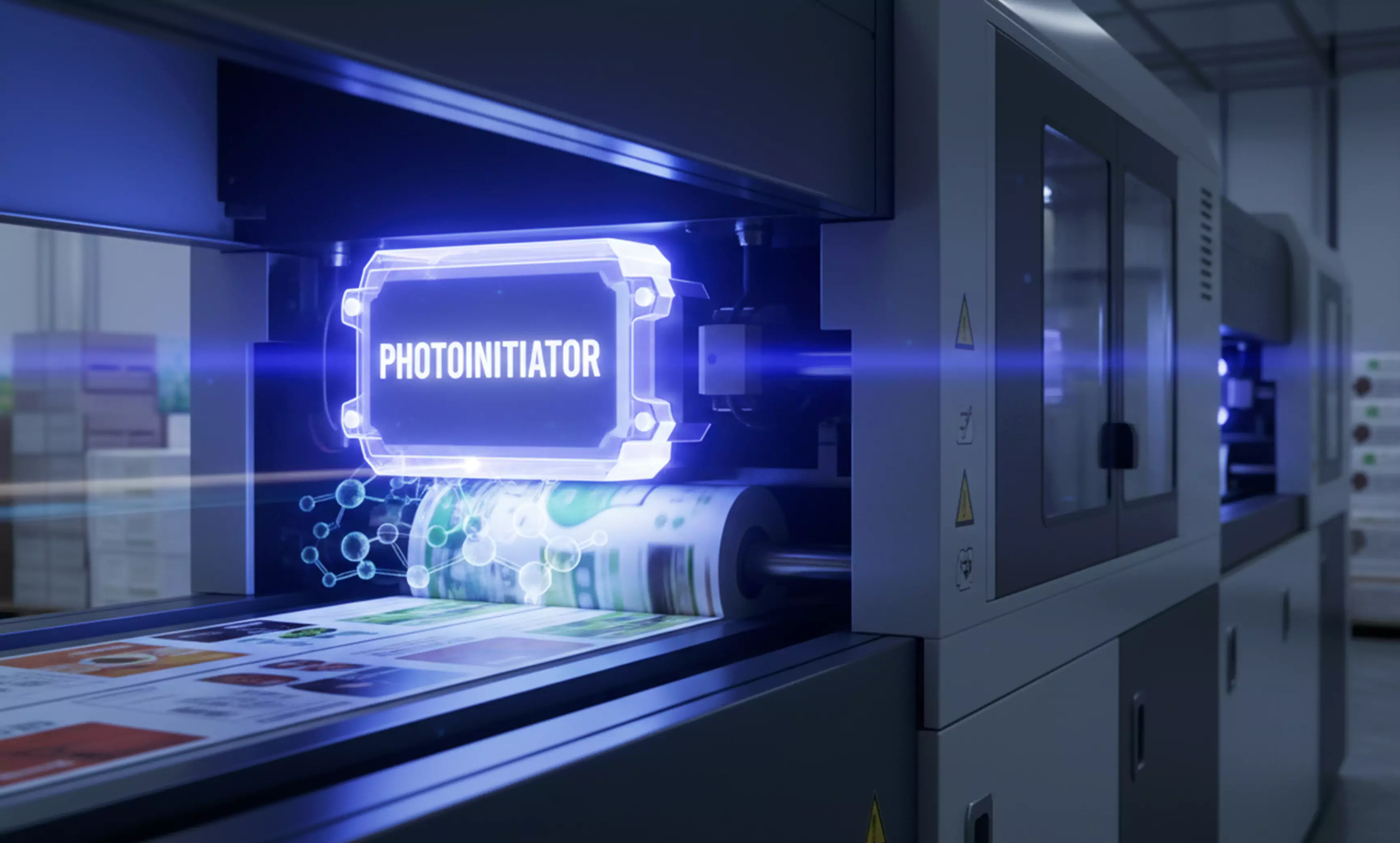
V4: Hoe selecteer je fotoinitiators met een lage migratie en een lage geur voor verpakkingsdrukinkten?
Verpakkingsinkten komen in direct contact met voedsel of het menselijk lichaam, wat extreem hoge veiligheidsnormen vereist.
Belangrijkste aankoopoverwegingen:
-
Geef prioriteit aan soorten met een lage migratiegraad: Zoals ethyl(2,4,6-trimethylbenzoyl)fenylfosfinaat.
-
Vermijd vluchtige bestanddelen: Vermijd traditionele initiators zoals ITX die geur kunnen veroorzaken.
-
Denk aan naleving van regelgeving: Zorgen voor conformiteit met voorschriften zoals FDA CFR en EU 10/2011 voor materialen die in contact komen met voedingsmiddelen.
Aanbevolen formulering: Een mengsel van TPO-L (geurarme TPO) en Irgacure 819, waardoor de uithardingsefficiëntie wordt gemaximaliseerd en het migratierisico tot een minimum wordt beperkt.
V5: UV LED-uitharding is een belangrijke trend. Welke fotoinitiatoren zijn het meest geschikt voor deze nieuwe lichtbron?
UV-LED's bieden voordelen zoals energie-efficiëntie, weinig warmte en een lange levensduur, maar hun smalle bandbreedte (voornamelijk 365 nm, 385 nm, 395 nm) vormt een uitdaging voor traditionele fotoinitiatoren.
Kenmerken van LED-compatibele fotoinitiatoren:
-
Sterke absorptiepiek binnen het LED-golflengtebereik: TPO (maximale absorptie ~380nm) is bijvoorbeeld een ideale keuze.
-
Hoge molaire extinctiecoëfficiënt: Zorgt voor een efficiënte reactie op het lagere vermogen van LED's.
-
Goed Photobleaching-effect: Voorkomt vergeling door achtergebleven initiator.
Markttrend: Nieuwe initiators die geoptimaliseerd zijn voor 395nm LED's (bijvoorbeeld de Genocure serie) winnen snel marktaandeel.
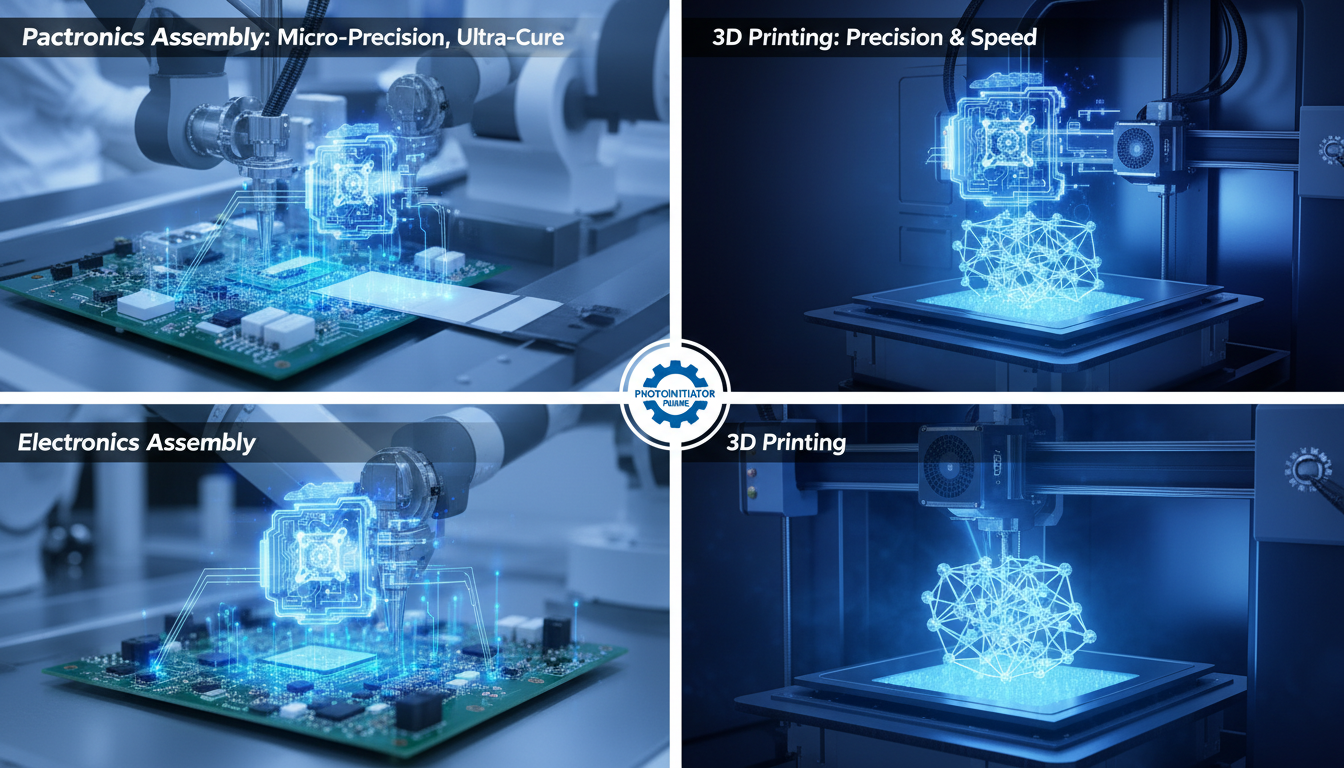
V6: Welke speciale vereisten hebben 3D-printharsen voor fotoinitiatoren? Hoe breng je snelheid en precisie in balans?
Fotopolymerisatie 3D printen (SLA/DLP) vereist initiators die snel reageren op specifieke golflengtes en tegelijkertijd de laagnauwkeurigheid en uiteindelijke mechanische eigenschappen garanderen.
Kritische parameters:
-
Zuurdieptecontrole → Vereist nauwkeurige aanpassing van de PI-concentratie om de laagdikte te regelen.
-
Lage vergelingseis → Kies initiators zoals BAPO-types om vergeling op de lange termijn te minimaliseren.
-
Kenmerken na uitharding → Sommige kationische systemen maken "dark cure" mogelijk, waardoor de uiteindelijke sterkte toeneemt.
Professioneel advies: Voor het zeer nauwkeurig printen van modellen is een ééncomponent fotoinitiatorsysteem wordt aanbevolen om resolutieproblemen door verschillende migratiesnelheden in mengsels te voorkomen.
V7: Wat voor fotoinitiatoroplossingen zijn er nodig voor autolak en industriële afwerkingen?
Auto's en industriële toepassingen vereisen uitzonderlijke weerbestendigheid, chemische weerstand en mechanische sterkte.
Prestatievereisten:
-
Uitstekende weerstand tegen vergelen: Kies initiators met een lage vergeling zoals 184 (1-Hydroxycyclohexyl fenyl keton).
-
Hoge hardheid en slijtvastheid: Vereist volledige initiatoromzetting om een dicht vernet netwerk te vormen.
-
Weerbestendigheid: Moet degradatie van initiatorresidu's onder UV-blootstelling vermijden.
Speciale uitdaging: Voor gepigmenteerde systemenfotoinitiatoren hebben een grotere lichtpenetratie nodig. Dit vereist vaak een combinatie met fotosensibilisatoren of met absorberende initiators met een lange golflengte.
Deel 3: Technische uitdagingen en oplossingen
V8: Hoe kan ik vergeling in UV-geharde materialen oplossen? Welke fotoinitiatoren dragen het minst bij?
Vergeling is een veelvoorkomend defect dat voornamelijk wordt veroorzaakt door:
-
Latere reacties van overgebleven fotoinitiatorgroepen.
-
Foto-oxidatie van aminesynergisten.
-
Fotodegradatie van het polymeer zelf.
Aanbevelingen voor fotoinitiatoren met een lage vergeling:
-
184 (HCPK): Een klassieke initiator met een lage vergeling, geschikt voor blanke lakken.
-
1173 (2-Hydroxy-2-methyl-1-phenyl-1-propanone): Kosteneffectief met lichte vergeling.
-
Nieuwe macromoleculaire initiatoren: bijvoorbeeld TPO-derivaten met hoog moleculair gewicht, die weinig migratie en minimale vergeling bieden.
Systematische oplossing: Naast het selecteren van de juiste initiator, is het toevoegen van UV-absorbers (bijvoorbeeld benzotriazooltypes) en lichtstabilisatoren (HALS) kan vergeling op systeemniveau onderdrukken.
V9: Welke speciale uitdagingen vormen UV-systemen op waterbasis voor fotoinitiatoren? Hoe pak je ze aan?
Systemen op waterbasis worden steeds populairder vanwege de milieuvoordelen, maar water vormt een uitdaging voor traditionele PI's.
Belangrijkste uitdagingen:
-
Oplosbaarheid en dispergeerbaarheid: Traditionele olie-oplosbare initiators dispergeren slecht in waterige fases.
-
Hydrolytische stabiliteit: Sommige initiators hydrolyseren gemakkelijk en worden ineffectief in water.
-
Uithardingsefficiëntie: Verdamping van water vereist extra energie, waardoor de behandelingssnelheid mogelijk wordt vertraagd.
Speciale fotoinitiatoren op waterbasis:
-
Waterdispergeerbare TPO-emulsies: Deeltjesgrootte <200nm, stabiele suspensie.
-
Ionische fotoinitiatoren: bijvoorbeeld initiatoren met quaternaire ammoniumgroepen, die zowel oplosbaarheid in water als reactiviteit bieden.
-
Micro-inkapselingstechnologie: Het inkapselen van olie-oplosbare initiatoren in een waterdoorlatend polymeer omhulsel.
V10: Hoe optimaliseer je de prestaties van fotoinitiatorsystemen door mengtechnieken?
Een enkele initiator voldoet zelden aan complexe toepassingsbehoeften. Wetenschappelijk mengen is essentieel.
Klassieke mengstrategieën:
-
Golflengte Complementair: bijv. TPO (lange golf) gemengd met 184 (middengolf) om de absorptie te verbreden.
-
Diepte-Complementair: Oppervlaktehardende types (bijv. DMPA) combineren met diephardende types (bijv. 819).
-
Synergetisch: Initiators met vrije radicalen in combinatie met amine- of thiolsynergisten om de omzettingssnelheid te verhogen.
Mengverhouding referentie:
-
Algemeen systeem: TPO:184 = 1:2 (totale belasting 3-4%).
-
Wit systeem: Verhoog het aandeel van diepuithardende initiator (bijv. 819 tot 2%).
-
Dikfilmsysteem: Verhoog de hoeveelheid kationische initiator om doorharding te garanderen.
Deel 4: Sourcing, veiligheid en regelgeving
V11: Welke belangrijke criteria moeten worden geëvalueerd bij de beoordeling van een fotoinitiatorleverancier?
Het kiezen van een betrouwbare leverancier is belangrijker dan alleen het vergelijken van prijzen.
Checklist voor leveranciersevaluatie:
-
Volledigheid van technische documentatie: Zijn MSDS/SDS, TDS, COA gestandaardiseerd en volledig?
-
Batchconsistentie: Vraag gegevens op over de kwaliteitsconsistentie van recente batches (laatste 6 maanden).
-
Technische ondersteuning: Biedt de leverancier diensten met toegevoegde waarde, zoals het testen van toepassingen en formuleringsadvies?
-
Naleving van regelgeving: REACH registratiestatus, FDA aanvragen, enz.
-
Logistiek en verpakking: Speciale opslagvereisten (lichtgevoelig, koel), minimale bestelhoeveelheden.
Industrietip: Aanvraag testrapporten die relevant zijn voor uw specifieke toepassingen niet alleen algemene gegevens.
V12: Hoe kan ik fotoinitiatoren veilig bewaren en hanteren?
Fotoinitiatoren zijn vaak licht- en warmtegevoelige chemicaliën, wat risico's met zich meebrengt als er verkeerd mee wordt omgegaan.
Veiligheidsrichtlijnen:
-
Lichtbeschermde opslag: Gebruik amberkleurige of ondoorzichtige verpakkingen en bewaar ze op een koele, donkere plaats.
-
Temperatuurregeling: De meeste initiators moeten beneden 25°C bewaard worden, sommige moeten gekoeld worden.
-
Persoonlijke beschermingsmiddelen (PPE): Draag chemicaliënbestendige handschoenen en een veiligheidsbril bij het werken met dit product; vermijd het inademen van stof.
-
Brandveiligheid: Rust geschikte blusapparaten uit (droog poeder, CO₂); vermijd het gebruik van water.
V13: Welke internationale regelgeving is van toepassing op fotoinitiatoren? Hoe zorgen we ervoor dat ze worden nageleefd?
Belangrijkste wereldwijde wettelijke vereisten:
Europese Unie:
-
REACH-verordening: Registratie vereist (>1 ton/jaar); volg de SVHC-kandidatenlijst.
-
Voorschriften voor materialen die met levensmiddelen in contact komen: EU 10/2011, etc., waarin specifieke migratielimieten zijn vastgelegd.
Verenigde Staten:
-
FDA 21 CFR: Lijst van stoffen die zijn toegestaan voor toepassingen in contact met voedingsmiddelen.
-
TSCA: Beheer van de productie en invoer van chemische stoffen.
Aziatische markten:
-
Registratie van nieuwe chemische stoffen in China.
-
Japan CSCL (Chemical Substances Control Law).
Nalevingsstrategie: Producten prioriteren al geregistreerd in uw belangrijkste marktenen vragen nalevingsverklaringen en testrapporten op bij leveranciers.
Deel 5: Toekomstige trends en innovatierichtingen
V14: Hoe zal de toepassing van UV-LED uithardingstechnologie de fotoinitiatormarkt veranderen?
De snelle groei van UV-LED's verandert de routekaarten voor PI-technologie.
Technische impact:
-
Innovatie in moleculair ontwerp: In de richting van smalbandige absorptie en hoge molaire extinctiecoëfficiënten.
-
Trend tot vereenvoudiging van formuleringen: De output van LED's met één band vermindert de behoefte aan breedspectrum absorptiemixen.
-
Nieuwe toepassingsscenario's: Uitharding bij lage temperatuur maakt UV-technologie mogelijk voor warmtegevoelige substraten (bijv. plastic films).
Marktvoorspelling: Tegen 2026 zal het marktaandeel van LED-gemedieerde fotoinitiatoren naar verwachting de traditionele producten overtreffen, met een jaarlijkse groei van meer dan 15%.
V15: Hoe stimuleren duurzaamheid en milieueisen de innovatie van fotoinitiatoren?
Te midden van de groene chemiegolf staan PI's voor een dubbele uitdaging: zelf milieuvriendelijk zijn en duurzame downstreamproducten mogelijk maken.
Innovatierichtingen:
-
Grondstoffen op biologische basis: Synthese van initiatormonomeren uit hernieuwbare bronnen.
-
Ontwerp voor afbreekbaarheid: Initiatorresten die biologisch afbreekbaar zijn aan het einde van de levensduur.
-
Niet-migrerende systemen: 100% reactieve macromoleculaire initiatoren, geen migratie.
-
Technologieën op waterbasis: VOC-emissies verminderen.
Geavanceerde zaak: Fotoinitiatoren afgeleid van natuurlijke producten (bijv. chalconen) worden op pilotschaal geproduceerd.
V16: Welke nieuwe eisen stelt digitale productie (bijv. 3D-printen) aan fotoinitiators?
De precisie van digitale productie vereist "slimmere" reacties van initiators.
Technische eisen:
-
Initiators met twee fotonen: Voor micro-/nanoschaalprinten met ultrahoge precisie.
-
Zichtbare lichtinitiatoren: Geschikt voor gevoelige toepassingen zoals bioprinting.
-
Programmeerbare respons: "Slimme" initiators met afstembare reactiedrempels op lichtintensiteit/golflengte.
Knelpunt in ontwikkeling & doorbraak: Momenteel is er geen enkele initiator die perfect voldoet aan de eisen voor hoge snelheid, hoge precisie en lage krimp tegelijkertijd. Initiatiefnemers met hybride mechanismen (vrij-radicaal-kationische hybride) zijn momenteel het meest veelbelovend.
Deel 6: Kostenoptimalisatie en inkoopstrategie
V17: Hoe kunnen we de kosten van fotoinitiatoren verlagen zonder aan prestaties in te boeten?
Kostenbeheersing gaat niet over het kopen van de goedkoopste optie, maar over het optimaliseren van waar voor je geld.
Systematische optimalisatiestrategieën:
-
Nauwkeurige dosering: Bepaal de minimale effectieve belasting via DOE-experimenten om overbelasting te voorkomen.
-
Gelokaliseerde inkoop: Overweeg binnenlandse kwaliteitsleveranciers (bijv. Jiuri New Materials, Yangfan New Materials) om de logistieke en tarifaire kosten te verlagen.
-
Bulkaankoopovereenkomsten: Onderteken jaarlijkse raamovereenkomsten met leveranciers om prijzen vast te zetten.
-
Formulering Consolidatie: Verminder de verscheidenheid aan gebruikte initiators om de beheers- en testkosten te verlagen.
Waarschuwing voor valkuilen in kosten: Vermijd het nastreven van alleen een lage eenheidsprijs en verwaarloos daarbij totale gebruikskosten (bijv. belastingsniveau, energieverbruik bij uitharding, defectpercentage).
V18: Welke belangrijke evaluaties moeten worden uitgevoerd tijdens de testfase?
Het testen van monsters is een kritieke stap om het risico op mislukte batches te vermijden.
Gestandaardiseerd testprotocol:
-
Basis prestatietests: Uithardingssnelheid (kleefvrije tijd), hardheidsontwikkelingscurve.
-
Verouderingsprestaties: QUV versnelde veroudering (beoordelen van vergeling, glansverlies).
-
Migratietesten: Voer specifieke migratietesten uit als het gaat om voedselverpakkingen.
-
Simulatie van toepassing: Proefdraaien van kleine batches op echte productielijnen.
Test Record Advies: Een Evaluatiematrix fotoinitiator om alle prestatiegegevens kwantitatief vast te leggen voor eenvoudige vergelijking tussen batches.
Conclusie: Een systeembenadering van fotoinitiatorselectie
Een fotoinitiator is geen geïsoleerde aankoopbeslissing. Het is een systeemengineeringproject waarbij afstemming van lichtbronnen, formuleringssynergie, procesaanpassing en naleving van regelgeving. In dit tijdperk van snelle technologische iteratie moeten ontwerpers van uithardingssystemen:
-
Bekijk de volledige levenscyclus: Van stabiliteit bij opslag en hantering tot duurzaamheid van het eindproduct.
-
Technologische openheid behouden: Blijf op de hoogte van nieuwe initiators en mengtechnologieën.
-
Partnerschappen met leveranciers versterken: Mechanismen opzetten voor het delen van technologie met belangrijke leveranciers.
-
Prestaties en kosten in evenwicht brengen: Definieer de vereisten nauwkeurig op basis van het toepassingsscenario om over-engineering te voorkomen.
Naarmate de UV-uithardingstechnologie zich ontwikkelt in de richting van meer milieuvriendelijkheid, efficiëntie en intelligentie, zullen fotoinitiatoren - als belangrijkste materialen op dit gebied - onvermijdelijk hun innovatietempo versnellen. Alleen door hun principes goed te begrijpen, selectiemethoden te beheersen en op de hoogte te blijven van de dynamiek van de regelgeving kunt u optimale beslissingen nemen in deze snel veranderende markt en zo een echt concurrentievoordeel voor uw producten creëren.