
Che cos'è il fotoiniziatore 550 e dove si usa?
Photoinitiator 550 / cas 591773-92-1 is a cationic photoinitiator. It starts chemical reactions when UV light shines on it. It works very well in coatings. You use it when you do not want yellowing, migration, or odor. Many companies use this photoinitiator in canned food coatings. They also use it in coil coatings and UV-curable products. It helps keep surfaces safe and clean.
- The global market for cationic photoinitiators, like photoinitiator 550 / cas 591773-92-1, may reach USD 253.6 million by 2030.
- More people want coatings that are safe for the environment and have low VOCs.
Knowing these features helps you pick the best products.
Punti di forza
- Photoinitiator 550 hardens fast when UV light shines on it. This helps save time and energy in factories. It stops things from turning yellow or smelling bad. This makes it good for food packaging and other careful uses. Using Photoinitiator 550 helps companies follow safety rules. This keeps products safe for people and nature. This photoinitiator mixes well with many resins. It can be used in printing and electronics. Picking the right photoinitiator can make products better. It also helps meet health rules.
Photoinitiator 550 / CAS 591773-92-1 Overview
What is Photoinitiator 550
Photoinitiator 550 / cas 591773-92-1 is a special chemical. It helps start reactions in many products. This photoinitiator reacts when uv light shines on it. You can find it in coatings, inks, and adhesives. These products need to cure fast and stay clean.
Here is a table with the main facts about photoinitiator 550 / cas 591773-92-1:
| Attribute | Dettagli |
|---|---|
| Numero CAS | 591773-92-1 |
| Struttura chimica | 10-[1,1′-Bipheny]1-4-yl-2-(1-methylethyl)-9-oxo-9H-thioxanthenium hexafluorophosphate |
| Chemical Formula | C28H23OS.PF6 |
People use this photoinitiator when they want no yellowing. It also stops migration and odor in products. These features make it great for food packaging and other sensitive uses.
Note: Photoinitiator 550 / cas 591773-92-1 helps keep coatings clear and safe.
Chemical Nature and Cationic Mechanism
Photoinitiator 550 / cas 591773-92-1 works with a cationic mechanism. When uv light hits it, the photoinitiator takes in energy. This energy makes the photoinitiator break apart. It then releases strong acids. These acids help small molecules join together. This forms a solid material.
Cationic photoinitiators do not need oxygen to work. This makes curing faster and more reliable. You get a hard and smooth surface every time. Photoinitiator 550 / cas 591773-92-1 is very active. You can use less material and still get good results.
Here are some reasons to pick this photoinitiator:
- It cures fast under uv light.
- It stops yellowing, so coatings stay bright.
- It does not move, so it stays in place.
- There is no odor after curing.
Photoinitiators are important in modern manufacturing. They help products cure quickly and stay safe for people and the environment. Photoinitiator 550 / cas 591773-92-1 works at the right wavelengths. It gives you the performance you need.
Key Features of Photoinitiator
High Activity and Surface Drying
If you use coatings or inks, you want quick results. Photoinitiator 550 starts curing fast. This means your work finishes sooner. You do not wait long for things to dry. Some photoinitiators need special settings. This one works well with UV light. You get a hard and smooth finish each time. Fast curing helps you use less energy.
Tip: Quick drying saves you time and money when making things.
No Yellowing, Migration, or Odor
You want coatings that stay clear and do not turn yellow. Photoinitiator 550 keeps products bright. It does not cause yellowing. Some photoinitiators can move into food or other stuff. This one stays in place, so it is safer. There is no smell after curing. This is good for food packaging and sensitive items. Many companies pick this photoinitiator for these reasons.
- Your products look nice and last longer.
- You follow safety rules for food and health.
- You do not get complaints about smell or color.
Safety and Compatibility
You care about safety and the environment. Photoinitiator 550 lets you use photopolymerization without solvents. This means you do not release bad VOCs into the air. Many new photoinitiators use natural and renewable materials. This lowers toxicity and makes things safer for workers and users. You can use this photoinitiator with many resins and coatings. It works well in lots of industries, like food and electronics.
Note: Picking safe and compatible photoinitiators helps protect people and the earth.
Applications of Photoinitiator 550
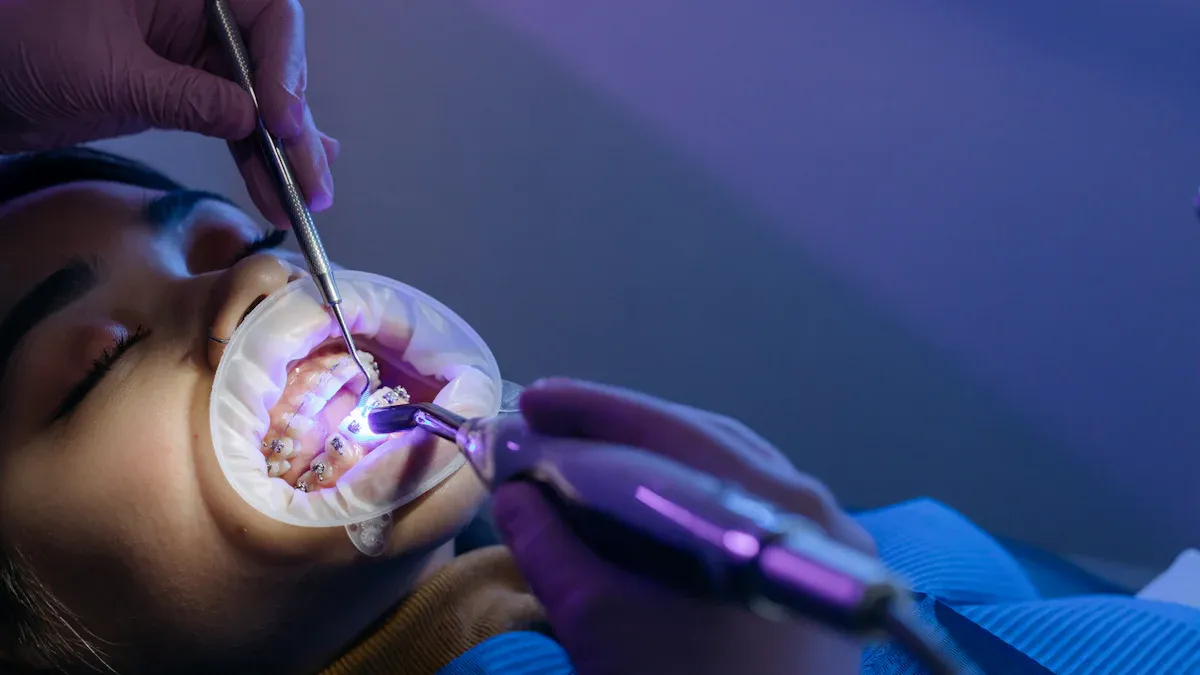
Photoinitiator 550 can be used in many ways. It works well in places that need quick and safe results. You find it in food packaging, metal coatings, printing, adhesives, and dental items. Let’s see how photoinitiators help in these jobs and why photoinitiator 550 is special.
Canned Food Coatings
Food cans need to be safe and clean. Photoinitiator 550 helps make coatings that protect food from metal. It keeps flavors fresh. These coatings do not turn yellow or move into food. This helps you follow safety rules. You also stop bad smells in your products. Photoinitiators help coatings dry fast with uv light. You get a hard and smooth surface. This keeps food safe for a long time.
- You follow food safety rules.
- You keep cans bright and clean.
- You stop problems with taste or smell.
Coil Coatings (Color-Coated Steel)
Coil coatings protect steel from rust and damage. Photoinitiator 550 lets you add color and protection at once. It cures fast with uv light. This helps your work go faster. These coatings stay put and do not turn yellow. They last a long time on metal. Photoinitiators help you make strong and bendable layers.
Tip: Fast curing saves energy and keeps steel looking new.
UV-Curable Coatings and Inks
You need uv-curable coatings and inks for printing and packaging. Photoinitiator 550 gives bright colors and clear pictures. It dries quickly, so you can print more. Photoinitiators keep prints sharp and stop yellowing. They also stop moving into food or makeup.
| Area di applicazione | Benefit of Photoinitiator 550 |
|---|---|
| Printing | Dries fast, no yellowing |
| Imballaggio | Safe for food, no smell |
| Labels | Clear images, sticks well |
Adhesives and 3D Printing
You use uv-curable adhesives and 3d printing for building and fixing things. Photoinitiator 550 helps make strong bonds and smooth finishes. You get better results with more uv power. Studies show adhesives with photoinitiator 550 are stronger and bend more at 1200 mW/cm2 than at 550 mW/cm2. This means joints are tougher and more flexible with stronger light.
| Proprietà | 550 mW/cm2 | 1200 mW/cm2 |
|---|---|---|
| Degree of Conversion | Più basso | Più alto |
| Flexural Strength | Più basso | Più alto |
| Modulus of Elasticity | Più basso | Più alto |
| Sorption | Più basso | Più alto |
| Solubilità | Più basso | Più alto |
Photoinitiators help you pick how strong and bendy your adhesives are. Hydrophilic systems keep their strength longer, even in water. This helps you choose the best photoinitiator for 3d printing and bonding.
- You get strong and safe joints.
- You control how fast and strong things cure.
- You make products last longer in wet places.
Dental Materials and Photoresists
Photoinitiator 550 is used in dental fillings and photoresists for electronics. Dental materials need to cure fast and be safe in the mouth. Photoinitiators help make hard and smooth surfaces. They do not turn yellow or smell. You also use photoinitiators in photoresists to make tiny circuits. You need exact curing and clean results. Photoinitiator 550 gives you control for light-cured and photopolymerization jobs.
Note: Picking the right photoinitiator helps you follow health and safety rules in dental and electronic work.
Photoinitiator 550 works in many places. You get quick, safe, and steady results in coatings, printing, adhesives, 3d printing, dental, and electronics. You pick photoinitiator 550 because it is safe, works well, and meets rules.
You now know that Photoinitiator 550 helps things cure fast with UV light. It keeps coatings clear and does not make them smell. Many companies use it because it works well and follows safety rules.
- The photoinitiator market was worth $145.26 million in 2024.
- It could grow to $374.36 million by 2034.
- Electronics and 3D printing help this market get bigger.
When you choose a photoinitiator, look at the table below for important facts:
| Fotoiniziatore | Applicazioni | Velocità di polimerizzazione | Stabilità del colore |
|---|---|---|---|
| TPO | Electronics, 3D printing | Veloce | Low risk of discoloration |
| ITX | UV curing, ink formulations | Moderato | May cause yellowing |
| DETX | LED-curable inks, packaging | Moderato | May cause yellowing |
Picking the right photoinitiator helps you make safer and better products. New types will help you keep up with what industries need in the future.
FAQ
What makes Photoinitiator 550 safe for food packaging?
Photoinitiator 550 stays in the coating. It does not move into food. It does not make food smell bad. It keeps food looking fresh. You follow food safety rules when you use it.
Can you use Photoinitiator 550 with different resins?
Photoinitiator 550 works with many resin types. It works with epoxy and vinyl ether. It also works with other UV-curable systems. You get strong results in many jobs.
How do you store Photoinitiator 550?
Keep Photoinitiator 550 in a cool, dry spot. Do not let sunlight touch it. Keep it away from water. Use closed containers to keep it good.
Tip: Check the expiration date before you use Photoinitiator 550.
What industries use Photoinitiator 550 most?
Photoinitiator 550 is used in many places. You see it in food packaging and coil coatings. It is also used in printing and adhesives. Dental and electronics use it too. People pick it for fast drying and safety.
| Industry | Benefici |
|---|---|
| Imballaggio per alimenti | Stays in place, no smell |
| Printing | Dries quickly |
| Elettronica | Cures exactly |