
Bagaimana bahan perata menciptakan hasil akhir cat yang sempurna?
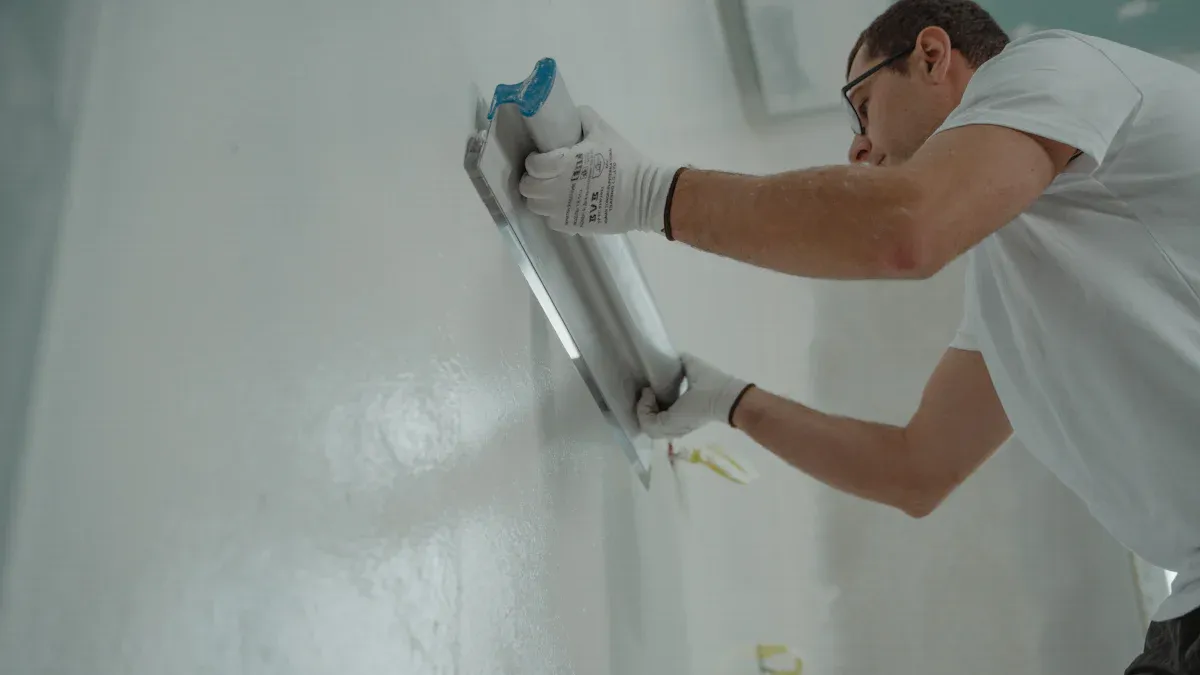
You want your painted surfaces to look smooth and even. Leveling agents help you get a perfect finish by lowering surface tension. These additives let paint spread out and push out air bubbles that get stuck. You can avoid streaks and bumps when you use a leveling agent. Both beginners and professionals get better results with these tools.
Hal-hal Penting yang Dapat Dipetik
- Leveling agents make paint go on smooth. They help stop brush marks and bumps. They lower surface tension, so paint spreads evenly. This gives a shiny and professional look. Pick the right agent for your paint type to stop problems. Follow mixing steps closely for the best finish.
Leveling agent basics and how they work
What is a leveling agent
A leveling agent is a special ingredient you add to paint to help it spread out smoothly. You use it to make sure your painted surface looks even and free of marks. Most leveling agents are made from surfactants, polymers, or other surface-active molecules. These chemicals work together to lower the surface tension of the paint. When you lower surface tension, the paint can flow better and cover the surface more evenly.
- Leveling agents help prevent common problems like brush marks and craters.
- They make it easier for the paint to stick to the surface, which is called wetting.
- You find leveling agents in many types of paint because they help create a uniform finish.
Tip: If you want your paint to look professional, always check if your paint contains a leveling agent.
Mechanism in paint coatings
When you use a leveling agent in paint coatings, you change how the paint behaves as it dries. The agent works at the surface and between layers of paint. It reduces both surface and interfacial tension. This means the paint can spread out and fill in tiny gaps or imperfections.
The process starts when you apply the paint. The leveling agent helps the paint flow out, so you do not see lines or bumps. It also helps release any air bubbles trapped in the paint. As the paint dries, the agent supports even evaporation of solvents. This helps the paint form a smooth, solid film.
Scientific studies show that leveling agents play a key role in film formation. They help the tiny particles in the paint move and join together. This process, called coalescence, is important for healing gaps and making the surface look flawless. Without a leveling agent, the paint might dry with rough spots or uneven areas.
- Coalescing agents in the paint reduce surface tension and help the particles blend.
- The right leveling agent makes sure the paint dries into a strong, even layer.
- Changes in temperature or humidity can affect how well the agent works, so always follow the instructions on your paint.
Note: Using a leveling agent gives you a better chance of getting a smooth, beautiful finish every time.
Key benefits in paint coatings
Smoother surfaces and improved flow
Leveling agents help paint spread out evenly. They make the paint move smoothly over the surface. This means you see fewer bumps or lines. The paint covers every spot and looks flat. You get a nice, even finish.
- Leveling agents make the surface look better by reducing flaws.
- They help the paint flow well, so the coating is smooth.
- You can use these agents in many types of paint, like for cars, walls, or furniture.
Leveling agents help the paint flow better. This makes the coating smooth and flat after you put it on. They are important for getting the right flow in paint.
The paint also dries more evenly with leveling agents. Some agents help control how fast the paint dries. This stops the paint from running or sagging. Your work looks neat and tidy.
Fewer defects and enhanced appearance
Leveling agents help you avoid many problems. You do not get craters or pinholes in your paint. The finish looks clean and smooth. These agents fill tiny holes and make the surface look full.
- Craters
- Pinhole
You also get a shiny and clear look. The paint shines and looks bright. Leveling agents help stop orange peel and brush marks. The finish feels smooth when you touch it. They help your project last longer and look better.
If you want your paint to look great, use the right leveling agent. You will notice a big change in how your paint looks.
Types of flow and leveling additives
Silicone-based flow and leveling agent
Silicone-based flow and leveling agent is used in many paints. People have used these agents since the 1950s. They are good at lowering surface tension. This helps paint spread out and cover well. It also stops problems like craters from forming.
- Silicone agents work best in thick paints like acrylic and polyurethane.
- Polyether-modified silicone wetting agents are used in waterborne wall paints and industrial coatings.
- Sometimes, silicone additives can cause trouble in multilayer coatings. They might move to the top layer and change how the paint looks or feels.
Note: If the molecular weight is too high, silicone-based agents may not mix well. Always check your paint before using this type.
| Jenis Aditif | Fungsi | Typical Application |
|---|---|---|
| Polyether-modified silicone wetting agent | Lowers surface tension, helps paint spread | Used in waterborne wall paints and industrial coatings |
| Agen perata silikon | Makes paint slippery, stops craters | Used in thick acrylic and polyurethane coatings |
| Fluorocarbon leveling agent | Needs only a little, makes surface even | Used in high-end protective and industrial coatings |
Acrylic-based flow and leveling agent
Acrylic-based flow and leveling agent is a good choice for low VOC and water-based paints. These agents help paint move smoothly and dry evenly. You can use them for eco-friendly projects.
- Acrylic agents do not have the same mixing problems as silicone ones.
- They work well in water-based paints and follow strict environmental rules.
- Some acrylic agents have fluorine to help wetting. High fluorine can make them work as well as silicone agents.
| Type of Agent | Dampak Lingkungan | Compatibility with Waterborne Paints |
|---|---|---|
| Acrylic-based | Good because of low VOC | Works very well in water-based paints |
| Silicone-based | Not as good for VOC rules | Works, but not best for green projects |
Tip: To lower health risks and help the environment, pick acrylic-based flow and leveling additives for water-based paints.
Choosing the right additive
You need to think about a few things when picking a flow and leveling additive. The right one makes your paint look smooth and last longer.
- Think about what kind of paint you have. Water-based paints work best with acrylic-based agents.
- Check if the agent works with your paint. Some can cause problems in layers.
- Think about the rules for the environment. Many new additives are low-VOC or VOC-free.
- Decide what finish you want. Shiny and smooth surfaces need special additives.
- Price is important too. Newer additives can save money and use less product.
Remember: The best flow and leveling agent makes your paint look better and last longer. Always read the label and follow the maker’s advice.
Using leveling agents for flawless finishes
Selection and mixing tips
You must pick the right flow and leveling agent for your paint. Think about what kind of paint you have and how you want it to look. Some paints need a 2:1 ratio if you want a shiny finish and put on thick coats. Epoxy primers and thick finishes often use a 1:1 ratio. If you use more than one part, you might see a 4:1:1 ratio. The last number is a reducer that helps the paint flow better.
- Always read the label before you mix anything.
- Use good mixing methods so the leveling agent spreads out well.
- Add the agent slowly and mix at the right speed to keep the paint steady.
- Make sure you or your team know how to use additives safely.
| Mixing Ratio | Paint Type | Resulting Finish |
|---|---|---|
| 2:1 | Heavy layers, clear coats | Smooth, high-gloss |
| 1:1 | Epoxy primers, high-build | Even, durable |
| 4:1:1 | Multi-component systems | Modified viscosity, good flow |
Tip: Watch your mixture and change it if the flow or finish looks different.
Application best practices
You can get a perfect finish by following some easy steps. Stir your paint well and thin it like the maker says. Always test a small spot first to see if it spreads and looks good. Let each coat dry before you add another one. This stops problems from happening.
- Clean, dry, and prime your surface before you start.
- Pick the right tool for your paint job. Use brushes for small spots, rollers for big flat places, and spray guns for large jobs.
- Put on thin, even coats to help the paint flow and not waste any.
| Application Method | Kasus Penggunaan Terbaik | Finish Quality |
|---|---|---|
| Brush | Small details, rough areas | Good penetration |
| Roller | Large, flat surfaces | Uniform thickness |
| Spray | Big projects | Smooth, professional |
Note: Keep checking your work as you go. This helps you fix problems fast and change how you work if needed.
Mistakes to avoid
You can stop common mistakes if you pay attention when you mix and use the paint. Mixing too much can make bubbles, which makes the finish rough. Not every leveling agent works with every paint, so always check if they match. Using too little or too much agent can make the paint not spread right.
- Watch for bubbles when you mix.
- Make sure your agent works with your paint type.
- Measure the agent carefully so you do not make mistakes.
Alert: If you see the paint separating or looking bad, stop and check your mix before you keep going.
Common surface issues solved
Preventing orange peel and craters
You often see orange peel and craters when paint does not spread out well. Orange peel looks like the skin of an orange, with tiny bumps. Craters are small holes or dips in the paint. These problems happen when paint cannot flow smoothly or when air gets trapped. Leveling agents help you avoid these issues by changing how paint moves and dries.
Leveling agents fine-tune the paint’s flow and make sure it covers every spot. They control surface tension, so paint spreads out and fills gaps. You get a flawless finish without bumps or holes. Silicone leveling agents, like DCA-F2661, reduce micro-texture and orange peel. They also stop craters and fisheyes from forming.
| Properti | Manfaat |
|---|---|
| Flow & Leveling | Improves flow and leveling properties |
| Substrate Wetting | Enhances substrate wetting |
| Defect Prevention | Prevents orange peel, craters, and more |
Tip: If you want to stop orange peel and craters, use a leveling agent that controls surface tension and helps paint flow.
Eliminating brush marks and uneven textures
Brush marks and uneven textures make your paint job look messy. You see lines or rough spots where paint did not spread out. High surface tension can cause these problems because paint does not wet the surface well. Leveling agents help paint move smoothly and cover the surface evenly.
- Leveling agents reduce surface tension, so paint flows better.
- You get fewer brush marks and a smoother look.
- Paint dries with a flat, even texture.
You can use leveling agents in many types of paint. They help you get a professional finish, even if you are new to painting. When you control surface tension, you stop defects like pinholes and rough spots. Your painted surface looks clean and feels smooth.
Note: Always choose a leveling agent that matches your paint type. This helps you avoid common defects and get the best results.
You can get a perfect finish by using a leveling agent in paint. Lower surface tension lets paint move and cover all spots. This stops streaks and bumps. Your painted surface looks smooth and even. Studies show good pigment mixing and leveling make color better and more stable. Wetting agents also lower surface tension. This helps the paint dry without problems. Use these tips for your next project. Your finish will look shiny and last longer.
PERTANYAAN YANG SERING DIAJUKAN
What does a leveling agent do in paint?
A leveling agent helps paint spread out smoothly. You get fewer brush marks and bumps. The finish looks even and professional.
Can you add a leveling agent to any paint?
You can add leveling agents to most paints. Always check the label first. Some paints already have them mixed in.
How much leveling agent should you use?
You should follow the instructions on the product label. Using too much can cause problems. Start with a small amount and test first.
Do leveling agents affect paint color or shine?
Leveling agents do not change the color. Some can make the surface look shinier. You should test on a small area if you want a matte finish.
Are leveling agents safe to use indoors?
Most leveling agents are safe for indoor use. Always read the safety instructions. Open windows or use a fan for fresh air.