
Bagaimana Kinerja Agen Pembasah yang Berbeda di Lingkungan Rumah dan Industri?
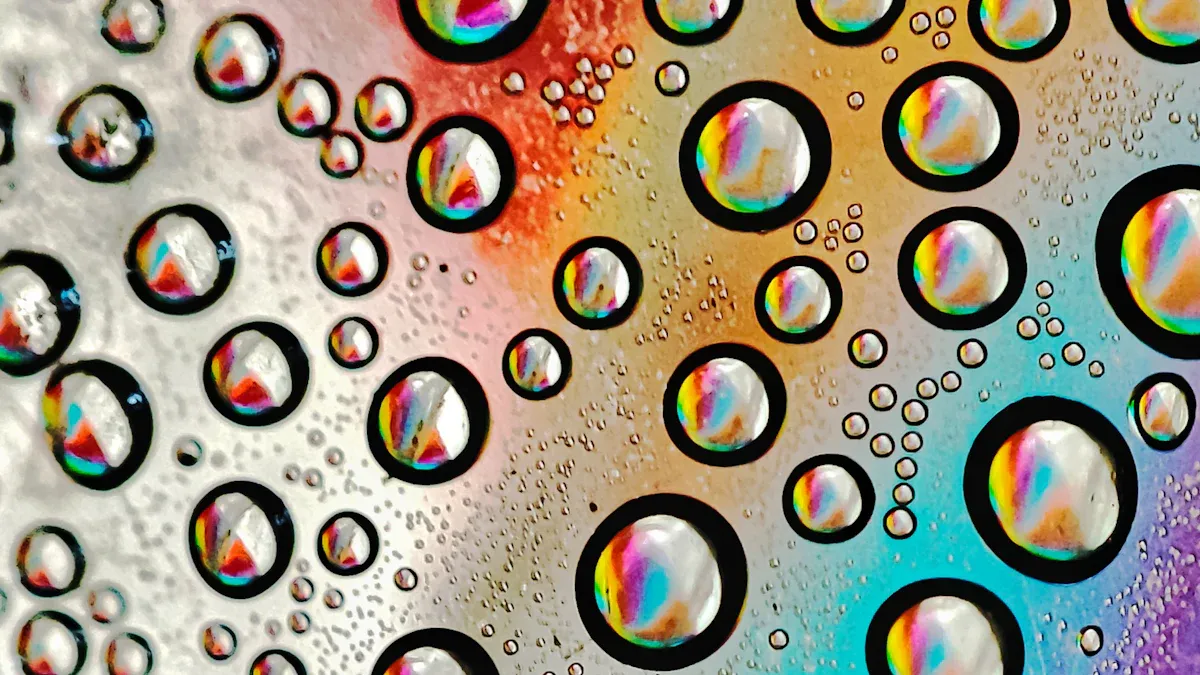
Anda menginginkan bahan pembasah terbaik untuk kebutuhan Anda. Bahan pembasah butiran membantu tanah tetap basah lebih lama di rumah. Bahan pembasah cair bekerja lebih cepat dan mencakup area yang lebih luas. Di pabrik, bahan pembasah cair memberikan hasil yang cepat. Banyak perusahaan memilih bahan pembasah yang ramah lingkungan untuk membantu lingkungan.
Memilih bahan pembasah yang tepat adalah penting untuk keamanan dan penghematan biaya. Tabel di bawah ini menunjukkan bagaimana pilihan ramah lingkungan membantu Anda dan bisnis:
| Jenis Bukti | Deskripsi |
|---|---|
| Pertumbuhan Pasar | Pasar dunia untuk bahan pendispersi ramah lingkungan akan tumbuh lebih dari 8% setiap tahun hingga 2025. |
| Dampak Lingkungan | Menggunakan WDA yang dapat terurai secara hayati dapat mengurangi bahaya dari pabrik hingga 40%. |
| Tren Produsen | Lebih dari separuh pembuatnya menginginkan agar bahan-bahan berbasis bio menggunakan lebih sedikit bahan kimia berbasis minyak. |
Pasar bahan pembasah tanah berkembang pesat. Pasar ini akan meningkat dari $2.394 miliar pada tahun 2025 menjadi hampir $3.9 miliar pada tahun 2035. Blog ini membantu Anda membandingkan bahan pembasah dan membuat pilihan yang cerdas.
Hal-hal Penting yang Dapat Dipetik
- Pilihlah bahan pembasah terbaik untuk kebutuhan Anda. Agen granular mudah digunakan di rumah. Bahan cair bekerja lebih cepat di ruangan besar.
- Bahan pembasah yang ramah lingkungan menjadi lebih populer. Mereka membantu lingkungan dan membuat koleksi menjadi lebih baik.
- Selalu coba membasahi bahan pembasah di tempat yang kecil terlebih dahulu. Hal ini untuk memastikan bahwa bahan tersebut dapat digunakan untuk kebutuhan pembersihan atau berkebun Anda.
- Keselamatan sangat penting saat menggunakan bahan pembasah. Jauhkan dari jangkauan anak-anak dan ikuti aturan keselamatan agar tetap aman.
- Bersihkan permukaan sesering mungkin setelah menggunakan pestisida. Bahan pembasah membantu menyingkirkan sisa-sisa makanan yang tidak enak dan menjaga rumah Anda tetap aman.
Dasar-dasar Agen Pembasah
Apa yang dimaksud dengan Agen Pembasah?
Bahan pembasah membantu air menyebar dan meresap lebih baik. Ini adalah sejenis surfaktan. Anda bisa menemukan bahan pembasah dalam produk pembersih. Bahan ini juga terdapat dalam peralatan berkebun dan beberapa proses pabrik. Bahan pembasah membantu air bergerak di atas permukaan yang tidak menyukai kelembapan. Apabila Anda menggunakan bahan pembasah, air tidak terlalu banyak mengembang. Air menutupi lebih banyak permukaan. Hal ini membantu dalam pembersihan, penyiraman tanaman, dan pengujian permukaan.
Cara Kerja Agen Pembasah
Agen pembasah mengubah cara kerja air. Mereka bekerja dengan membantu penyebaran air. Anda dapat menganggapnya sebagai pembantu kecil. Inilah yang mereka lakukan:
- Bahan pembasah adalah surfaktan yang berada di tepi air dan udara atau air dan cairan lainnya.
- Mereka cocok di antara molekul air dan membuatnya tidak saling menempel.
- Hal ini membuat tegangan permukaan lebih rendah.
- Bahan pembasah memiliki bagian yang menyukai air dan bagian yang tidak. Hal ini memungkinkan mereka bekerja dengan berbagai hal yang berbeda.
- Di dalam air, misel terbentuk dengan kepala yang menyukai air dan ekor yang tidak. Ekornya mengelilingi tetesan minyak dan kepalanya menyentuh air.
Apabila Anda menggunakan bahan pembasah, tegangan permukaan air akan turun. Air dapat menyebar dan membasahi benda-benda yang sebelumnya sulit dibasahi. Anda dapat melihat hal ini dalam kegiatan pembersihan, berkebun, dan pabrik. Bahan pembasah membantu air bekerja lebih cepat dan lebih baik.
Koleksi dan Jenis Bahan Pembasah
Jenis Bahan Kimia dari Agen Pembasah
Ada beberapa hal utama jenis bahan kimia dari bahan pembasah. Setiap jenis bekerja secara berbeda untuk efisiensi pengumpulan. Bahan pembasah anionik sangat membantu dalam pembersihan dan penyemprotan. Bahan pembasah kationik memiliki muatan positif. Mereka membantu penggunaan antimikroba. Bahan pembasah nonionik bekerja dengan baik di banyak tingkat pH. Mereka baik untuk makanan dan perawatan pribadi. Bahan pembasah amfoter dapat berubah agar sesuai dengan kondisi yang berbeda. Anda dapat menggunakannya untuk pembersihan yang lembut.
Berikut ini adalah tabel untuk membantu Anda membandingkan tipe-tipe ini:
| Kategori | Jenis Pengisian Daya | Properti dan Aplikasi |
|---|---|---|
| Agen Pembasah Anionik | Muatan negatif | Baik untuk pembersihan berbusa dan mendalam pada deterjen dan semprotan. |
| Agen Pembasah Kationik | Muatan positif | Digunakan untuk pekerjaan antimikroba, seperti pelembut kain. |
| Agen Pembasah Non-Ionik | Tidak dikenakan biaya | Berguna dalam makanan dan perawatan pribadi. |
| Agen Pembasah Amfoter | Kedua biaya | Ringan dan lembut untuk perawatan pribadi dan pembersih khusus. |
Studi terbaru menunjukkan bahwa bahan pembasah anionik cepat terurai. Mereka mencapai lebih dari 80% efisiensi pengumpulan dalam empat hari. Bahan pembasah nonionik terurai dengan kecepatan sedang. Bahan pembasah kationik terurai paling lambat. Anda harus memikirkan efisiensi pengumpulan dan lingkungan saat memilih bahan pembasah.
Alami dan bahan pembasah yang ramah lingkungan menjadi lebih populer. Banyak industri menginginkannya untuk efisiensi pengumpulan yang lebih baik dan lebih sedikit merusak alam. Orang-orang menginginkan pilihan yang lebih aman dan lebih ramah lingkungan. Aturan yang lebih ketat tentang surfaktan sintetis membuat perusahaan menggunakan lebih banyak pilihan yang dapat terurai secara hayati.
Butiran vs Agen Pembasah Cair
Anda dapat memilih bahan pembasah butiran atau cairan. Masing-masing mengubah seberapa baik pengumpulan bekerja. Bahan pembasah butiran mudah digunakan. Anda tidak perlu mencampurnya. Bahan ini memiliki bahaya hanyut yang rendah dan efisiensi pengumpulan yang stabil di tanah atau air. Tetapi butiran bisa jadi sulit untuk disebarkan secara merata. Mereka mungkin tidak bekerja dengan baik jika tidak ada cukup kelembaban. Butiran juga bisa berisiko bagi burung.
Bahan pembasah cair bekerja dengan cepat dan memberikan hasil yang cepat. Cairan menempel pada daun dan permukaan yang kasar. Hal ini membantu efisiensi pengumpulan di banyak tempat. Anda harus berhati-hati dengan cairan. Mereka memiliki bahaya hanyut yang lebih tinggi. Anda mungkin memerlukan alat khusus untuk cairan. Cairan bekerja lebih baik pada area yang luas.
Berikut ini beberapa pro dan kontra untuk masing-masing:
- Agen Pembasah Butiran:
- Mudah digunakan dan tanpa pencampuran.
- Bahaya hanyut rendah.
- Perlu kelembapan untuk hasil terbaik.
- Tidak sebaik dalam kondisi kering.
- Bahan Pembasah Cair:
- Hasil yang cepat dan efisiensi pengumpulan yang cepat.
- Bekerja dengan baik pada permukaan yang kasar.
- Bahaya penyimpangan yang lebih tinggi.
- Perlu penggunaan yang hati-hati dan alat khusus.
Bahan pembasah yang ramah lingkungan lebih banyak digunakan di rumah dan di pabrik. Teknologi baru membantu produk alami bekerja lebih baik. Anda mendapatkan efisiensi pengumpulan yang lebih aman dan lebih baik untuk membersihkan dan menghilangkan residu pestisida.
Tip: Selalu pilih bahan pembasah yang sesuai dengan kebutuhan Anda. Hal ini akan membantu Anda mendapatkan efisiensi pengumpulan terbaik untuk pekerjaan Anda. Untuk residu pestisida, periksa seberapa baik setiap produk bekerja sebelum Anda menggunakannya. Efisiensi pengumpulan yang tinggi berarti hasil yang lebih baik dan lebih aman bagi Anda dan lingkungan.
Agen Pembasah dalam Penggunaan di Rumah
Aplikasi Rumah Umum
Bahan pembasah digunakan di banyak tempat di rumah. Bahan ini membantu Anda membersihkan residu pestisida dari tanah dan permukaan. Anda sering melihat bahan pembasah dalam campuran pot dengan kulit kayu pinus. Jika Anda memiliki taman, Anda menggunakan bahan pembasah untuk memperbaiki bagian yang kering dan menambah kelembapan. Bahan pembasah juga membantu membersihkan lantai dan furnitur setelah menggunakan pestisida. Bahan pembasah memudahkan Anda menghilangkan piretroid dan residu pestisida lain yang tertinggal setelah penyemprotan. Bahan pembasah membantu Anda membersihkan permukaan dengan lebih baik dan menurunkan kadar pestisida di rumah Anda.
- Bahan pembasah membantu membersihkan residu dari mainan dan area bermain.
- Anda menggunakannya untuk membersihkan pestisida dari meja dapur.
- Alat-alat kebun dan pot dapat dilap untuk menghilangkan residu.
- Bahan pembasah membantu membersihkan furnitur dan dek luar ruangan.
- Anda menggunakannya untuk membersihkan tumpahan dan noda dari pestisida.
Penelitian menunjukkan bahwa menggunakan bahan pembasah sepanjang musim membantu memperbaiki titik-titik kering dan menyebarkan air secara merata. Membersihkan permukaan sesering mungkin dengan bahan pembasah akan melindungi anak-anak dari pestisida. Bahan pembasah meningkatkan penyebaran air dan membantu menghilangkan residu berbahaya.
Faktor Kinerja untuk Pengaturan Rumah
Anda menginginkan bahan pembasah yang bekerja dengan baik dan menjaga anak-anak tetap aman. Banyak hal yang mempengaruhi cara kerja bahan pembasah di rumah. Anda harus mengetahui sejarah rumah Anda sebelum membersihkannya. Hal ini membantu Anda menghindari kesalahan dan mendapatkan hasil yang benar. Anda perlu membandingkan area yang sudah dibersihkan dan yang belum dibersihkan untuk melihat seberapa baik bahan pembasmi nyamuk bekerja. Pengujian yang baik membantu Anda menghilangkan piretroid dan residu lainnya dengan lebih baik.
Keselamatan itu penting saat menggunakan bahan pembasah. Anda harus menghindari menghirup bahan kimia atau menyentuhnya dengan kulit telanjang. Anak-anak memiliki risiko yang lebih tinggi dari pestisida dan residu. Selalu bersihkan permukaan dengan hati-hati dan jauhkan bahan pembasah dari anak-anak. Paparan dalam waktu lama dapat menjadi racun, jadi segera bersihkan tumpahannya.
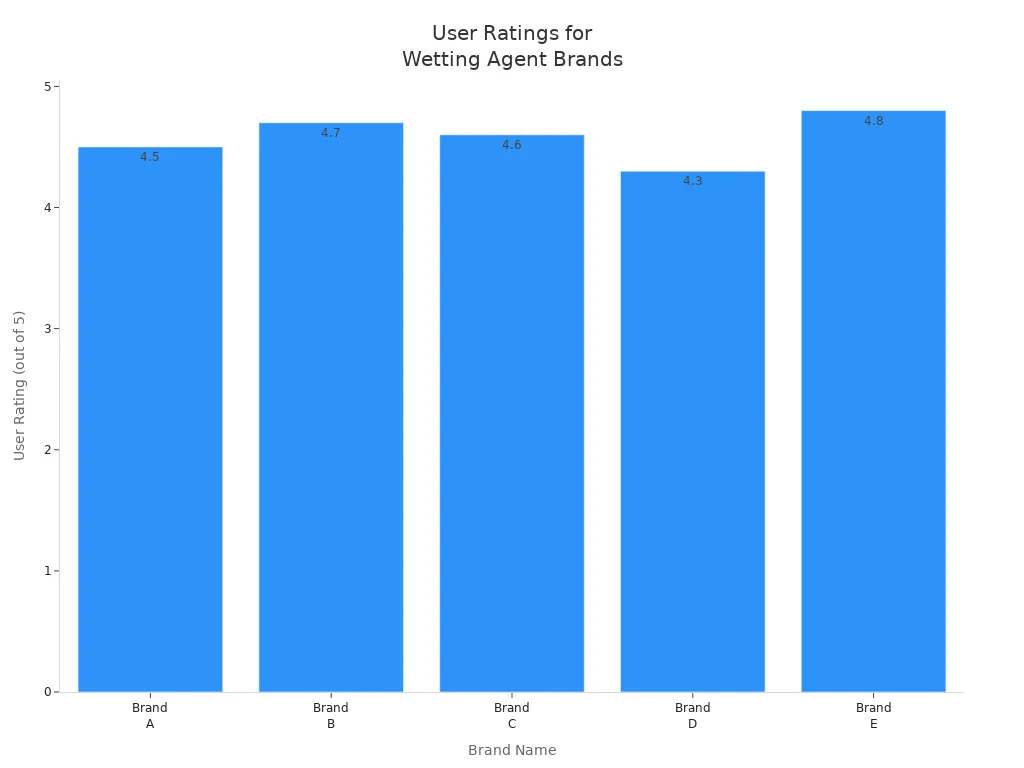
Orang-orang mengatakan bahwa merek-merek bahan pembasah terbaik membantu menghilangkan residu pestisida dan piretroid. Produk yang membantu penyebaran air dan memudahkan pembersihan mendapat peringkat tinggi.
| Nama Merek | Peringkat Pengguna |
|---|---|
| Merek A | 4.5/5 |
| Merek B | 4.7/5 |
| Merek C | 4.6/5 |
| Merek D | 4.3/5 |
| Merek E | 4.8/5 |
Tip: Selalu bersihkan permukaan setelah menggunakan pestisida. Bahan pembasah membantu mengurangi kontaminasi pestisida dan melindungi anak-anak dari paparan. Anda menjaga rumah Anda lebih aman dengan menghilangkan residu dan piretroid.
Agen Pembasah dalam Penggunaan Industri
Aplikasi Industri
Bahan pembasah banyak digunakan di pabrik-pabrik. Bahan pembasah membantu pestisida menempel pada tanaman dan menghilangkan residu. Dalam pertanian, bahan pembasah membuat pestisida menyebar dengan lebih baik. Hal ini membantu menutupi semua daun dan membasmi hama. Pada tekstil, bahan pembasah membantu pewarna bekerja dengan baik. Hal ini memberikan warna-warna cerah dan kain yang halus. Perusahaan obat menggunakan bahan pembasah untuk membantu obat larut. Hal ini memudahkan tubuh untuk menggunakan obat. Pabrik makanan menggunakan bahan pembasah untuk membuat makanan menjadi lebih halus dan merata.
Berikut ini adalah tabel yang menunjukkan bagaimana bahan pembasah digunakan dalam industri besar:
| Aplikasi | Pangsa Pasar pada tahun 2023 | Deskripsi |
|---|---|---|
| Pertanian | 30% | Bahan pembasah membantu pupuk dan pestisida bekerja lebih baik pada tanaman. |
| Tekstil | 30% | Digunakan dalam pewarnaan dan finishing untuk membuat kain menjadi lebih baik. |
| Obat-obatan | 70% | Penting untuk membuat obat bekerja dengan baik di dalam tubuh. |
| Pengolahan Makanan | N/A | Membuat makanan olahan menjadi lebih halus dan merata. |
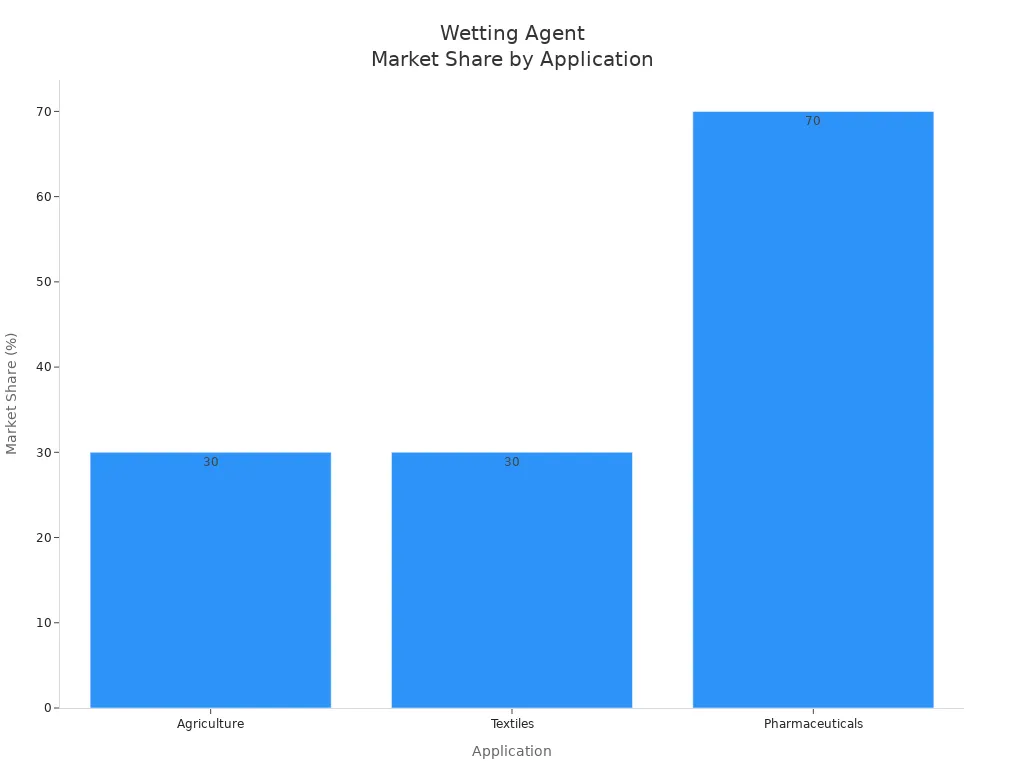
Teknologi bahan pembasah baru digunakan di banyak pabrik. Produk seperti bahan pembasah super yang mudah dibasahi membantu melicinkan pelapis. Surfaline WA membantu pestisida menyebar pada tanaman secara merata. Produk-produk baru ini lebih baik untuk lingkungan. Mereka memiliki lebih sedikit polusi dan lebih aman untuk digunakan.
Faktor Kinerja untuk Industri
Anda perlu mengetahui seberapa baik bahan pembasah bekerja sebelum menggunakannya. Tegangan permukaan menunjukkan seberapa baik bahan pembasah membantu cairan menyebar. Kemampuan penyebaran menunjukkan seberapa cepat dan merata cairan menutupi benda. Waktu penetrasi adalah seberapa cepat cairan meresap ke dalam benda-benda seperti kain atau tanah. Hal ini membantu pestisida bekerja lebih baik dan membasmi hama.
Berikut ini adalah tabel yang berisi fakta-fakta kinerja yang penting:
| Indikator Kinerja | Fungsi | Penggunaan Industri |
|---|---|---|
| Tegangan Permukaan | Menunjukkan seberapa baik agen membantu penyebaran cairan. | Penting untuk menyebarkan cairan pada permukaan. |
| Kemampuan Penyebaran | Memberitahukan seberapa cepat dan merata cairan menyebar. | Diperlukan untuk cakupan yang baik di bidang tekstil dan pertanian. |
| Waktu Penetrasi | Seberapa cepat cairan meresap ke dalam benda. | Membantu pewarna dan pestisida bekerja lebih baik. |
Aturan membantu menjaga keselamatan pekerja di pabrik. UL Solutions memeriksa bahan pembasah untuk keselamatan dan kesehatan kebakaran. Anda harus mengikuti aturan seperti NFPA 18 dan memastikan tidak ada masalah keselamatan. Beberapa negara bagian menyebut bahan pembasah sebagai amandemen tanah. Anda perlu mendaftarkan produk Anda dan mengatakan yang sebenarnya tentang apa yang mereka lakukan, terutama di California.
Tip: Selalu periksa apakah bahan pembasah Anda mengikuti aturan negara bagian dan nasional sebelum menggunakannya. Hal ini akan menjaga pekerja tetap aman dan menghentikan masalah.
Ide-ide baru membantu memperbaiki masalah lama. Bahan pembasah bebas silikon membantu membuat lapisan yang halus dan menghentikan busa. Semprotan baru membantu pestisida menempel lebih baik pada tanaman. Perubahan-perubahan ini membantu mengurangi limbah dan menjaga orang tetap aman dari bahan kimia.
Bahan pembasah di pabrik membantu menghilangkan residu, membuat pestisida bekerja lebih baik, dan menjaga pekerja tetap aman. Anda menjaga produk tetap aman dan mengurangi risiko dengan memilih bahan pembasah yang tepat.
Perbandingan Analitis Agen Pembasah
Analisis Efektivitas dan Keamanan
Anda ingin tahu bahan pembasah mana yang paling baik. Anda juga ingin tahu mana yang aman untuk keluarga Anda. Membandingkan bahan pembasah membantu Anda melihat mana yang membersihkan lebih baik di rumah dan di pabrik. Anda menggunakan tes untuk mengukur seberapa banyak pestisida yang tersisa setelah pembersihan. Tes ini menunjukkan bahwa jenis bahan pembasah akan mempengaruhi seberapa baik pestisida yang terkumpul.
Jika Anda menggunakan isopropanol sebagai pengganti air, Anda akan mengumpulkan lebih banyak residu pestisida. Sebagian besar pestisida tidak dapat bercampur dengan baik dengan air. Isopropanol membantu Anda mengumpulkan lebih banyak selama pembersihan. Tisu polivinil alkohol juga mengumpulkan lebih banyak daripada tisu biasa. Jadi, pilihan tisu dan bahan pembasah Anda sangat penting.
Anda juga harus memikirkan tentang keamanan. Tes membantu Anda memeriksa apakah ada pestisida yang tertinggal setelah pembersihan. Jika Anda menggunakan bahan pembasah atau lap yang salah, lebih banyak pestisida yang tertinggal. Hal ini dapat membuat pestisida menjadi kurang aman bagi keluarga Anda. Menggunakan lap dan bahan pembasah yang tepat akan mengurangi jumlah yang tertinggal dan membuat rumah Anda lebih aman.
Di pabrik-pabrik, para pekerja menggunakan tes untuk melihat seberapa baik bahan pembasah membersihkan peralatan. Tes ini membantu melacak berapa banyak pestisida yang dihilangkan. Anda menginginkan tisu dan bahan pembasah yang lolos uji keamanan dan memiliki risiko yang lebih rendah bagi para pekerja.
Berikut ini adalah tabel untuk membantu Anda membandingkan seberapa baik setiap bahan pembasah bekerja dan seberapa aman bahan tersebut:
| Jenis Agen Pembasah | Efisiensi Penagihan | Keamanan untuk Penggunaan di Rumah | Keselamatan untuk Industri |
|---|---|---|---|
| Isopropanol | Tinggi | Bagus. | Bagus. |
| Air | Rendah | Bagus. | Bagus. |
| Lap Polivinil Alkohol | Tinggi | Sangat baik | Sangat baik |
| Lap Tradisional | Sedang | Bagus. | Bagus. |
Catatan: Pengujian menunjukkan bahwa tisu isopropanol dan polivinil alkohol mengumpulkan lebih banyak pestisida. Menggunakan tisu ini membantu mengurangi paparan saat Anda membersihkan.
Anda harus selalu menggunakan tes untuk memeriksa pembersihan Anda. Tes membantu Anda mengetahui apakah Anda telah membersihkan cukup pestisida. Hal ini memberi Anda fakta untuk menjaga rumah dan tempat kerja Anda tetap aman.
Analisis Biaya dan Kepraktisan
Anda menginginkan bahan pembasah yang bekerja dengan baik dan tidak terlalu mahal. Membandingkan bahan pembasah membantu Anda menemukan nilai terbaik. Bahan kimia dan kekuatan setiap bahan pembasah mengubah seberapa baik kerjanya dan berapa biayanya. Pengujian membantu Anda mengetahui apakah Anda mendapatkan pembersihan yang baik sesuai dengan harganya.
- Bahan kimia dan kekuatan surfaktan membantu menurunkan tegangan permukaan. Hal ini membantu Anda menyebarkan pestisida dan membersihkan dengan lebih baik.
- Jika Anda menggunakan terlalu sedikit atau terlalu banyak surfaktan, pembersihan tidak akan berhasil dengan baik. Pengujian menunjukkan bahwa jumlah yang tepat memberikan hasil terbaik untuk uang Anda.
Anda harus memikirkan betapa mudahnya setiap produk digunakan. Bahan pembasah butiran mudah digunakan di rumah. Anda tinggal menebarkannya dan menambahkan air. Bahan pembasah cair bekerja lebih cepat dan menjangkau area yang lebih luas, tetapi Anda mungkin memerlukan alat khusus. Pengujian menunjukkan bahwa produk cair sering kali membersihkan lebih baik, tetapi harganya lebih mahal dan perlu digunakan dengan hati-hati.
Berikut ini adalah daftar untuk membantu Anda membandingkan biaya dan kemudahan penggunaan setiap produk:
- Bahan pembasah butiran: Mudah digunakan, harganya lebih murah, bagus untuk pekerjaan kecil, tetapi mungkin tidak bersih.
- Bahan pembasah cair: Bekerja cepat, membersihkan dengan baik, bagus untuk area yang luas, tetapi harganya lebih mahal dan membutuhkan alat.
- Tisu polivinil alkohol: Membersihkan dengan sangat baik, aman untuk rumah dan pabrik, tetapi harganya lebih mahal daripada tisu biasa.
- Isopropanol: Membersihkan residu pestisida yang keras, bekerja dengan baik, tetapi membutuhkan penyimpanan yang hati-hati.
Anda menggunakan tes untuk melihat apakah Anda mendapatkan pembersihan yang baik untuk uang Anda. Membandingkan bahan pembasah membantu Anda memilih mana yang terbaik untuk Anda. Anda ingin mengurangi paparan dan mendapatkan pembersihan terbaik dengan setiap tisu atau produk.
Tip: Selalu periksa label untuk mengetahui jumlah yang tepat untuk digunakan. Pengujian menunjukkan bahwa menggunakan jumlah yang tepat akan membantu Anda membersihkan dengan lebih baik dan menghemat uang.
Membandingkan bahan pembasah membantu Anda membuat pilihan yang cerdas. Anda menggunakan pengujian dan pengukuran untuk memilih bahan pembasah terbaik untuk rumah atau pabrik Anda. Anda mengurangi paparan, membersihkan dengan lebih baik, dan mendapatkan nilai yang baik untuk uang Anda.
Memilih Bahan Pembasah
Menilai Kebutuhan
Anda harus memulai dengan analisis yang jelas tentang tujuan Anda sebelum memilih agen pembasah. Pikirkan tentang apa yang ingin Anda capai dengan pengumpulan dan bagaimana Anda akan mengukur efisiensi. Anda harus memeriksa apakah bahan pembasah cocok dengan produk lain yang Anda gunakan. Beberapa bahan pembasah bekerja lebih baik dengan tanah atau permukaan tertentu. Anda juga perlu melihat seberapa stabil bahan pembasah tersebut ketika dicampur dengan bahan lainnya. Jika Anda menginginkan koleksi terbaik, Anda harus mempertimbangkan bagaimana bahan pembasah akan bekerja di tempat Anda.
Para ahli mengatakan bahwa Anda harus melihat rute aplikasi dan jenis permukaan. Sebagai contoh, Anda mungkin membutuhkan bahan pembasah yang berbeda untuk rumput daripada untuk lantai keras. Anda juga harus memikirkan tentang lingkungan. Beberapa bahan pembasah lebih cepat terurai dan membantu Anda menjaga koleksi Anda tetap aman bagi alam. Selalu periksa apakah bahan pembasah akan tetap efektif selama penyimpanan dan penggunaan. Analisis ini membantu Anda menghindari kesalahan dan mendapatkan efisiensi terbaik.
Tips Evaluasi Produk
Anda ingin memastikan bahwa Anda memilih produk yang tepat untuk kebutuhan koleksi Anda. Mulailah dengan analisis sederhana tentang biaya dan seberapa baik produk bekerja. Lihatlah konsentrasi bahan aktifnya. Konsentrasi yang lebih tinggi dapat memberikan efisiensi yang lebih baik, tetapi Anda harus menggunakan jumlah yang tepat. Anda harus menguji bahan pembasah pada area kecil terlebih dahulu. Hal ini membantu Anda melihat seberapa baik produk ini bekerja untuk pengumpulan dan kinerja penyeka.
Berikut ini beberapa tips untuk membantu Anda dalam melakukan analisis:
- Periksa apakah produk memenuhi peraturan saat ini dan yang akan datang.
- Mintalah data independen untuk mendukung klaim vendor.
- Menguji produk untuk pengumpulan dan efisiensi dalam pengaturan Anda sendiri.
- Pastikan produk sesuai dengan rantai pasokan Anda dan dapat ditingkatkan jika diperlukan.
- Bandingkan biaya jangka panjang dengan harga pertama.
- Tetap terinformasi dengan teknologi baru dan standar industri.
Anda harus menghindari kesalahan umum. Jangan gunakan bahan pembasah selama cuaca buruk. Hal ini dapat menurunkan pengumpulan dan efisiensi. Selalu kalibrasi peralatan Anda sebelum digunakan. Hal ini akan membantu Anda mendapatkan cakupan yang merata dan hasil pembersihan yang lebih baik. Jangan abaikan kesehatan tanah. Tanah yang sehat membantu Anda mendapatkan pengumpulan dan efisiensi yang lebih baik dari bahan pembasah Anda.
Tip: Selalu gunakan tisu untuk memeriksa hasil Anda setelah setiap aplikasi. Hal ini akan memberikan Anda analisis yang jelas mengenai pengumpulan dan efisiensi. Anda dapat menyesuaikan metode Anda untuk hasil yang lebih baik.
Anda perhatikan bahan pembasah bekerja secara berbeda di rumah dan di pabrik. Di rumah, Anda biasanya membutuhkan lap sederhana untuk membersihkannya. Di pabrik, Anda membutuhkan lap yang lebih kuat untuk menghilangkan residu yang membandel. Melakukan analisis akan membantu Anda memilih tisu yang paling aman dan murah. Selalu periksa hal-hal sebelum Anda memilih tisu. Gunakan tisu untuk melihat seberapa baik kerjanya setelah digunakan. Analisis Anda memberikan fakta sehingga Anda dapat membuat pilihan yang lebih baik. Menggunakan tisu dan memeriksa pekerjaan Anda akan menjaga area Anda tetap aman dan bersih.
Tip: Selalu gunakan tisu dan periksa pekerjaan Anda untuk setiap pekerjaan. Hal ini akan membantu Anda mendapatkan hasil terbaik.
PERTANYAAN YANG SERING DIAJUKAN
Apa bahan pembasah yang paling aman untuk digunakan di rumah?
Pilihlah bahan pembasah yang alami atau ramah lingkungan. Bahan-bahan ini menggunakan bahan nabati. Bahan-bahan ini cepat terurai dan lebih aman untuk anak-anak dan hewan peliharaan.
Dapatkah Anda menggunakan bahan pembasah industri di rumah?
Jangan gunakan bahan pembasah industri di rumah. Bahan-bahan tersebut mengandung bahan kimia yang kuat. Ini bisa berbahaya jika Anda tidak menggunakannya dengan aman.
Bagaimana cara mengaplikasikan bahan pembasah cair?
Gunakan botol semprot atau penyemprot taman. Selalu periksa label untuk mengetahui berapa banyak yang harus digunakan. Kenakan sarung tangan dan jauhkan anak-anak saat Anda menyemprot.
Saran: Cobalah produk di tempat yang kecil terlebih dulu untuk mengetahui apakah ada masalah.
Bahan pembasah mana yang paling baik untuk menghilangkan residu pestisida?
| Jenis Agen Pembasah | Efektivitas |
|---|---|
| Isopropanol | Tinggi |
| Lap Polivinil Alkohol | Tinggi |
| Air | Rendah |
Tisu isopropanol dan polivinil alkohol paling baik digunakan untuk membersihkan residu pestisida.