
Don’t Let Light Hurt Your Cells:
A Senior Researcher’s Practical Guide to Safe Photoinitiator Handling
Hi, I’m Starry — a materials scientist who’s been working in the lab for nearly a decade. Today, let’s skip the dry MSDS clauses and talk about how to safely work with photoinitiators, the chemicals we handle almost daily — especially when delicate cells are involved.
Don’t Let Light Hurt Your Cells:
A Senior Lab Researcher’s Field Notes on Safe Photoinitiator Handling
Introduction
If you work in bioprinting or photosensitive materials research, you almost certainly use reagents like LAP and Irgacure 2959 (phenylbis(2,4,6-trimethylbenzoyl)phosphine oxide). These small molecules are the “igniters” of photopolymerization — without them, our 3D structures simply won’t form.
But I’ve seen too many new researchers, and even some experienced colleagues, treat them like ordinary chemical powders: storing them carelessly, weighing them casually. The results? Dead cells in their prints, or mysterious rashes appearing on their hands.
This article shares what I’ve learned over ten years of “working with” these photoinitiators — not just how to use them to make beautiful structures, but how to use them safely and properly, so your cells stay healthy and you stay unharmed. By the end, you’ll avoid at least 80% of the mistakes I once made.
Know Your Reagents: Don’t Be Fooled by “Non-Hazardous” Labels
Many people relax when they see “not classified as a dangerous good” on the MSDS for LAP or 2959. That’s one of the biggest misunderstandings.
“Non-hazardous” does NOT mean “risk-free” — especially in delicate biological applications.
I once had a new junior researcher who took a shortcut: he weighed LAP outside a biosafety cabinet using an uncalibrated spatula. A light gust blew a tiny amount onto his hand. He felt nothing, washed it off, and forgot about it — until the next day, when that area became red, itchy, and stayed that way for days.
This is classic skin and mucous membrane irritation.
Water-soluble initiators like LAP dissolve easily in sweat and can be absorbed through the skin.
The Irgacure series generates free radicals under UV light — exactly what we want for curing — but if that reaction happens on your skin, it effectively photodegrades your skin cells.
And for cell-based work:
High concentrations of photoinitiators are inherently cytotoxic.
Before every use, I mentally review their “profile”:
-
LAP (Lithium Phenyl-2,4,6-trimethylbenzoylphosphinate)
The “all-rounder” for aqueous systems, relatively cell-friendly — but keep it off your skin. -
Irgacure 2959 (2-hydroxy-1-[4-(2-hydroxyethoxy)phenyl]-2-methyl-1-propanone)
A classic UV photoinitiator, low water solubility, usually pre-dissolved in organic solvents (e.g., methanol). Relatively low cytotoxicity, but UV light itself stresses cells. - Ruthenium / Sodium-based Photoinitiators
The “new stars” of visible-light systems, very gentle to cells, but oxygen-sensitive with special handling needs.
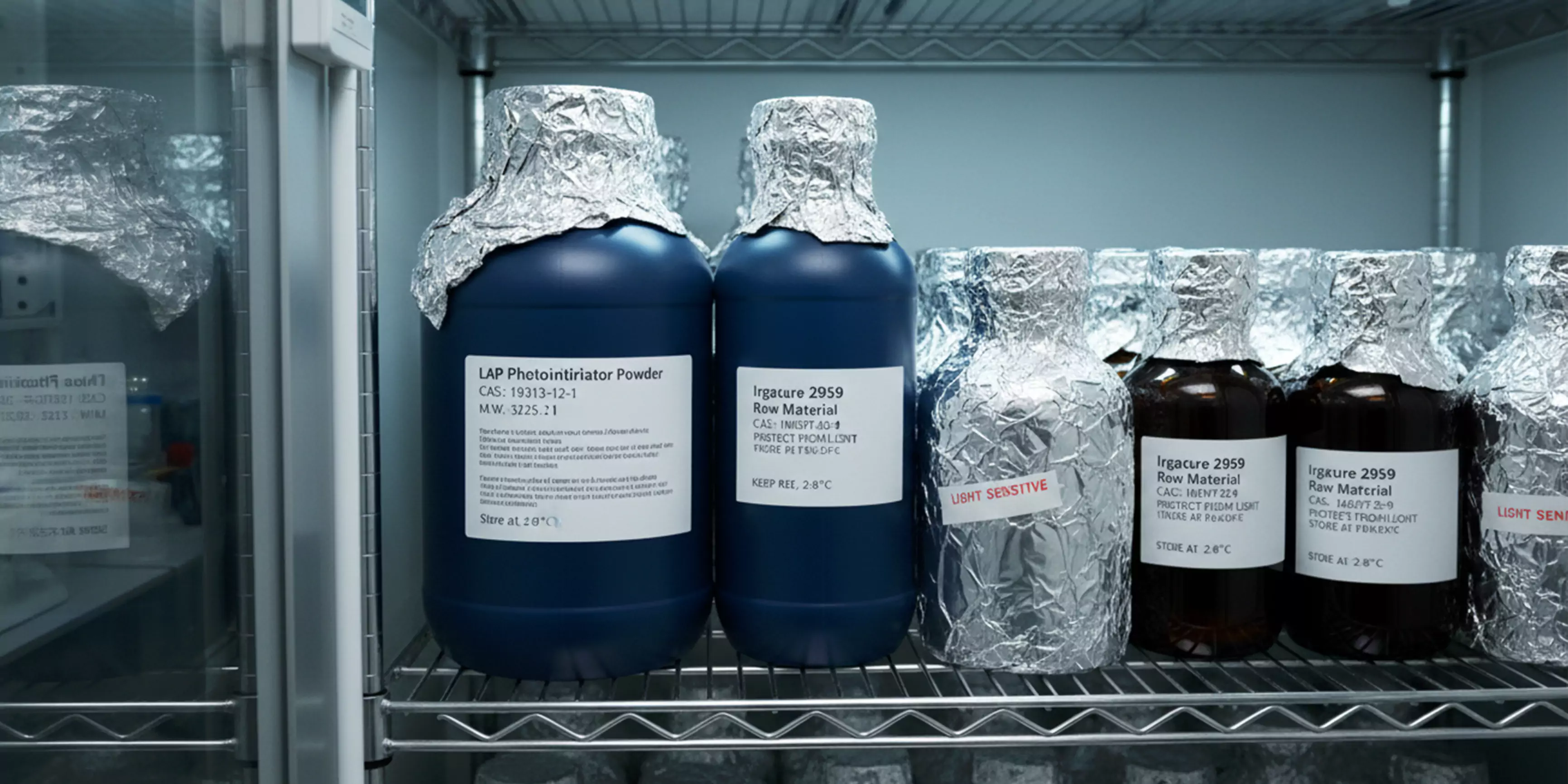
Proper Storage: Give These Photosensitive Molecules a Stable Home
As the name says, photoinitiators are light-sensitive. One careless mistake can deactivate an entire bottle.
In our lab:
- LAP and 2959 powders are always stored in the refrigerator at 2–8 °C, tightly wrapped in aluminum foil or in amber bottles.
- Ruthenium initiators, being more stable, go into a desiccator at room temperature.
The golden rule: Keep away from light and heat.
Never leave them on a windowsill or above an oven.
Even More Important: Handling Stock Solutions
A common mistake among new students:
They make a large batch of LAP solution, thaw a portion for use, then refreeze the rest. After several freeze–thaw cycles, the hydrogel no longer crosslinks properly.
Why? Freeze–thaw cycles destroy photoinitiator activity.
My recommendation:
Aliquot your stock solutions.
Use sterile Eppendorf tubes, split into single-use volumes (e.g., 50 μL or 100 μL), use once, discard. This preserves activity and prevents contamination.
As a general rule:
Prepared solutions stored at 2–8 °C should be used within 2 weeks.
When handling powder:
- Always use a dry, clean spatula.
- Open, sample, and seal quickly — moisture silently deactivates many initiators.
- Clean used spatulas immediately.
- Dispose of empty containers as chemical waste, not regular trash.
Safe Operation: Instill “Sterility” and “Protection” into Your Routine
This is the core: how to use photoinitiators both safely and effectively. I break it down into three steps.
Step 1: Protect Yourself
- Lab coat, nitrile gloves, and safety goggles are mandatory.
- If working with 365 nm UV light, use UV-protective goggles — regular plastic lenses are not enough.
- Always handle powders in a fume hood to avoid inhaling dust.
Step 2: Accurate Weighing & Dissolution
- Weighing: Use an analytical balance. For cell culture, small concentration differences can drastically affect viability.
- Dissolution:
- LAP: Dissolve directly in 1× PBS or cell medium. Stir gently — avoid vigorous vortexing, which creates aerosols.
- Irgacure 2959: Poor water solubility. Pre-dissolve in a small amount of methanol (e.g., 100 mg/mL stock), then dilute with PBS.
- Ruthenium initiators: Water-soluble, but handle in the dark to avoid premature activation.
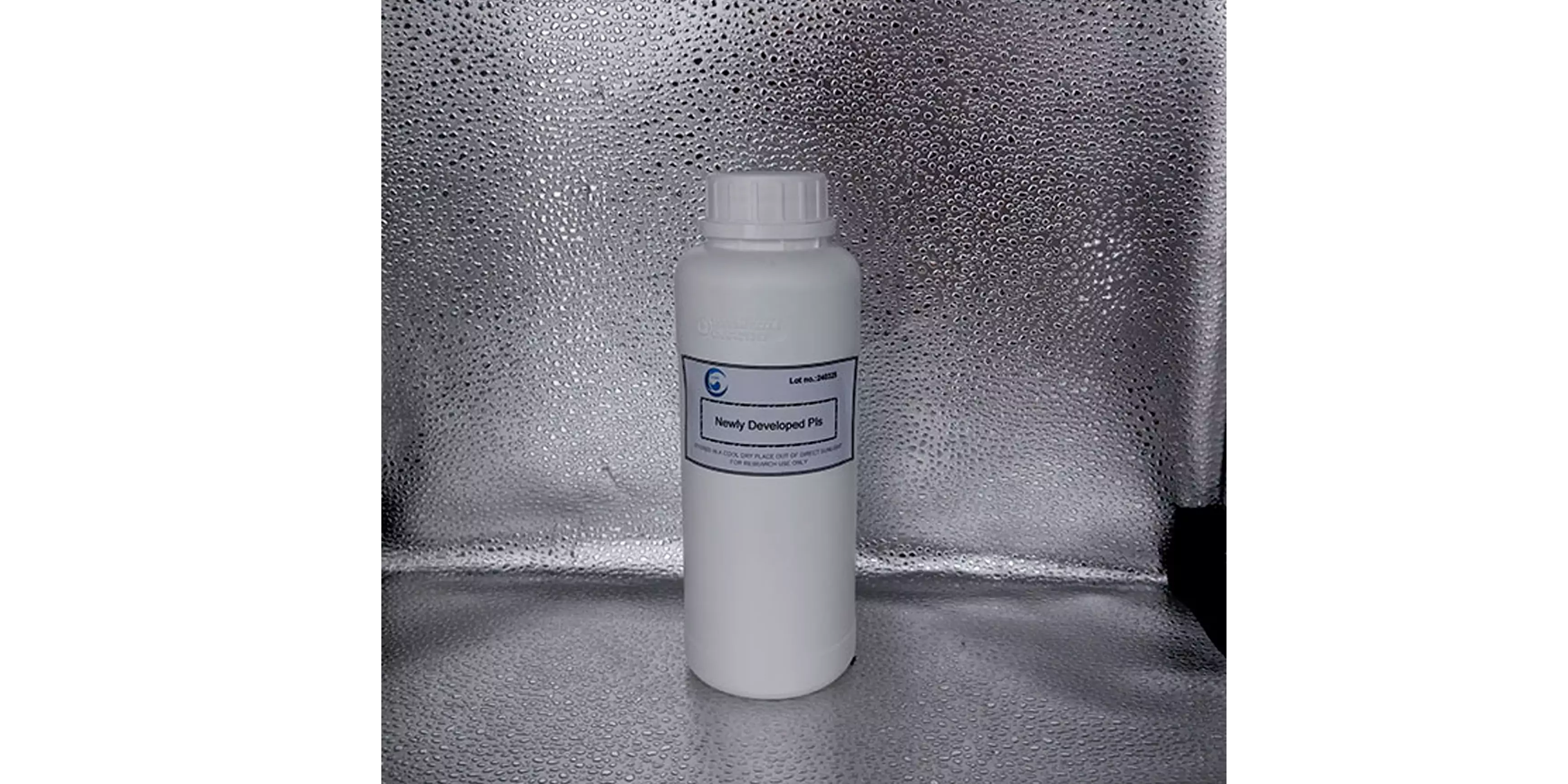
Photoinitiator LAP
Step 3: Sterilization — Non-Negotiable for Cell Work
Always filter-sterilize using a 0.22 μm filter into a sterile container. For long-term culture, I often add 1% penicillin–streptomycin for extra protection.
Real-World Best Practices: Protocols for Different Scenarios
Scenario 1: 3D Bioprinting
The most popular — and most challenging — application.
-
Concentration is a balancing act
For LAP, a typical working window is 0.03% – 0.5% (w/v).Too low: incomplete crosslinking, structure collapse.Too high: cytotoxicity.Optimize for your hydrogel and cell type. For primary neurons, we found 0.15% LAP with 405 nm blue light gave the best cure speed and viability. -
Choose your light wisely
Use blue light (405 nm) whenever possible instead of UV (365 nm).Blue light causes far less DNA damage to cells. - Post-print care
Immediately after crosslinking, wash 2–3 times with warm, fresh medium.This removes unreacted residual initiator that could slowly damage cells during culture.
Scenario 2: Photocatalysis (e.g., High-Pressure Reactors)
I assisted colleagues in chemistry with a near-accident: rapid heating caused a dangerous pressure spike.
Three non-negotiable rules:
- Fill volume: Never exceed 80% of the reactor capacity — leave space for gas expansion.
- Heating rate: Ramp slowly, at ≤ 5 °C per minute.
- Cooling before opening: Only open the reactor after it naturally cools below 40 °C.
Emergency Response: Be Prepared, Not Afraid
I’m not trying to scare you — just help you respond calmly if something goes wrong.
- Skin contact: Immediately rinse with plenty of soap and water.
This stops nearly all issues early. If redness develops, seek medical attention and bring the reagent information.
- Eye exposure: Emergency! Use an eyewash or saline, hold eyelids open, flush continuously for at least 15 minutes, then go to the hospital immediately.
- Inhalation: Move to fresh air. If breathing is difficult, administer oxygen and seek medical help.
- Small spill: Cover with dry sand, diatomaceous earth, or absorbent wipes. Sweep gently into a sealed container and dispose as chemical waste.
Final Thoughts
Photoinitiators are tools, not enemies.
The core principles of safe handling are simple:
Control concentration, regulate light exposure, and strictly follow sterile technique.
Control concentration, regulate light exposure, and strictly follow sterile technique.
In biomedicine, our goal is to find the perfect balance between curing efficiency and cell compatibility.
Have you had interesting or challenging experiences with photoinitiators? Do you have unique tips for specific reagents? Feel free to share in the comments — let’s learn and improve together.