
Is gel polish better than normal nail polish?
Hello everyone! I’m a star employee at CHROMÉCLAIR, a brand of hema free gel polish brands. The nail industry continues to evolve, with nail products constantly being updated and upgraded. However, many nail enthusiasts still struggle to grasp the difference between nail polish and gel polish. Though they differ by just one word, the gap between them is substantial! Is nail art actually harmful to one’s health?
It seems many people lack a thorough understanding of nail art itself. Not only does it cause no harm (provided non-toxic, eco-friendly products are chosen), it can even offer some protective benefits. In fact, decorative manicures encompass various embellishments and decals. Techniques like gel polish painting and stamping follow strict protocols. Any procedure involving nail polish application begins with thorough cleansing, followed by nourishing oils and cuticle softeners to remove dead skin, then a base coat. These steps actually benefit nail health and cause no harm whatsoever.
 Is nail art actually harmful to one’s health?
The Difference Between Nail Polish and Gel Polish
Generally speaking, these two categories comprise the bulk of nail care products. Nail polish is more mainstream and does not require a lamp; it dries naturally. Some ladies find nail polish takes an age to dry and believe UV or LED lamps can speed up the process. This is actually incorrect—nail lamps only work on gel polish and are entirely useless for regular nail polish.Nail polish
Composition: Primarily consists of 70%–80% volatile solvents, approximately 15% nitrocellulose, along with small quantities of oily solvents, camphor, titanium dioxide, and oil-soluble pigments.
Function: The solvents in nail polish evaporate to form a coloured film. Once adhered to the nail surface, this film imparts colour.
Characteristics: No curing lamp is required, hence nail polish is typically packaged in transparent bottles and should be stored with the cap securely fastened.
 Nail polish
Gel Polish
Ingredients & Function: The primary components are natural resins and colour pigments. This material cures under ultraviolet light rather than evaporating, forming a thin, plastic-like film. Characteristics: Offers superior gloss, abrasion resistance, and durability compared to traditional nail polish. Crucially, it emits minimal vapour, is virtually odourless, and cures in just one to two minutes under UV light. It also facilitates a wider range of nail art designs. However, gel polish must be stored in opaque containers away from light. Gel polish requires a specialised UV/LED lamp to cure. Once cured, it offers superior longevity compared to traditional nail polish, typically lasting 20-30 days.
Removal necessitates dedicated gel polish remover; standard nail polish remover is ineffective. A professional gel polish removal kit is recommended. Improper removal methods (such as forcibly peeling off) can cause significant damage to the natural nail.
Gel polish requires a specialised UV/LED lamp to cure. Once cured, it offers superior longevity compared to traditional nail polish, typically lasting 20-30 days.
Removal necessitates dedicated gel polish remover; standard nail polish remover is ineffective. A professional gel polish removal kit is recommended. Improper removal methods (such as forcibly peeling off) can cause significant damage to the natural nail.
Which is better: nail polish or gel polish?
Answer: Definitely gel polish.Nail polish is being used less and less these days!
01 Poor-quality nail polish emits a rather unpleasant odour. Even slightly better-quality polish still has a noticeable scent, albeit milder The chemical solvents it contains can cause discomfort when they evaporate, and prolonged inhalation may adversely affect one’s health to some degree. 02 Prolonged use may cause damage to the nails
Due to its high permeability, nail polish may have adverse effects on those with more fragile nails. For instance, frequent application can lead to yellowing, loss of shine, or even splitting of the nail plate. This risk is particularly heightened with unbranded, inferior-quality nail polish products.
03 The duration is too short, making it prone to chipping
As nail polish typically lasts only five or six days on the nail surface, this leads to frequent manicures, increasing the number of repeated applications and thereby accumulating damage to the nails.
02 Prolonged use may cause damage to the nails
Due to its high permeability, nail polish may have adverse effects on those with more fragile nails. For instance, frequent application can lead to yellowing, loss of shine, or even splitting of the nail plate. This risk is particularly heightened with unbranded, inferior-quality nail polish products.
03 The duration is too short, making it prone to chipping
As nail polish typically lasts only five or six days on the nail surface, this leads to frequent manicures, increasing the number of repeated applications and thereby accumulating damage to the nails.
Can ordinary enthusiasts apply gel polish themselves?
Answer: Yes, they can. However, the process requires specialised equipment. Fortunately, complete manicure kits are readily available for purchase online. Gel polish has a distinctive feature: its viscosity and flow properties make it easier to handle, allowing for more even application than traditional nail polish. The simplest gel polish routine is actually quite similar to using regular nail polish, with the added step of curing under a lamp. (That curing step essentially mimics the time it would take to dry naturally.) Nail polish: Base coat >> Colour polish >> Top coat
Gel polish: Base coat (cured under lamp) >> Colour gel (typically applied in three layers, each cured under lamp) >> Top coat (cured under lamp)
Gel polish offers greater durability and longer wear than traditional nail polish, though the exact duration depends on individual nail growth patterns.
Nail polish: Base coat >> Colour polish >> Top coat
Gel polish: Base coat (cured under lamp) >> Colour gel (typically applied in three layers, each cured under lamp) >> Top coat (cured under lamp)
Gel polish offers greater durability and longer wear than traditional nail polish, though the exact duration depends on individual nail growth patterns.
How do I remove gel polish?
Answer: You can have it removed by a nail technician at the salon. If the manicure was done at that particular salon, the removal is complimentary.What should one bear in mind when applying nail polish?
Many ladies simply apply polish directly onto their nails. Generally speaking, applying solid-colour nail polish involves three steps: base coat, colour polish (the pigmented nail polish), and top coat. Base Coat Applying a base coat is a crucial step, as it protects and strengthens the nails. A high-quality base coat ensures your manicure lasts longer. For specific needs, one may opt for functional base coats. For instance: if your nails are brittle, choose a base coat designed to strengthen nails and prevent breakage; if applying dark or highly pigmented polish, select a base coat that prevents staining; if merely testing colours or needing temporary removal for school or work, choose a peel-off base coat, and so forth. Coloured nail polish Coloured nail polish refers to those vibrantly hued nail varnishes. Nowadays, nail polish comes in numerous textures, enabling a wide array of effects. Essentially, all coloured polishes require at least two coats to achieve a saturated, even finish. Some thinner formulations may need three to five coats to reveal their true colour.How can one hasten the drying of nail polish?
Firstly, nail polish should be kept in a slightly thinner consistency for easier application. If it is too thick, it can easily become overly heavy on the nails, appearing unattractive whilst also proving difficult to dry. Secondly, it is crucial to apply just the right amount of polish. Avoid dipping the brush directly into the bottle and applying it straight onto your nails. Instead, scrape off half the polish at the bottle’s opening or swirl the brush a few times to ensure the polish is evenly distributed on the brush before application. Applying too much will result in a thick, uneven coat and may cause the polish to bleed beyond the cuticle. Furthermore, the first coat of colour polish must be applied thinly, without worrying about colour evenness. If the first layer is too thick, it will take a long time to dry completely. Applying a second coat over this will also make it difficult for the polish to set quickly, greatly increasing the risk of smudging or damage. Should your polish remain wet for an extended period, aside from potential product quality issues, it is invariably due to excessive thickness. Naturally, if noticeable streaks or smudges appear on the first coat, it is advisable to remove and reapply promptly. Do not expect the second coat to conceal imperfections, as this will only worsen the result.Why does nail polish chip so easily after drying?
- Firstly, opt for high-quality nail polish. Those cheap bottles sold in boutique shops not only contain inferior ingredients but also tend to dry slowly, making them highly susceptible to chipping and offering poor longevity. There are now many excellent choices available, such as BornPretty and Innisfree.

- Secondly, prepare thoroughly before applying nail polish. Though it may appear dry after an hour, it remains vulnerable to chipping upon contact with hard surfaces. In truth, nail polish requires approximately twelve hours to cure fully. Prior to this, it remains susceptible to smudging or damage, albeit to varying degrees depending on the force applied.
- Thirdly, exercise extreme caution after application. It’s best to avoid any activity altogether – quietly scrolling through social media or watching a series is ideal. Gradually, you may perform small, gentle movements. If you attempt washing clothes or your hair within the first hour or two, the damp polish will inevitably chip immediately.
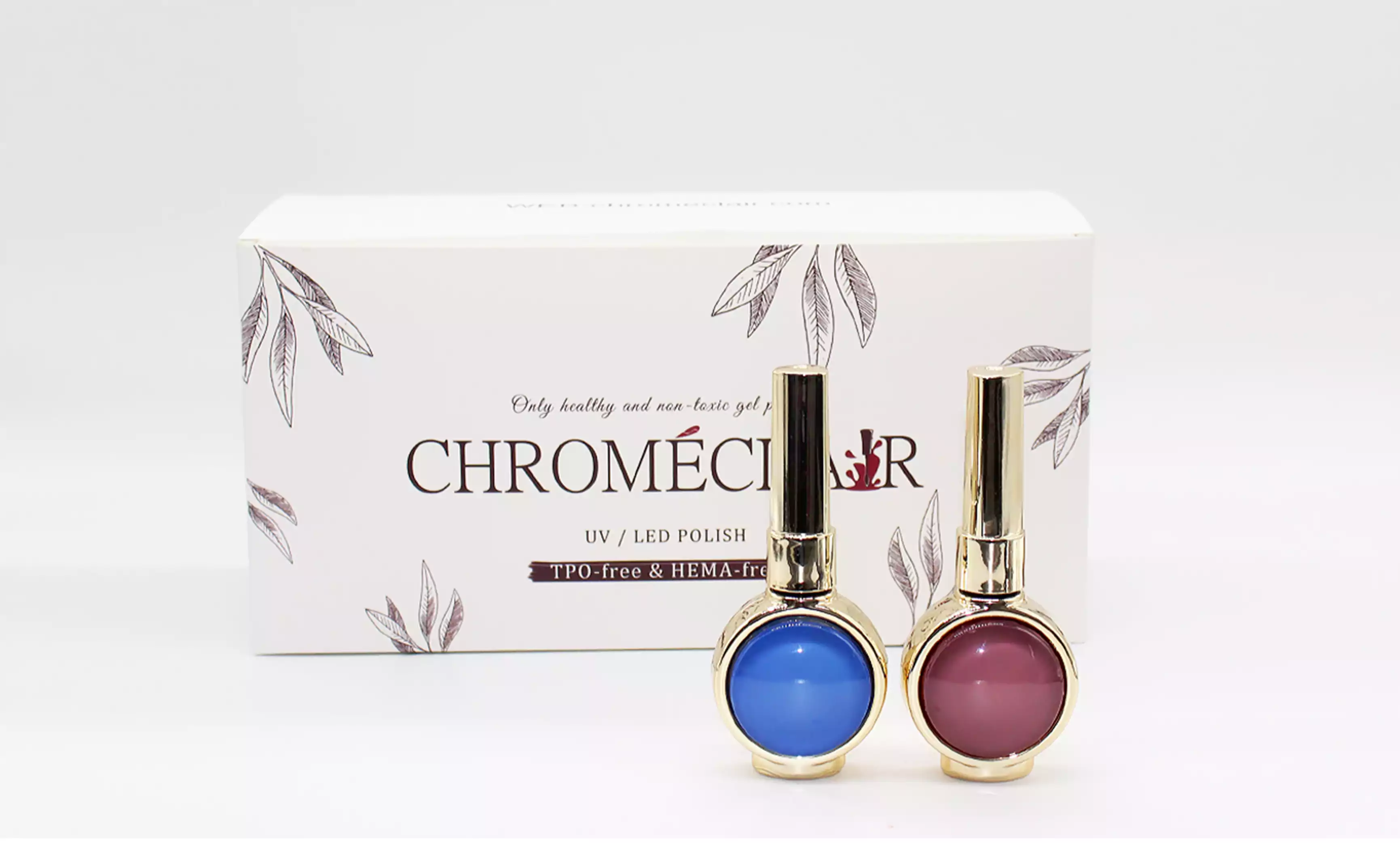 Their website also features nail art tutorials, such as:
Halloween Nail Art Tutorial: Cyber Ghost
How to Do the 3D Petal Nail Art at Home?
Related product references: For formulation review or sourcing comparison, see CHROMÉCLAIR HEMA-free & TPO-free Gel Polish and CHLUMINIT TMO.