
Pigments & Inks
Pigments are a vital component of ink and the key film-forming substance in the ink layer. They not only impart rich decorative colors to the ink and provide coverage over the printed substrate, but also enhance the physical properties of the ink layer. These improvements include increased mechanical strength, enhanced corrosion resistance, and reduced permeability to air and water. Certain specialty pigments further confer functional properties to the ink, such as fluorescence and antistatic effects, playing a central role in achieving multifunctional ink formulations. Typically, we evaluate pigment performance using metrics such as tinting strength, hiding power, lightfastness, weather resistance, resistance to chalking, heat resistance, and acid and alkali resistance.
Tinting Strength
Tinting strength refers to the intensity of color produced when one pigment is mixed with another. The stronger the tinting strength, the less pigment is required. For example, ultramarine pigment is often added to white ink to neutralize yellow tones; the stronger the ultramarine’s tinting strength, the smaller the amount needed.
Typically, we evaluate pigment performance using metrics such as tinting strength, hiding power, lightfastness, weather resistance, resistance to chalking, heat resistance, and acid and alkali resistance.
Tinting Strength
Tinting strength refers to the intensity of color produced when one pigment is mixed with another. The stronger the tinting strength, the less pigment is required. For example, ultramarine pigment is often added to white ink to neutralize yellow tones; the stronger the ultramarine’s tinting strength, the smaller the amount needed.
 Opacity
 refers to the ability of ink to conceal the underlying color after printing onto a substrate surface. For pigments, opacity manifests in whether the pigment within the ink layer can effectively obscure the substrate, preventing the base color from showing through. This property is typically expressed in grams of pigment required to cover one square meter of area.
Lightfastness and Weather Resistance
Pigments may undergo color and property changes when exposed to sunlight and atmospheric conditions. Lightfastness and weather resistance denote the ability to resist such alterations. This property is particularly critical for exterior inks. For instance, mica iron oxide and aluminum powder pigments absorb ultraviolet rays, significantly enhancing the weather resistance of the ink layer.
Chalking
Chalking occurs when the binder in the ink layer breaks down due to photochemical decomposition, causing pigments to separate from the ink layer and form powder. This not only affects appearance but also reduces the protective function of the ink layer.
Opacity
Opacity refers to the ability of ink to conceal the underlying color after printing onto a substrate surface. For pigments, opacity manifests in whether the pigment within the ink layer can effectively obscure the substrate, preventing the base color from showing through. This property is typically expressed in grams of pigment required to cover one square meter of area.
Lightfastness and Weather Resistance
Pigments may undergo color and property changes when exposed to sunlight and atmospheric conditions. Lightfastness and weather resistance denote the ability to resist such alterations. This property is particularly critical for exterior inks. For instance, mica iron oxide and aluminum powder pigments absorb ultraviolet rays, significantly enhancing the weather resistance of the ink layer.
Chalking
Chalking occurs when the binder in the ink layer breaks down due to photochemical decomposition, causing pigments to separate from the ink layer and form powder. This not only affects appearance but also reduces the protective function of the ink layer.
 Heat Resistance
Refers to a pigment’s ability to maintain color stability under high-temperature conditions. For inks requiring high-temperature baking (such as baked enamel), heat resistance is a critical indicator.
Acid and Alkali Resistance
Refers to a pigment’s ability to maintain its original color in acidic or alkaline environments. For example, pigments used in water-based inks must possess excellent alkali resistance.
Pigment Classification
Pigments are diverse and can be categorized into four main types based on their function in ink: coloring pigments, rust-preventive pigments, extender pigments, and specialty pigments.
Coloring Pigments
This category of pigments offers diverse colors, primarily used to provide color and coverage while enhancing the durability and abrasion resistance of ink films. By color, they are categorized into nine major groups: yellow, red, orange, purple, blue, green, white, black, and metallic. Common varieties include: chrome yellow, iron yellow, lightfast yellow, antimony red, toluidine red, iron blue, phthalocyanine blue, zinc oxide, titanium white, carbon black, chrome oxide green, aluminum powder, and copper powder.
Heat Resistance
Refers to a pigment’s ability to maintain color stability under high-temperature conditions. For inks requiring high-temperature baking (such as baked enamel), heat resistance is a critical indicator.
Acid and Alkali Resistance
Refers to a pigment’s ability to maintain its original color in acidic or alkaline environments. For example, pigments used in water-based inks must possess excellent alkali resistance.
Pigment Classification
Pigments are diverse and can be categorized into four main types based on their function in ink: coloring pigments, rust-preventive pigments, extender pigments, and specialty pigments.
Coloring Pigments
This category of pigments offers diverse colors, primarily used to provide color and coverage while enhancing the durability and abrasion resistance of ink films. By color, they are categorized into nine major groups: yellow, red, orange, purple, blue, green, white, black, and metallic. Common varieties include: chrome yellow, iron yellow, lightfast yellow, antimony red, toluidine red, iron blue, phthalocyanine blue, zinc oxide, titanium white, carbon black, chrome oxide green, aluminum powder, and copper powder.
 Anti-rust Pigments
Anti-rust pigments are categorized into physical and chemical types, serving as essential components of anti-rust inks.
Physical anti-rust pigments, such as iron oxide red, feature stable chemical properties and fine particles that enhance ink layer density while blocking moisture and oxygen. Aluminum powder, with its flake-like structure, improves ink layer sealing and reflects ultraviolet rays to delay aging.
Chemical rust-proof pigments like red lead, zinc chromate yellow, and zinc powder achieve rust prevention through chemical reactions.
Extender Pigments
Also known as filler pigments, these are often derived from natural minerals or industrial byproducts, offering lower costs. With refractive indices similar to oils or resins, they lack coloring or covering power. Their primary functions include increasing ink layer thickness, enhancing hardness and abrasion resistance, improving suspension and leveling properties, and optimizing ink structure to boost aging resistance. Using extender pigments also helps control ink costs by preventing functional redundancy with coloring pigments.
Specialty Pigments
Anti-rust Pigments
Anti-rust pigments are categorized into physical and chemical types, serving as essential components of anti-rust inks.
Physical anti-rust pigments, such as iron oxide red, feature stable chemical properties and fine particles that enhance ink layer density while blocking moisture and oxygen. Aluminum powder, with its flake-like structure, improves ink layer sealing and reflects ultraviolet rays to delay aging.
Chemical rust-proof pigments like red lead, zinc chromate yellow, and zinc powder achieve rust prevention through chemical reactions.
Extender Pigments
Also known as filler pigments, these are often derived from natural minerals or industrial byproducts, offering lower costs. With refractive indices similar to oils or resins, they lack coloring or covering power. Their primary functions include increasing ink layer thickness, enhancing hardness and abrasion resistance, improving suspension and leveling properties, and optimizing ink structure to boost aging resistance. Using extender pigments also helps control ink costs by preventing functional redundancy with coloring pigments.
Specialty Pigments
- Effect Pigments:Such as angle-dependent color-shifting pigments, which cause ink layers to exhibit color and brightness variations at different viewing angles. Commonly used in automotive coatings and high-end packaging printing.
- Fluorescent Pigments: Divided into inorganic and organic types, emitting intense fluorescence. Widely applied in advertising and safety signage.
- Antistatic Fillers:Used in antistatic inks, these are favored for their low cost and ease of application, making them widely adopted in electronics manufacturing and plastic packaging.
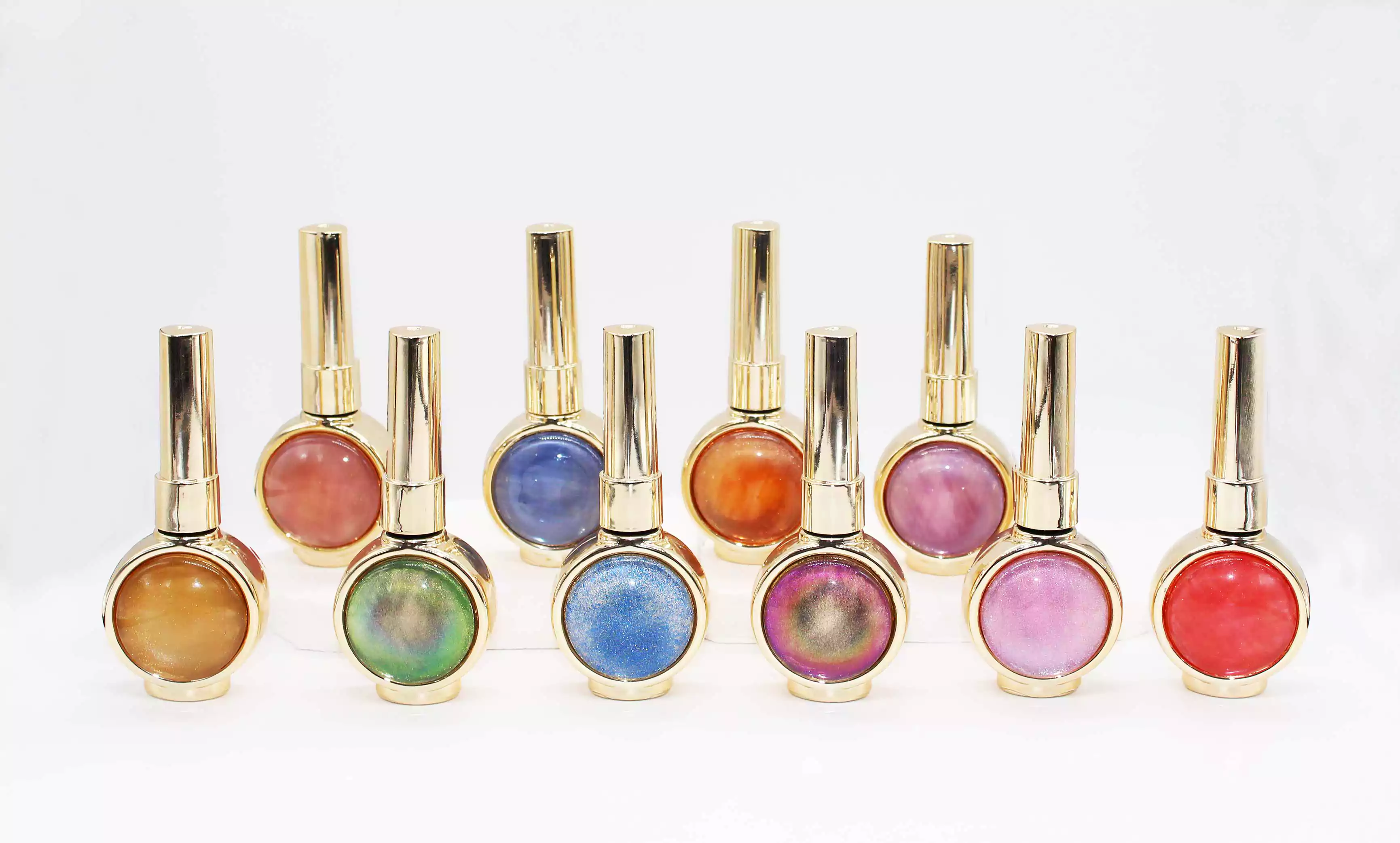 Their products emphasize safety, low irritation, and eco-friendliness, free from harmful or irritating ingredients to protect nail health. This commitment to ingredient safety and environmental responsibility aligns perfectly with the broader industry shift toward healthier, more sustainable practices in the pigment and ink sectors.
Related product references: For formulation review or sourcing comparison, see CHROMÉCLAIR HEMA-free & TPO-free Gel Polish and CHLUMINIT TMO.